Mack’s Horribly Hellacious Ghost Town AJ Sherwood (Wylder Tales, #3) Publication date: June 12th 2026 Genres: Adult, LGBTQ+, Romance
Apprentices, and two ghost towns, and almost-demons oh…no.
Mack doesn’t mind the apprentice part of this job; in fact, finding Gwyn is delightful, though he hates she grew up in such a haunted town with parents who don’t believe she’s a Medium.
Mack really hates the old mining ghost town is locked down with weird energy and none of the ghosts can see them, which makes passing them difficult.
Mack especially hates that in Black Rock there’s an almost-demon ghost inciting other ghosts to cause a mob, how is that allowed to be a thing?!
Who you gonna call for help when you’re the experts? Mack wants to know for a friend. (Him. He’s the friend.)
Tags:
Mack has found hell on earth, this was not on his bucket list, Accidental apprentice acquisition, Lachlan is back!, ghost gangs, chaos magician, Seiji is a new bonk bro, wedding, almost demons lurking, too much water and limestone for a medium’s peace of mind, uncharted haunted mines make Lachlan’s day, Eli is her usual scary self, Mack goes Wild West, Brandon can see ghosts here, that’s not a good thing, Brandon gets to have an apprentice too and can’t be happier, ghost pranks, Mack has picked too many battles, he’s putting some back, Ghost-hunting squad–assemble!
Tropes: MM Romance, Multicultural Romance, Ghost Town, Ghost Medium, Age Gap, Apprentices, Wedding, HEA
This is the fifth and final book in the series following a plot crossover with the Jon’s Mysteries Series. While it would be best to read the books listed in the below order, you can read Mack’s Horribly Hellacious Ghost Town without having read “Book 4” with minimal confusion. To read in series order, Book 1 – Brandon’s Very Merry Haunted Christmas, Book 2 – Mack’s Perfectly Ghastly Homecoming, Book 3 – Mack’s Rousing Ghoulish Highland Adventure, Book 4 – Jon & Mack’s Terrifying Tree Troubles, and Book 5 – This title.
AJ Sherwood believes in happily ever afters, magic, dragons, good men, and dark chocolate. She often dreams at night of delectable men doing sexy things with each other. In between writing multiple books (often at the same time) she pets her cats, plays with her dogs, and attempts insane things like aerial yoga.
She currently resides in Michigan with aforementioned dogs and cats. Being in snow country gives her the excuse to stay inside and watch bl dramas, which suit her perfectly.
Hott Hotter Hottest Serena Bell (Hott Springs Eternal, #5) Publication date: June 9th 2026 Genres: Adult, Comedy, Contemporary, Romance
Real bodyguard. Fake boyfriend. Unexpected benefits. Trouble guaranteed.
Tucker: Autumn Sato is a happiness influencer. And I’m…well, let’s just say my brand is more big gray stormcloud. If life were going to plan, the closest I’d get to her would be scrolling past her posts as fast as my thumbs could fly.
But my sister needs help, so I agree to bodyguard Autumn at her sister’s wedding. One thing leads to another, and suddenly I’m pretending to be her new boyfriend in front of all her friends and family.
It’s a hot mess, made worse because I swore I’d never do this again. Never get close to someone I was guarding. Never fall for someone whose safety was in my hands. Never let distraction get in the way of my job.
Unfortunately, this entire week is nothing but distractions: trapped in a car with my smoking hot client, only one bed in our hotel room, only one tent on the wedding camping trip… all before the bachelor–bachelorette prom. Meanwhile, someone seems to have it out for Autumn… or my family… or both.
As things heat up between us, I’m left with one question: Can I keep my heart—and the people I care about—safe?
A spicy, small-town, bodyguard, fake relationship, grumpy-sunshine romantic comedy with a hint of danger and a lot of heart.
There’s a knock on the door behind us, and it swings open, and—
Wow.
Yeah, this guy is not a blend-into-a-crowd type. He’s gotta be at least six five, and he fills up the doorway—weight-lifter muscles under a lovingly clinging tee, a torso that tapers from broad shoulders to a trim waist, and tree-trunk thighs beneath snug-fitting jeans. His jaw is a hard line to a well-defined chin; his eyes are flecks of pale blue ice; his nose is Roman-warrior-worthy, and his mouth is lush.
Did I say wow? Let me reiterate: Wow.
“Autumn, this is my brother, Tucker; Tucker, Autumn.”
I stand up. Giant White Guy grunts and extends a hand. Mine disappears into his, into heat and calluses and thick fingers that make me wonder—
Nope. Not wondering.
“Thanks so much for being willing to do this on short notice,” I say.
He grunts again.
Okay, so not a conversationalist. We’ll have to work on that because there is zero chance I would date a guy who isn’t a talker. My sister would never believe that.
“Anything you two need from me?” Hanna asks. “Or can you take it from here? I have to run a couple of errands.”
“That’s fine!” I say, hoping to warm him up a bit by being extra friendly, definitely one of my superpowers. “We’ll be great, right, Tucker?”
A grunt.
Not warm yet, but I can work on it.
She gives both of us a look that says she doubts we’ll be great, shoots Tucker another look that I interpret as Behave, and slips out the door.
“So!” I say brightly. “This is gonna be a cinch!”
He raises both eyebrows but doesn’t respond.
“Hanna told you about the discretion thing, right? That my sister can’t know that you’re a bodyguard, because she can’t know that my dad thinks there might be danger at her wedding?”
The grunts clearly have different meanings. I’m taking this one as a yes.
“But I don’t see that as a problem! Because”—I pause for effect—“you can pretend to be my date for the wedding week!”
Author Bio:
USA Today bestselling author Serena Bell writes contemporary romance with heat, heart, and humor. A former journalist, Serena has always believed that everyone has an amazing story to tell if you listen carefully, and you can often find her scribbling in her tiny garret office, mainlining chocolate and bringing to life the tales in her head.
Serena’s books have earned many honors, including an RT Reviewers’ Choice Award, Apple Books Best Book of the Month, and Amazon Best Book of the Year for Romance.
When not writing, Serena loves to spend time with her college-sweetheart husband and two hilarious kiddos—all of whom are incredibly tolerant not just of Serena’s imaginary friends but also of how often she changes her hobbies and how passionately she embraces the new ones. These days, it’s stand-up paddle boarding, board-gaming, meditation, and long walks with good friends.
Genre: Native American Cross-Cultural Conspiracy Thriller
GOVERNMENT
CORRUPTION TRIGGERS AN ANCIENT CHEYENNE CURSE…
Greed and corruption have infiltrated the once-pristine
Colorado Rockies, echoes of years past when silver miners swarmed the area like
vermin, precipitating a 19th Century curse. Now a new generation delivers a
different form of pollution, among them the most corrupt entity of them all.
All Sara Reynolds remembers of the wreck that slammed their Silverado to the
depths of Dead Horse Canyon is Bryan’s dying plea to expose what he found. Why
did they kill him? What happened that fateful spring day? Will she and her dead
husband’s life-long Native American friend, Charlie Littlewolf, discover his
secret?
Ceremonies taught by Charlie’s Northern Cheyenne medicine man grandfather
decades before can connect with the spirits and reveal all things. He shunned
them then. He needs them now, like never before. Coupled with Sara’s ethereal
clues from the heavens can they find answers in time? Or will the same black
ops raiders murder them, too?
READERS’ FAVORITE 5-STAR REVIEW
“Infused with a sense of danger, the intricate plot and dramatic
storyline create a breathtaking and intense story.…An exceptional
novel complete with conspiracy, intrigue, and murder that will enthrall
everyone who has an affinity for suspenseful thrillers with just a smidgen of
the paranormal.” –Susan Sewell
THE BOOK COMMENTARY 5-STAR REVIEW
“A fascinating blend of historical mystery and the supernatural that is
as suspenseful as it is entertaining. How the past affects the present is a
cleverly handled theme, and the narrative highlights the enduring consequences
of greed and disrespect for the land. Boldly written, tautly plotted, and
expertly delivered.” –George Buehlman
AWARDS
Page Turner Book Award
Silver Medal Global Book Awards
Pinnacle Book Achievement Award
Book Excellence Award Finalist
Readers’ Favorite 5-star Review
Breathtaking drops along the road that rimmed Colorado’s
Dead Horse Canyon terrified Sara Reynolds from the start. Cliffs and gorges
stretched on and off for miles, few protected by guardrails.
“Too expensive,” Bryan explained. “Not a priority for lean
county budgets.”
His advice for dealing with roadway-induced acrophobia was simple:
“Keep your eyes on the center line. Concentrate on the road. Whatever
you do, never, ever look down!”
His words sprang from memory, recommendations moot. Ignoring the threat
didn’t make it go away. Especially when someone T-boned your truck on a blind
curve.
Their mangled Silverado teetered on a ledge twenty feet below. She stared,
incredulous, as steam twisted upward from its crumpled hood in a sultry,
hypnotic dance. Vapors crawled along the shattered windshield, then teased the
heart-shaped leaves of a young quaking aspen—the truck’s only ally against a
sheer drop of several hundred feet.
The realization she’d been the truck’s passenger only moments before sizzled
through her like lightning. Why was she weightless, brunette tendrils floating
about her shoulders like a storm cloud? Her horrified gaze shifted to her
husband, likewise weightless and wearing his signature crooked grin.
“What happened?” Her words were soundless, thought rather
than speech.
“We’re dead.”
“What? Dead? What do you mean we’re dead?”
He pointed to their truck. She gasped. Their lifeless bodies were clearly
visible through the cab’s passenger side window.
He was right—they were dead.
The tender expression in his hazel eyes embraced her heart as affection
flowed between them. An unexpected sense of peace defied what lay below.
Time froze, the forest hushed and serene as a leafy chorus offered a requiem in
the spring breeze.
What seemed an eternity later, sirens screamed through the canyon. His
demeanor shifted.
“I’m sorry, Sara. That didn’t exactly work out as planned. I know—I
should have listened to you. I love you, sweetheart.”
Renewed panic surged. “What are you saying, Bryan?”
“You must go back. Promise me. Don’t let them get away with this.
Please.”
He blew her a kiss, then his personage retreated, fading into a swirling
vortex of unearthly light.
He didn’t stop, her plea denied, his only response a wave of farewell as he
vanished into the light.
* * *
She awoke to mind-numbing pain. Her shoulder, neck, and hip screamed, spasms
twisting every muscle as if some wild beast had torn them apart. There’d been
an ear-splitting crash, a brilliant flash of light. . .
Where was Bryan? Where was she?
Unless someone knew otherwise, surely it was hell.
Somewhere far away a muffled siren wailed. Fear of the truth conspired with
her blood-crusted lashes not to open her eyes. Pain vetoed the refusal. Her
eyelids trembled open.
A sandy haired, broad-shouldered man in a blue EMS uniform sat beside her,
attention fixed on a beeping vital signs monitor. A metallic taste filled her
mouth, lips swollen and heavy, her attempt to speak a scratchy whisper.
“What. . .happened? Wh-where’s Bryan? Is he h-here?”
The man turned her way, regarding her with dark, concerned eyes.
“It’s okay, ma’am. Don’t try to talk.” He placed a gentle hand on
her shoulder. “We’re getting you to help as fast as we can.”
Her breathing quickened, ravaged muscles and nerves on fire, but the agony
consuming her heart eclipsed it all. A sob caught in her throat, words an
articulated whimper.
“H-he left me. Here….”
“Just relax.” He emptied a syringe into the port of the IV line
embedded in her arm.
The pain ebbed. Again nothing. Only darkness.
* * *
BELTON REGIONAL MEDICAL CENTER
April 17, Tuesday
5:37 p.m.
The sensation of motion breached the persistent fog. Her eyes cracked open
as the gurney rumbled through a portal into blinding light. Electronic
chirping, then muted voices, the smell of antiseptics.
She forced her query out from somewhere in her chest. “W-what
h-happened?”
The pretty black nurse hanging a unit of blood looked her way. “You
were in a bad wreck, darlin’. Just rest now. You’re in good hands. You’re awake
and that’s a really good sign.”
“But my husband—”
“I know, darlin’. Don’t worry about him. He’s in a better place.”
Tears flowed unbidden. It had to be a nightmare. Willing herself awake,
however, failed. Abandonment and confusion in the grip of agonizing pain
remained.
Return to Dead Horse
Canyon: Grandfather Spirits
Dead Horse Canyon Saga Book 2
THE DEAD HORSE
CANYON SAGA CONTINUES. . .
READERS’ FAVORITE
5-STAR REVIEW
“I went into ‘Return to Dead Horse Canyon’ not having read the first
book and while it does read comfortably as a stand-alone, after just a couple
of chapters I actually went back to read ‘The Curse of Dead Horse Canyon’
before restarting book two. It was an excellent decision. The building of the
Cheyenne history is critical to the story and had I not understood Sara’s
complete motivation and Charlie’s fully fleshed-out roots, I’d have missed out
on so much more than just a good read. My gosh, the depth of ethnology packed
into both novels is meticulously researched and beautifully detailed.
Co-authors Marcha Fox and Pete Risingsun are a dream team with this saga and
I’m really looking forward to the third and final installment of their
trilogy.” — Asher Syed
This epic modern Native American saga continues in this sequel to “The
Curse of Dead Horse Canyon” where Charlie Littlewolf and Sara Reynolds
discovered why her husband, Bryan, was murdered, changing their lives forever.
While Charlie swore to avenge his white brother’s death, the path to do so
remains unclear.
His job with Lone Star Operations allows him to use his college education and
earn a generous income. However, it conflicts with everything he knows to be
right, especially as he returns to the teachings of his medicine man
grandfather. Is violating the Earth wrong or not? Little does he realize that
his work will ultimately return him to the Northern Cheyenne reservation where
his true destiny will manifest in ways he never imagined.
Sara is determined to fulfill Bryan’s last request to expose the government
corruption coupled with the lethal forces that stole his life. Releasing the
scandalous Top Secret data via WikiLeaks infuriates those with much to lose,
who place a high price on her demise. When her response gets too personal, the
next attempt to silence her forever comes close to home.
While miles apart, each struggles with life-threatening situations as a result
of their dedication to Bryan’s legacy. Their lives remain entangled through a
series of fateful decisions and circumstances that define a future fraught with
dangerous unknowns for them both.
AWARDS
Pinnacle Book Achievement Award
Firebird Book Award
Book Excellence Award Finalist
5-star Readers’ Favorite Review
Page Turner Award Finalist
The Revenge of Dead
Horse Canyon: Sweet Medicine Spirits
Dead Horse Canyon Saga Book 3
The DEAD HORSE
CANYON Trilogy’s explosive conclusion!
Picking up where “Return to Dead Horse Canyon: Grandfather Spirits”
left off, we find that much to her enemy’s dismay, Sara’s life is spared, but
with a steep price. A million dollar bounty remains on her demise, motivating
another to threaten her life. Paralyzed by the last attempt to eliminate her,
her Native American friend, Charlie, promises to help restore her health so she
can walk again. Before he can accomplish that, however, the unthinkable happens,
which disrupts and redirects their plans.
To fulfill his promise to his Northern Cheyenne Grandfather to complete a
four-day ceremonial fast at the Sacred Mountain, Charlie journeys to Bear Butte
in South Dakota, known to his tribe as Novavose. A series of
startling visions reveal the full scope of his destiny. Of prime importance is
to restore the ancient Earth Giving Ceremony known as the Massaum, originally revealed
thousands of years before by their prophet, Sweet Medicine.
Has the time come at last for Native People to unite and fulfill Black Cloud’s
curse on Dead Horse Canyon? And what about those other 19th century prophecies
directed to the 7th Generation by Black Elk and Crazy Horse?
Phase I of the PURF complex is complete. A gala open house to celebrate is
scheduled around the same time as the Gathering of Indigenous Leaders.
While the underground facility is filled to the brim with corrupt lobbyists,
contractors, and government officials, not far away a host of First Nation
Americans is entrenched in a ceremony that promises to restore them to their
land.
What could possibly go wrong?
5-STAR EDITORIAL REVIEW FROM READERS’
FAVORITE
“The Revenge of Dead Horse Canyon by
Marcha Fox and Pete Risingsun stands out for its sharp writing and complete
ability to immerse readers, especially in Charlie’s spiritual transformation.
Poor Sara just cannot get a break. Attacked, paralyzed, kidnapped, and then
labeled a domestic terrorist and sanctioned! This isn’t just a fight for
survival; this is about the power of truth in the face of overwhelming
opposition. Charlie fits into this description, with a spectacular ceremony for
Sara’s healing, but also as a powerful catalyst when he is in the presence of
Grandmother Earth and the consequences of his actions. Fox and Risingsun are a
dream writing team in every way, and, culturally, this portrayal of Charlie’s
heritage is painted from the sky to the smallest pebble and the fire burning in
between. The pacing is elevated by point of view shifts and all the drama, but
also a surprising relationship transformation as well. Ultimately, this finale
succeeds with a perfect 10 landing. Very, very highly recommended.”
AWARDS
Reader’s Favorite 5-stars
Book Excellence Award
Pinnacle Achievement Award
A
sweetgrass braid ordered in 2019 connected a NASA physicist in Texas with a
Cheyenne elder living on the Northern Cheyenne reservation in Montana. That
relationship evolved from a transaction to a consultation to a co-authorship
that produced a culturally meticulous, spiritually grounded, award-winning
conspiracy thriller trilogy.
Before
publishing “The Curse of Dead Horse Canyon” Marcha wanted to confirm
her portrayal of Native American culture and the story’s protagonist, Charlie
Littlewolf, was accurate as well as respectful toward indigenous people.
Synchronicity
intervened via that sweetgrass braid and connected her with Pete Risingsun, an
enrolled member and elder in the Northern Cheyenne tribe. He offered insights
and changes, but best of all, was so taken with the story he ultimately became
its coauthor.
Marcha’s
experience as a retired NASA engineer and seasoned author of The Star Trails
Tetralogy science fiction series, melded perfectly with Pete’s knowledge of his
tribe’s history and ceremonies.
The
pair, who has never met face to face, collaborated via phone calls, text
messages, and snail mail between her home in the Texas Hill Country and his on
the reservation in Montana.
It
took five years to produce the trilogy that comprises “The Curse of Dead
Horse Canyon Saga,” the three books of which have collected a total of 13
awards.
In
preparation for writing the saga’s explosive conclusion, Marcha and Pete
conducted extensive research. In so doing, they were delighted to uncover
fascinating details of Norther Cheyenne history and ceremonies that dove-tailed
perfectly with the complex story’s plot, tying it back to numerous events in
the 19th Century.
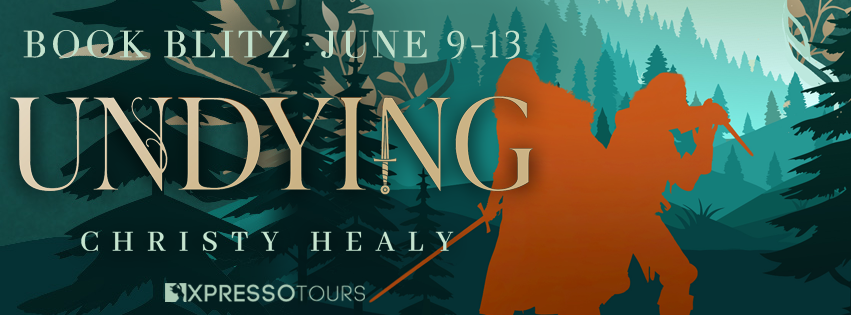
Rory Ó Conchúir has always known that she was destined for war. Her deadly gifts, the unwanted inheritance of her ancestor, the Mórrígan, can only be wielded as a weapon of destruction and doom. For years, she would not allow herself to be used as such, instead choosing to live far across the sea, refusing to regret what she has left behind in order to do so…until the fateful day that she learns of the price she has paid for her peace.
Niall Ó Flannagáin, the young king of Connacht, was never meant for war — that has always been his half-sister, Rory’s, role. But now he finds himself threatened with a foreign invasion and the ruination of the realm, without her aid. In desperation, he turns to a powerful enemy as an ally, his only hope to unite the provinces against the foreign armies gathering even now to destroy the land he has sworn to protect.
Locke MacMurchada, the son of the most hated traitor in all of Éire, owes a debt that he knows he can never pay. But when the opportunity to propose a political marriage with the murderous Rory Ó Conchúir arises, he seizes the chance to protect what is left of both his people, as well as the legacy which his father ripped to shreds…so long as she doesn’t kill him first.
When the fateful day of doom at last arrives, the fates of all three royals – the cursed princess, the young king, and the traitor prince – become inextricably woven together, forcing them to face new threats and old enemies, hoping to forge a stronger Éire from the ashes of the old.
Content Warnings:
Frequent depictions of war & battle scenes
Graphic descriptions of torture & death
Loss of a family member
Discussions of grief & self-hatred
On-page death of major character
Christy Healy has been a book nerd ever since she was a little girl hiding under the covers with a flashlight and a dog-eared copy of Anne of Green Gables. She started writing soon after, and the obsession only grew. Now Christy weaves stories of her own into the myths and tales of the Celtic, Indo-European, and Greco-Roman worlds that she has loved for so long. When not lost in her fantasy worlds, she lives in North Carolina with her children, her dog, and her husband.
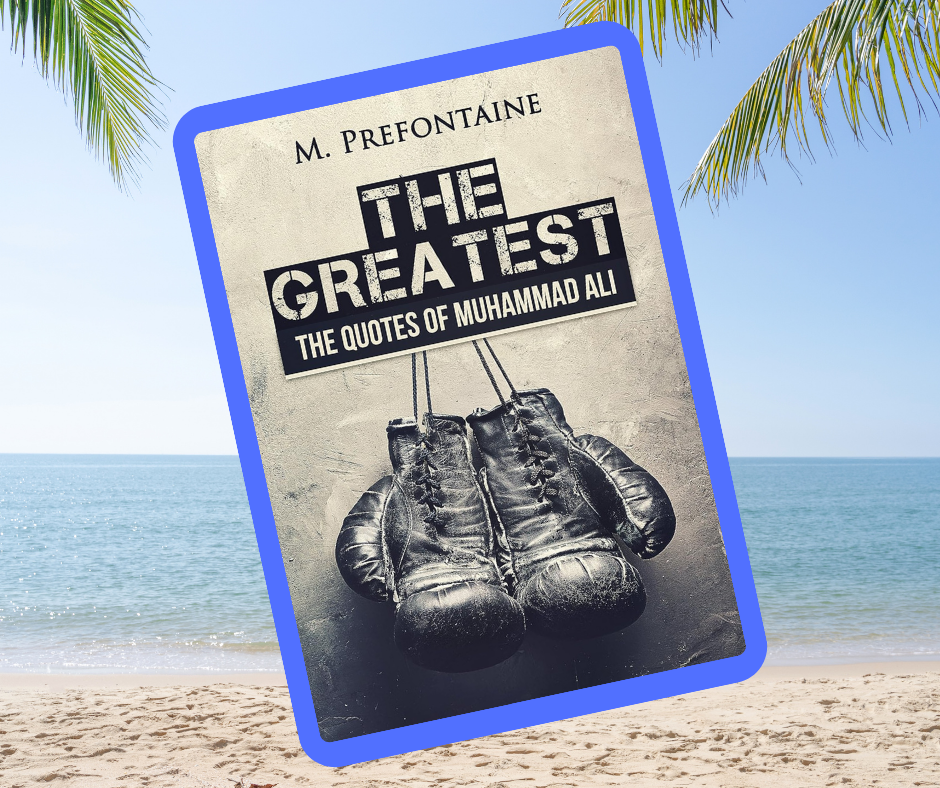
“I’ll tell you how I would like to be remembered: As a black man who won the heavyweight title – Who was humorous and never looked down on those who looked up to him – A man who stood for freedom, justice and equality – And I wouldn’t even mind if folks forgot how pretty I was.”
Muhammad Ali
No one has straddled the world of sport, politics and popular culture as Muhammad Ali did.
He was born in Louisville in 1942 in an America where blacks were subjected to a brutal apartheid and were treated as second class citizens. He rose, through his boxing skill and character, to become the most famous person in the world at the time.
He was most famous for styling himself as ‘The Greatest’. There is a consensus that he was the greatest of boxers during an era of great boxers. However, he was far more than that. He was a very great man a moral leader, anti-war and fierce opponent of racial prejudice.
A career beyond boxing as a black political leader, fighting for the rights of an oppressed minority, seemed inevitable. Fate had another twist however and Ali suffered from Parkinson’s Disease for 30 years, possibly exacerbated by an extended boxing career. This rendered his full potential as an advocate for black rights impossible.
This book is some of the wit and wisdom of a much loved and complex man through his own words.