

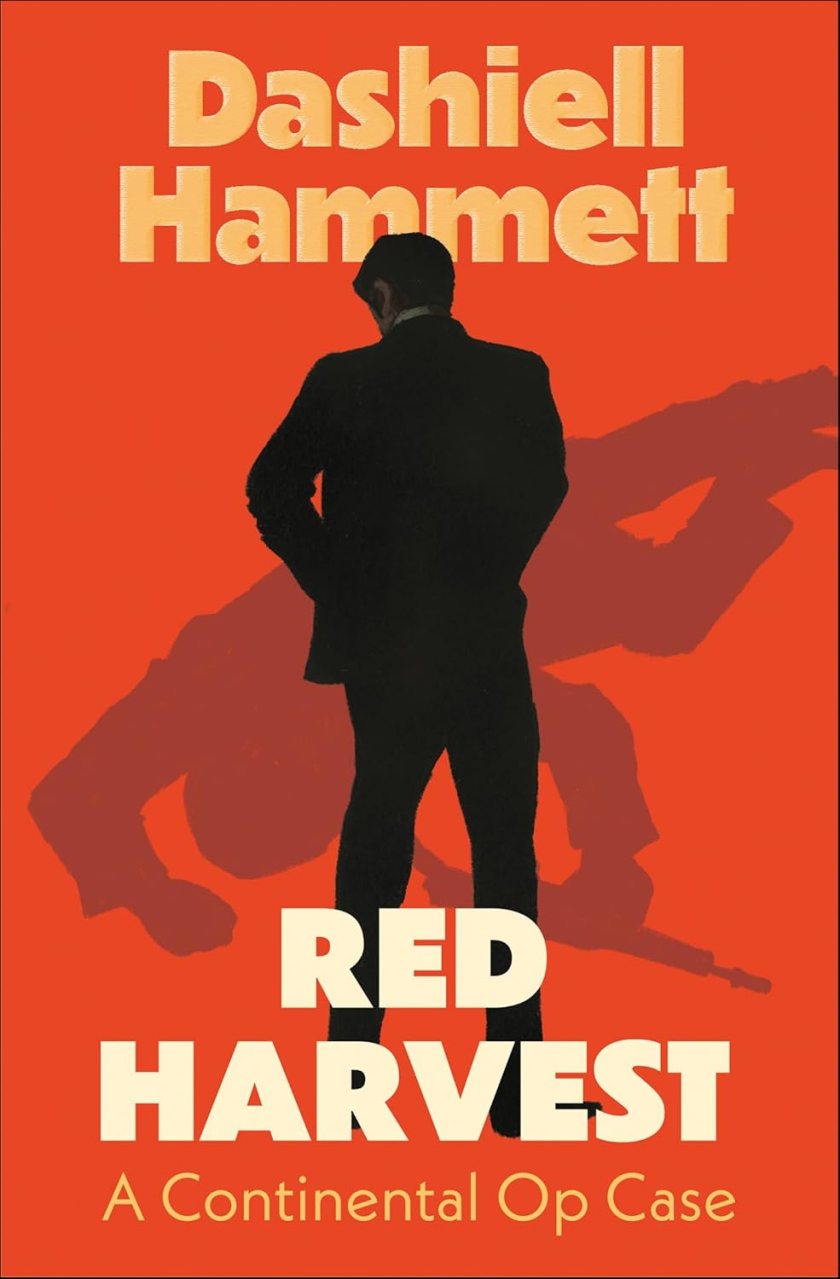
From a crime writer and “an acknowledged literary landmark,” a PI heads west and battles corruption and a rising death toll in this 1920s classic mystery (The New York Times Book Review).
Summoned to Personville, the detective known as Continental Op discovers the real reason locals call the western mining town “Poisonville.” The whole community has been divvied up into warring factions of gangsters and petty criminals. As the body count continues to rise, starting with the newspaperman who called in the detective for help, the Op decides to stick around. He is determined to clean up the criminal element, even if it means interrogating the whole town. But corruption knows no bounds and soon enough, the trusty detective finds himself a prime suspect of murder.
“Dashiell Hammett is an original. He is a master of the detective novel, yes, but also one hell of a writer.” —The Boston Globe
“Hammett’s prose [is] clean and entirely unique. His characters [are] as sharply and economically defined as any in American fiction.” —The New York Times
“[Hammett] was spare, frugal, hard-boiled, but he did over and over again what only the best writers can ever do at all. He wrote scenes that seemed never to have been written before.” —Raymond Chandler
Editorial Reviews
About the Author
Dashiell Samuel Hammett was born in St. Mary’s County, Maryland. He grew up in Philadelphia and Baltimore. Hammett left school at the age of fourteen and held several kinds of jobs thereafter—messenger boy, newsboy, clerk, operator, and stevedore, finally becoming an operative for Pinkerton’s Detective Agency. Sleuthing suited young Hammett, but World War I intervened, interrupting his work and injuring his health. When Sergeant Hammett was discharged from the last of several hospitals, he resumed detective work. He soon turned to writing, and in the late 1920s Hammett became the unquestioned master of detective-story fiction in America. In The Maltese Falcon (1930) he first introduced his famous private eye, Sam Spade. The Thin Man (1932) offered another immortal sleuth, Nick Charles. Red Harvest (1929), The Dain Curse (1929), and The Glass Key (1931) are among his most successful novels. During World War II, Hammett again served as sergeant in the Army, this time for more than two years, most of which he spent in the Aleutians. Hammett’s later life was marked in part by ill health, alcoholism, a period of imprisonment related to his alleged membership in the Communist Party, and by his long-time companion, the author Lillian Hellman, with whom he had a very volatile relationship. His attempt at autobiographical fiction survives in the story “Tulip,” which is contained in the posthumous collection The Big Knockover (1966, edited by Lillian Hellman). Another volume of his stories, The Continental Op (1974, edited by Stephen Marcus), introduced the final Hammett character: the “Op,” a nameless detective (or “operative”) who displays little of his personality, making him a classic tough guy in the hard-boiled mold—a bit like Hammett himself. –This text refers to the paperback edition.
Discover more from Book Reviews by the Reluctant Retiree
Subscribe to get the latest posts sent to your email.


 Book Reviews by the Reluctant Retiree