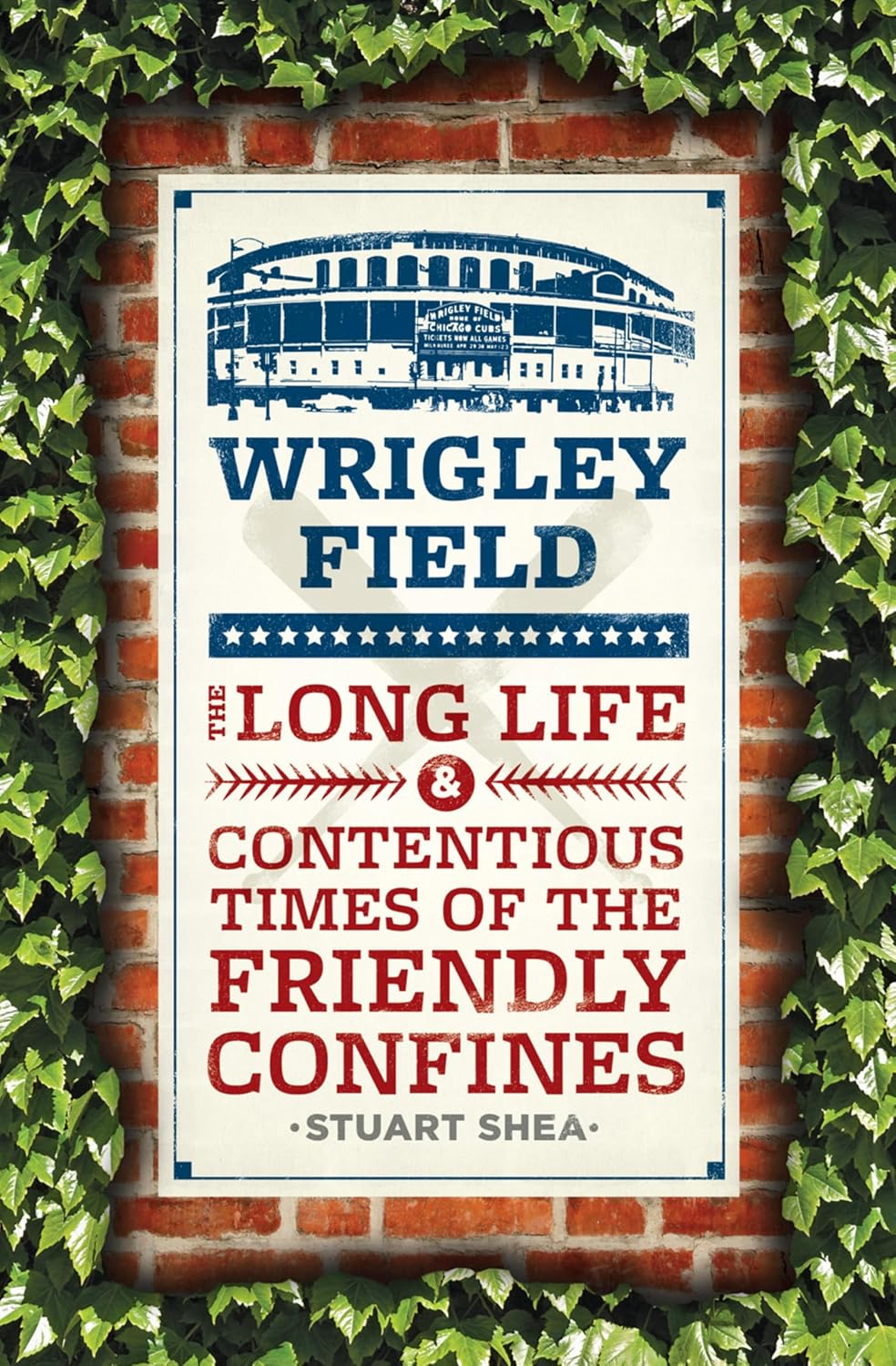
“One of the best books ever written about the Cubs, their home and the fans who flock there to watch them, win or lose.”—Rolling Stone
In spring 1914, a new ballpark opened in Chicago. Hastily constructed after epic political maneuvering around the city’s and organized baseball’s hierarchies, the new Weeghman Park (named after its builder, fast-food magnate Charley Weeghman) was home to the Federal Leagues Chicago Whales. The park would soon be known as Wrigley Field, one of the most emblematic and controversial baseball stadiums in America.
In this book, Stuart Shea provides a detailed and colorful chronicle of this living historic landmark and shows how the stadium has evolved to meet the shifting priorities of its owners and changing demands of its fans. While Wrigley Field today seems irreplaceable, we learn that from game one it has been the subject of endless debates over its future, its design, and its place in the neighborhood it calls home. To some, it is a hallowed piece of baseball history; to others, an icon of mismanagement and ineptitude. Shea deftly navigates the highs and lows, breaking through myths and rumors, in a book packed with facts, stories, and surprises that will captivate even the most fair-weather fan. From big money (the Ricketts family paid $900 million for the team and stadium in 2009), to exploding hot dog carts, to the curse-inducing goat, Shea uncovers the heart of the stadium’s history.
“More than any other American institution, baseball most wholeheartedly welcomes half-baked history and curdled lore. It’s fun, after all; what grinch wishes to poke at the tale of Babe Ruth’s called shot? But more often than not the real stories are even more delicious, and no one has gathered more of them than author Stuart Shea. His book is an unceasing delight.”—John Thorn, official historian, Major League Baseball and author of Baseball in the Garden of Eden
Editorial Reviews
Review
“Most ballpark books are like junk food―hundreds of empty calories of glossy photos and told-a-million-times anecdotes. They sate your appetite briefly without feeding your brain. But Stuart Shea’s Wrigley Field is a Thanksgiving feast for baseball fans. The book is saturated with culture and passion, flavor and spice, all lovingly created by a master chef. This is history to be savored: a winning combination of intimate knowledge, amazing detail, relevant context, and expert storytelling.” ― Gary Gillette, editor of The Baseball Encyclopedia
“Amid Wrigley Field’s birthday revels much will be reported about its vines, its scoreboard, its goat, its very origin—much of it not quite so. More than any other American institution, baseball most wholeheartedly welcomes half-baked history and curdled lore. It’s fun, after all; what grinch wishes to poke at the tale of Babe Ruth’s called shot? But more often than not the real stories are even more delicious, and no one has gathered more of them than author Stuart Shea. His book is an unceasing delight.” ― John Thorn, official historian, Major League Baseball and author of Baseball in the Garden of Eden
“Unlike any other venue, Wrigley Field has been a second home for generations of fans, a paragon of modern convenience turned baseball’s ultimate wayback machine, a status symbol for social climbers and corporate muscle alike. Shea’s book is the perfect history of the place that reflects Chicago’s past and future, its failures and its aspirations.” ― Christina Kahrl, cofounder of Baseball Prospectus
“One of the best books ever written about the Cubs, their home and the fans who flock there to watch them, win or lose.” ― Rolling Stone
“The 448-page book is packed with colorful anecdotes that are sure to keep any Chicago history buff or baseball fan—yes, even those who root for the South Side White Sox (or ‘Pale Hose,’ as Shea notes they are nicknamed)—glued to their bleacher seat.” ― Wrigleyville Nation
“You should read this book because of the history of wonderful stories and anecdotes about the team’s and the ballpark’s history, some of which is ‘contentious,’ as Shea’s title states, some of which is just colorful and fun, just as is the history of the neighborhood and city in which it resides.” ― Bleed Cubbie Blue
“Wrigley Field: The Long Life & Contentious Times of the Friendly Confines is a great reminder of what makes the ballpark so special, and why the Cubs remain so popular.” ― The Writer’s Journey
“Stuart Shea’s Wrigley Field: The Long Life and Contentious Times of the Friendly Confines deserves the location of honor on the nightstand of each and every Cubs fan, to be read a chapter or two at a time between Opening Day and the World Series.” ― Chicago Tribune
“Home of the Cubs, world’s greatest ballpark, Chicago’s largest beer garden, bucket list-worthy tourist attraction, field of (broken) dreams, enduring monument to enduring failure―Wrigley Field is all of these things, and of course so much more. Stuart Shea’s witty, informative, and deeply entertaining book gives the Friendly Confines the tribute it deserves.” — Dan Epstein, author of Big Hair and Plastic Grass: A Funky Ride Through Baseball and America in the Swinging ’70s
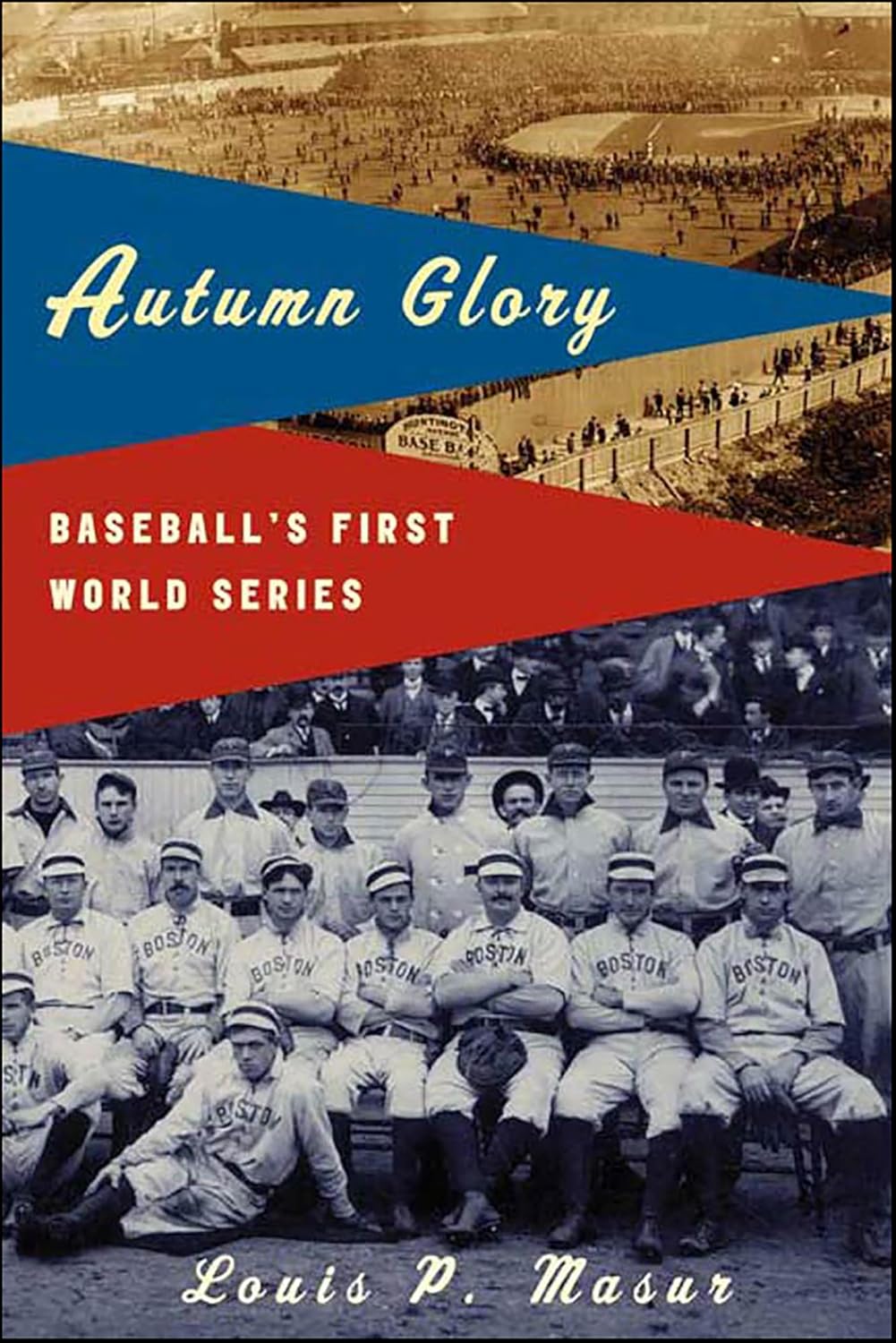
A suspenseful account of the glorious days more than a century ago when our national madness began, the first Major League Baseball World Series. A post-season series of games to establish supremacy in the major leagues was not inevitable in the baseball world. But in 1903 the owner of the Pittsburgh Pirates (in the well-established National League) challenged the Boston Americans (in the upstart American League) to a play-off, which he was sure his team would win. They didn’t—and that wasn’t the only surprise during what became the first World Series. In Autumn Glory, Louis P. Masur tells the riveting story of two agonizing weeks in which the stars blew it, unknown players stole the show, hysterical fans got into the act, and umpires had to hold on for dear life.
Before and even during the 1903 season, it had seemed that baseball might succumb to the forces that had been splintering the sport for decades: owners’ greed, players’ rowdyism, fans’ unrest. Yet baseball prevailed, and Masur tells the equally dramatic story of how it did so, in a country preoccupied with labor strife and big-business ruthlessness, and anxious about the welfare of those crowding into cities such as Pittsburgh and Boston (which in themselves offered competing versions of the American dream) . His colorful history of how the first World Series consolidated baseball’s hold on the American imagination makes us see what one sportswriter meant when he wrote at the time, “Baseball is the melting pot at a boil, the most democratic sport in the world.” All in all, Masur believes, it still is.
Editorial Reviews
Review
“This is a book that every baseball fan will enjoy. History-minded Americans will love it, too. It’s a marvelous look at the Americans of 1903. What a great way to celebrate the one-hundredth anniversary of the World Series!” –Thomas Fleming, author of The New Dealers’ War: F.D.R. and the War Within World War II
“Autumn Glory is a book to be savored in all seasons. Louis Masur vividly recreates a bygone year not only of immortals such as Cy Young, but also of forgotten diamond heroes with monikers such as Ginger Beaumont, Kitty Bransfield, and Noodles Hahn; a time when players rode to the stadium through cheering throngs in open barouches, and when, inning after inning, derby-hatted, cigar-smoking fans waved red parasols and belted out music-hall ballads until their throats were raw.” –William E. Leuchtenburg, William Rand Kenan, Jr. Professor Emeritus, University of North Carolina
“Louis Masur’s Autumn Glory is the best researched and most eloquent account of the first World Series yet written. He provides ample evidence why the first modern fall classic became a beloved American tradition.” –Glenn Stout, co-author of Red Sox Century
“Autumn Glory brings one back to those halcyon days when players and owners alike eschewed money for honor, and when Boston actually used to win the World Series. An invaluable resource for all fans of the game.” –Kevin Baker, author of Paradise Alley
“As the World Series turns a hundred years old this year, I can think of no better way to celebrate than reading Autumn Glory. Louis Masur drops us back a full century to relive the first World Series, and in his hands the games lose none of their excitement and flavor. The era comes vibrantly alive in this wonderful baseball book.” –Jules Tygiel, author of Past Time: Baseball as History
“In a perfect world, there would be a book this good about every World Series.” s20–Rob Neyer, author of Feeding the Green Monster
From the Inside Flap
“Autumn Glory is a book to be savored in all seasons. Louis Masur vividly recreates a bygone year not only of immortals such as Cy Young, but also of forgotten diamond heroes with monikers such as Ginger Beaumont, Kitty Bransfield, and Noodles Hahn; a time when players rode to the stadium through cheering throngs in open barouches, and when, inning after inning, derby-hatted, cigar-smoking fans waved red parasols and belted out music-hall ballads until their throats were raw.” William E. Leuchtenburg, William Rand Kenan, Jr. Professor Emeritus, University of North Carolina
“In a perfect world, there would be a book this good about every World Series.” Rob Neyer, author of Feeding the Green Monster
“Autumn Glory brings one back to those halcyon days when players and owners alike eschewed money for honor, and when Boston actually used to win the World Series. An invaluable resource for all fans of the game.” Kevin Baker, author of Paradise Alley
“As the World Series turns a hundred years old this year, I can think of no better way to celebrate than reading Autumn Glory. Louis Masur drops us back a full century to relive the first World Series, and in his hands the games lose none of their excitement and flavor. The era comes vibrantly alive in this wonderful baseball book.” Jules Tygiel, author of Past Time: Baseball as History
“Louis Masur s Autumn Glory is the best researched and most eloquent account of the first World Series yet written. He provides ample evidence why the first modern fall classic became a beloved American tradition.” Glenn Stout, co-author of Red Sox Century
“This is a book that every baseball fan will enjoy. History-minded Americans will love it, too. It s a marvelous look at the Americans of 1903. What a great way to celebrate the one-hundredth anniversary of the World Series!” Thomas Fleming, author of The New Dealers War: F.D.R. and the War Within World War II
Nixon’s White House counsel discusses the Bush-Cheney administration in thisNew York Timesbestseller: “Powerful . . . a riveting book.” —Los Angeles Times Book Review
Former White House counsel John Dean, with the unique viewpoint and expertise born of working for Richard Nixon during the Watergate scandal, here looks critically at the administration of George W. Bush and Dick Cheney, arguing that its worldview—and its tendency toward secrecy and deception—set America back decades, and may ultimately do more damage to the nation than Nixon at his worst.
“He has become a discerning connoisseur of presidential venality.” —The New York Times
“Few critics have as effectively put the disparate pieces together.” —Publishers Weekly
Editorial Reviews
Amazon.com Review
The most facile presidential comparison one could make for George W. Bush would be his father, who presided over a war in Iraq and a struggling economy. Some “neocons” reject the parallel and compare Bush to his father’s predecessor, Ronald Reagan, citing a plainspoken quality and a belief in deep tax cuts. But John Dean goes further back, seeing in Bush all the secrecy and scandal of Dean’s former boss, the notorious Richard Nixon. The difference, as the title of Dean’s book indicates, is that Bush is a heck of a lot worse. While the book provides insightful snippets of the way Nixon used to do business, it offers them to shed light on the practices of Bush. In Dean’s estimation, the secrecy with which Bush and Dick Cheney govern is not merely a preferred system of management but an obsessive strategy meant to conceal a deeply troubling agenda of corporate favoritism and a dramatic growth in unchecked power for the executive branch that put at risk the lives of American citizens, civil liberties, and the Constitution. Dean sets out to make his point by drawing attention to several areas about which Bush and Cheney have been tight-lipped: the revealing by a “senior White House official” of the identity of an undercover CIA operative whose husband questioned the administration, the health of Cheney, the identity of Cheney’s energy task force, the information requested by the bi-partisan 9/11 commission, Bush’s business dealings early in his career, the creation of a “shadow government”, wartime prisoners held at Guantanamo Bay, and scores more. He theorizes that the truth about these and many other situations, including the decision to go to war in Iraq, will eventually surface and that Bush and Cheney’s secrecy is a thus far effective means of keep a lid on a rapidly multiplying set of lies and scandals that far outstrip the misdeeds that led directly to Dean’s former employer resigning in disgrace. Dean’s charges are impassioned and more severe than many of Bush’s most persistent critics. But those charges are realized only after careful reasoning and steady logic by a man who knows his way around scandal and corruption. –John Moe
From the Publisher
Former White House counsel and New York Times bestselling author John Dean reveals how the Bush White House has set America back decades-employing a worldview and tactics of deception that will do more damage to the nation than Nixon at his worst.
About the Author
John W. Dean (b. 1938) served as White House counsel for President Richard Nixon from 1970 to 1973. During the Watergate scandal, his Senate testimony helped lead to Nixon’s resignation. Dean has written about Watergate in his New York Times bestsellers Blind Ambition and The Nixon Defense. Among his fourteen other books are the national bestsellers Worse Than Watergate, Conservatives Without Conscience, and Broken Government. A retired investment banker, Dean is now a columnist, commentator, and teacher in a continuing legal education program for attorneys, the Watergate CLE. Most recently, Dean held the Barry Goldwater Chair of American Institutions at Arizona State University. He is currently consulting on a Watergate television series under development for ABC Entertainment.
“A welcomed addition to the growing literature on the care of disabled Civil War veterans . . . cleverly conceived, ably crafted and eloquently written.” —R.B. Rosenburg, author ofLiving Monuments
In the wake of America’s Civil War, homeless, disabled, and destitute veterans began appearing on the sidewalks of southern cities and towns. In 1902 Kentucky’s Confederate veterans organized and built the Kentucky Confederate Home, a luxurious refuge in Pewee Valley for their unfortunate comrades. Until it closed in 1934, the Home was a respectable—if not always idyllic—place where disabled and impoverished veterans could spend their last days in comfort and free from want.
In My Old Confederate Home, Rusty Williams frames the lively history of the Kentucky Confederate Home with the stories of those who built, supported, and managed it: a daring cavalryman-turned-bank-robber, a senile ship captain, a prosperous former madam, and a small-town clergyman whose concern for the veterans cost him his pastorate. Each chapter is peppered with the poignant stories of men who spent their final years as voluntary wards of an institution that required residents to live in a manner which reinforced the mythology of a noble Johnny Reb and a tragic Lost Cause. Based on thorough research utilizing a range of valuable resources, including the Kentucky Confederate Home’s operational documents, contemporary accounts, unpublished letters, and family stories, My Old Confederate Home reveals the final, untold chapter of Kentucky’s Civil War history.
“Teems with humanity. Williams has a storyteller’s gist for making historical characters come alive . . . It offers a new angle on the South’s Lost Cause.” —Charles Reagan Wilson, author of The New Encyclopedia of Southern Culture
Editorial Reviews
Review
Won the Douglas Southall Freeman Award in 2011.
“My Old Confederate Home is a good story well told.”Gaines M. Foster, author of Ghosts of the Confederacy: Defeat, the Lost Cause, and the Emergence of the New South, 1865-1913
“Williams’s book is a welcomed addition to the growing literature on the care of disabled Civil War veterans and the Confederate soldiers’ home movement. He narrates a compelling, true story, cleverly conceived, ably crafted and eloquently written.”―R. B. Rosenburg, author of Living Monuments: Confederate Soldiers’ Homes in the New South
“Teems with humanity. Williams has a storyteller’s gist for making historical characters come alive. This well-researched account of the establishment of a Confederate veterans’ home in a state, Kentucky, that did not even support the Confederacy is a dramatic story of a diverse range of people who responded to the needs of Civil War veterans. It offers a new angle on the South’s Lost Cause.”―Charles Reagan Wilson, author of Baptized in Blood: The Religion of the Lost Cause, 1865-1920
“[My Old Confederate Home tells] of the nuances and “byway” stories involving the war – the personal stories, the oddities, the forgotten. . . . about a forgotten and overlooked aspect of the War Between the States.”Old Virginia Blog
“This well-written book is highly recommended to Civil War enthusiasts.” -Daily Oklahoman
“Based on the Kentucky Confederate Home’s operational documents, contemporary accounts, unpublished letters, family stories, and other valuable resources, My Old Confederate Home reveals an unwritten chapter of Kentucky’s Civil War history.” ―Joseph-Beth Newsletter
“Williams provides the history of this home and what happened during its existence. This well-written book is highly recommended to Civil War enthusiasts.” ―Benet Exton, The Oklahoman
“Rusty Williams’ definitive account of the Kentucky Confederate Home was written from extant original sources and documents . . . and is intended for both general readers and scholars.” ―Marion B. Lucas, Bowling Green Daily News
“Williams rekindles the significance of respecting veterans and honoring their contribution to history. He also emphasizes the importance of average Americans supporting veterans despite the political tensions and economic hardships that follow war. As the story of the Kentucky Confederate Home shows, caring for veterans is the first step to repairing an injured nation.” ―civilwar.com
“Rusty Williams’ My Old Confederate Home demonstrates how the Kentucky Confederate Home in Pewee Valley was forged and maintained through a mutually beneficial partnership between government and private organizations. By profiling a shining example of how societies can and should honor and care for veterans in need, it highlights important lessons for present and future generations.” ―cwba.com
“Freelance writer Rusty Williams has written the first history of the Kentucky Confederate Home, which operated in Pewee Valley, near Jefferson County, for thirty-two years during the early 1900s. . . .This book will provide some very worthwhile insight on the experiences the Confederate veteran might have had while living there.” ―Kentucky Ancestors
“Williams tells how Kentucky tried to provide some support for its needy Confederate veterans long after the cannons were quiet but while many of the older Rebel soldiers were still alive during the emotional “Lost Cause” era. This entertaining narrative utilizes the individual stories of many of the home’s benefactors, managers and residents.” ―Berkeley Scott, Kentucky Monthly
“Provide readers with an excellent account of efforts made by ex-Confederate who were business and political leaders in the state to provide a place for their comrades who had fallen on hard times.” ―Post and Courier
“This book is a real jewel for your Confederate Library, just as the Confederate home in Kentucky was the jewel of all the places that were set up across the southern veterans.” ―Lone Star Book Review
“Williams provides an excellent summarization about Confederate veterans’ organizations in Kentucky after the war.” ―Bits and Pieces
“This book is a real jewel for your Confederate library, just as the Confederate home in Kentucky was the jewel of all places that were set up across the south for southern veterans.” ―The Lone Star Book Review
“This interesting tale of late-19th-century Kentucky politics, the workings of Civil War veterans’ organizations, and the careers of institutionalized Civil War veterans is sure to hold your attention.” ―Civil War News
“William’s book teems with human interest stories that undergird an institutional history. My Old Confederate Home will find broad appeal among scholarly and popular audiences who have an interest in thepost-Civil War lives of Kentucky’s Confederate veterans, social welfare, the United Daughters of the Confederacy, and the mythology of the Lost Cause…Williams makes great strides in unraveling the Lost Cause mythology that encased the Kentucky Confederate Home, it’s inhabitants, and its supporters…Williams story and its lively characters illuminate Kentucky’s responses to its needy veterans and how these efforts ensured a proper place for the states’ citizen-soldiers.” ―H-Net Reviews
“…a fascinating read. . . . No library on Kentucky Civil War history will be complete without this book.”―The Journal of America’s Military Past
“Using detailed records of the home, Mr. Williams is able to cover the entire period of operation from inception to the death of the final Veteran. . . . an interesting and moving read.” ―DCV Today
“All readers…will appreciate Williams’s descriptive writing and colorful storytelling which brings his many subjects, and the time period in which they lived, to life.”―Register of the Kentucky Historical Society
“Williams reveals the final, untold chapter of Kentucky’s Civil War history.”―Appalachian News-Express
“Williams should be commended for his energetic and very readable history of one of the South’s most successful postwar efforts to provide solace and assistance to Confederate veterans as they ambled toward the grave.”―Journal of Southern History
“A useful introduction into the grassroots formation, organization, and management of Confederate homes. Throug his meticulous research and a cast of lively characters, Williams has indeed created a respectable place for Civil War veterans.”―West Virginia History
“This work is a captivating narrative and a fine addition to several burgeoning sub-fields in southern history, including the Lost Cause, social welfare, women’s history, and progressive reform.”―Louisiana History
From the Inside Flap
In the wake of America’s Civil War, hundreds of thousands of Confederate veterans trudged back to their homes in the South, where the nation whose ideals they had fought for no longer existed. Lingering war wounds, missing limbs, or the horrors of brutal warfare left some unable to care for themselves. Homeless, disabled, and destitute veterans began appearing on the sidewalks of southern cities and towns, unwanted and unsupported by the government.
Driven by compassion for their less fortunate comrades, in 1902 Kentucky’s Confederate veterans organized and built the Kentucky Confederate Home, a luxurious refuge that sheltered almost a thousand needful men who had worn the gray decades before. For three decades the Home was a respectable — if not always idyllic — place where invalid, decrepit, and impoverished veterans could spend their last days in comfort and security. Part military encampment and part rest home, the Home became a tourist destination and a living museum where twentieth-century schoolchildren could meet the men who marched at Shiloh or defended Atlanta.
In My Old Confederate Home: A Respectable Place for Civil War Veterans, Rusty Williams frames the lively history of the Kentucky Confederate Home through the stories of those who built, managed, and inhabited it: a daring cavalryman-turned-bank robber, a small-town clergyman whose concern for the veterans cost him his pastorate, a senile ship captain, a wealthy benefactress with a scandalous secret, and more.
Based on the Kentucky Confederate Home’s operational documents, contemporary accounts, unpublished letters, family stories, and other valuable resources, My Old Confederate Home reveals an unwritten chapter of Kentucky’s Civil War history. Each chapter is peppered with the poignant stories of men who spent their final years as voluntary wards of an institution that required residents to live in a manner which reinforced the mythology of a noble Johnny Reb and a tragic Lost Cause.
From the Back Cover
In the wake of America’s Civil War, hundreds of thousands of Confederate veterans trudged back to their homes in the South, where the nation whose ideals they had fought for no longer existed. Lingering war wounds, missing limbs, or the horrors of brutal warfare left some unable to care for themselves. Homeless, disabled, and destitute veterans began appearing on the sidewalks of southern cities and towns, unwanted and unsupported by the government.
Driven by compassion for their less fortunate comrades, in 1902 Kentucky’s Confederate veterans organized and built the Kentucky Confederate Home, a luxurious refuge that sheltered almost a thousand needful men who had worn the gray decades before. For three decades the Home was a respectable — if not always idyllic — place where invalid, decrepit, and impoverished veterans could spend their last days in comfort and security. Part military encampment and part rest home, the Home became a tourist destination and a living museum where twentieth-century schoolchildren could meet the men who marched at Shiloh or defended Atlanta.
In My Old Confederate Home: A Respectable Place for Civil War Veterans, Rusty Williams frames the lively history of the Kentucky Confederate Home through the stories of those who built, managed, and inhabited it: a daring cavalryman-turned-bank robber, a small-town clergyman whose concern for the veterans cost him his pastorate, a senile ship captain, a wealthy benefactress with a scandalous secret, and more.
Based on the Kentucky Confederate Home’s operational documents, contemporary accounts, unpublished letters, family stories, and other valuable resources, My Old Confederate Home reveals an unwritten chapter of Kentucky’s Civil War history. Each chapter is peppered with the poignant stories of men who spent their final years as voluntary wards of an institution that required residents to live in a manner which reinforced the mythology of a noble Johnny Reb and a tragic Lost Cause.
About the Author
Rusty Williams, a freelance writer and historian, has written for the Dallas Morning News, Fort Worth Star-Telegram, San Antonio Express-News and the Associated Press. He lives in Dallas, Texas.
A history of one of the most important battles waged on American soil that changed the course of the Civil War and helped decide a presidential election.
In the North, a growing peace movement and increasing criticism of President Abraham Lincoln’s conduct of the war threatened to halt US war efforts to save the Union. On the morning of July 22, 1864, Confederate forces under the command of General John Bell Hood squared off against the Army of the Tennessee led by General James B. McPherson just southeast of Atlanta. Having replaced General Joseph E. Johnston just four days earlier, Hood had been charged with the duty of reversing a Confederate retreat and meeting the Union army head on. The resulting Battle of Atlanta was a monstrous affair fought in the stifling Georgia summer heat. During it, a dreadful foreboding arose among the Northerners as the battle was undecided and dragged on for eight interminable hours. Hood’s men tore into US forces with unrelenting assault after assault. Furthermore, for the first and only time during the war, a US army commander was killed in battle, and in the wake of his death, the Union army staggered. Dramatically, General John “Black Jack” Logan stepped into McPherson’s command, rallied the troops, and grimly fought for the rest of the day. In the end, ten thousand men—one out of every six—became casualties on that fateful day, but the Union lines had held. Having survived the incessant onslaught from the men in grey, Union forces then placed the city of Atlanta under siege, and the city’s inevitable fall would gain much-needed, positive publicity for Lincoln’s reelection campaign against the peace platform of former Union general George B. McClellan. Renowned Civil War historian Gary Ecelbarger is in his element here, re-creating the personal and military dramas lived out by generals and foot soldiers alike, and shows how the battle was the game-changing event in the larger Atlanta Campaign and subsequent March to the Sea that brought an eventual end to the bloodiest war in American history. This is gripping military history at its best and a poignant narrative of the day Dixie truly died.
The decisive clash in Sherman’s 1864 Atlanta campaign is the battle recounted in Ecelbarger’s history. Precipitated by Confederate commander John Bell Hood’s all-out gamble to reverse the hitherto inexorable Union advance, the fight escalated into a characteristically bloody Civil War fray that killed or wounded about 12,000 men. From describing Hood’s attack plan, Ecelbarger launches into its initiation with a flank attack and climax with a burst through the Union center that seemed to deliver Southern victory––until Union General John Logan (memorialized in a prominent Chicago equestrian statue) galloped into history and bronze by repulsing the rebels. Narrated in increments of regiment-on-regiment collisions that aggregated into the battle, Ecelbarger’s account includes guide maps to the combat and survivors’ testimonies to scenes of its carnage. In control of his sources, Ecelbarger acquits himself well as a Civil War historian, enabling conceptualization of the battle’s course and visualization of its ground—a significant attribute of this work to buffs, since obliteration of the battlefield by urban growth hamstrings imagining the event except through such able presentations as Ecelbarger’s. –Gilbert Taylor
Review
Advance Praise for THE DAY DIXIE DIED
“[The] Battle of Atlanta emerges as one of the Civil War’s more dramatic engagements in this vivid re-creation…Ecelbarger paints a fine panorama of a seldom-sung but rousing epic.”
—Publishers Weekly
“The author places the reader on the battlefield as an observer watching the struggle of both sides during that hot and sultry day in 1864…This is an excellent book to add to your Civil War battles and campaigns book shelf.”
—The Lone Star Book Review, WOW! rated
“Noted Civil War historian Gary Ecelbarger has written the definitive study of the Battle of Atlanta, the climactic encounter in a campaign that cemented Abraham Lincoln’s prospects for reelection in 1864 and doomed the Confederacy to defeat. In this deeply researched work, Ecelbarger not only provides the clearest and most detailed account ever written of the battle itself, but he also explains clearly and convincingly what was at stake. His analyses of the strengths and foibles of the leading figures in the battle are exceptionally insightful, and his treatment of the suffering of the men in the ranks most poignant.”
—Peter Cozzens, author of Shenandoah 1862: Stonewall Jackson’s Valley Campaign
Praise for THE GREAT COMEBACK
“Ecelbarger, a Civil War historian and Lincoln scholar, presents a side of Lincoln not frequently seen: a politician on the make, carefully tailoring his message to various audiences.”
—Booklist
“Artfully shows how, from a career in cinders, Lincoln rose in a mere two years to seize the presidential nomination in May 1860. . . . Ecelbarger’s scholarship is sound, his prose enthralling.”
—Publishers Weekly
“This is a rousing—yet authoritatively researched—account of one of the most dramatic, unlikely, and history-altering presidential conventions ever. . . . Gary Ecelbarger [emerges] as a major force in Lincoln scholarship.”
—Harold Holzer, author of Lincoln: President-Elect
“Ecelbarger offers a lively and challenging explanation of Lincoln’s rise to power.”
—Daniel W. Stowell, editor of The Papers of Abraham Lincoln
“With impressive research and engaging prose Ecelbarger shows a fact of Lincoln’s rise to the presidency that has never before been explored and in the process weaves a tale that is as interesting as it is inspiring.”
—Steven E. Woodworth, author of Nothing but Victory: The Army of the Tennessee, 1861–1865
Praise for BLACK JACK LOGAN
“[Gary Ecelbarger’s] research is full and exhaustive, his judgments mature, and his narrative style engaging. The result is one of those biographies that cannot help but be good.”
—William C. Davis, editor of The History Book Club Review