Posted in #History

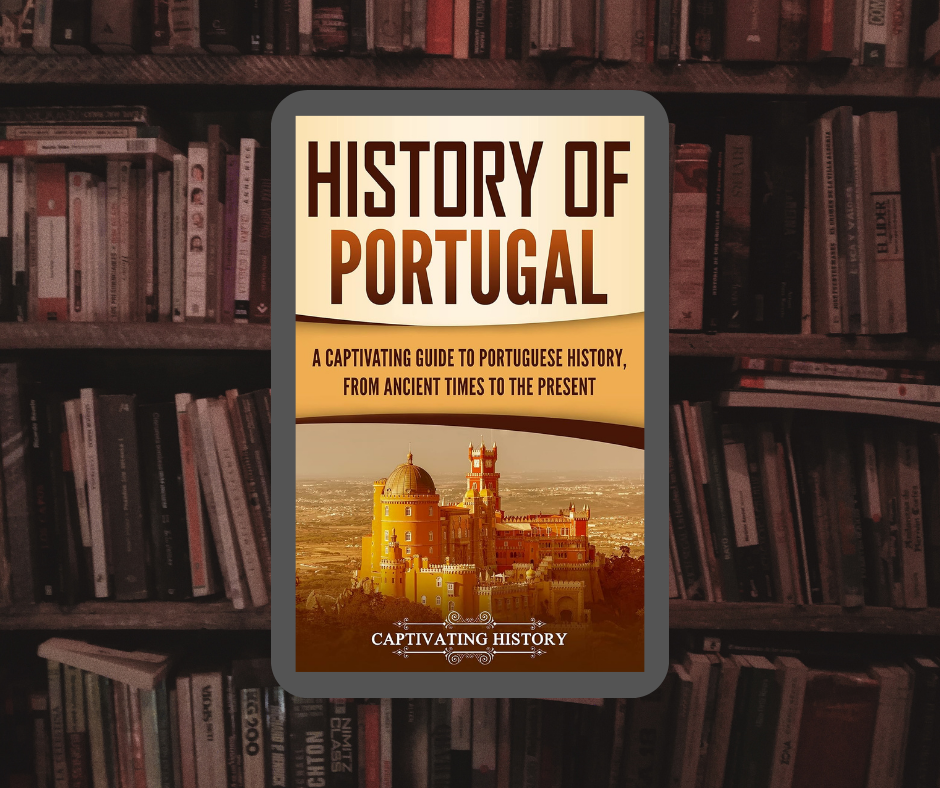
History of Portugal

A Captivating Guide to Portuguese History from Ancient Times to the Present (European Countries)

Did you know modern-day Lisbon, the capital of Portugal, is the first European city built with seismic safety in mind?

And there is a very good reason for that! In 1755, Portugal was hit by an earthquake that would measure nine on the future Richter scale.

Portugal, which is located in the Iberian Peninsula, has a rich history that dates to prehistoric times. The first settlers left amazing art behind in the form of rock carvings and rock monoliths. These first peoples never left their country but were integrated into the many societies that came to Portugal over time. There were Phoenician traders, Romans, Germanic tribes, Muslims from North Africa, and Hispanic peoples. This mix of ethnicities resulted in a unique language and culture of the medieval Kingdom of Portugal. One might even say it influenced the modern-day Portuguese Republic as well.

Portugal is probably best known for exploring the world during the Age of Discovery. However, the history of mainland Portugal is rarely described outside of the country. The Age of Discovery is only briefly touched upon for this reason. There are many other fascinating things to talk about instead. These topics might be lesser known to readers. This book aims to familiarize English speakers. It presents the events and personas that built the Portuguese kingdom. It also highlights its overseas empire and the state that Portugal is today.

Instead of presenting dry facts, the book’s pages include interesting facts. They also contain historical events that are little known to the world outside of Portugal itself. In this book, you will learn:

  • Who were the first people that inhabited the Iberian Peninsula?
  • What was the early culture and religion of the peninsula?
  • Which civilization first discovered the shores of Portugal?
  • How did trade with the Phoenicians develop the culture of the indigenous people?
  • How did the Carthaginian and Roman wars shape the Iberian Peninsula?
  • Why did the Germanic tribes invade the peninsula?
  • Did the Iberian Peninsula thrive under Islamic rule?
  • Why did the Christian kings of the north launch the Iberian Reconquista?
  • How did Afonso I form the medieval Kingdom of Portugal?
  • How did the House of Avis rise to power and start the golden age of Portugal?
  • Why has Portugal always struggled to preserve its independence?
  • What role did the House of Braganza play in the restoration of Portuguese independence?
  • How did the empire end, and how did Portugal become a republic?

History, #Reviews, #WorldHistory,

Follow on Fediverse

BookReviews
BookReviews

I’m a Mom, a Grandmom, and a Veteran. Nothing scares me! That’s the saying on my favorite T Shirt. I’m enjoying life too much to let the little things slow me down. If you can’t tell from my Avatar, I live in Florida where I enjoy the sunshine and endure the hurricanes with good grace. Sometimes you have to take the bad with the good!

275 posts
4 followers
Posted in #History

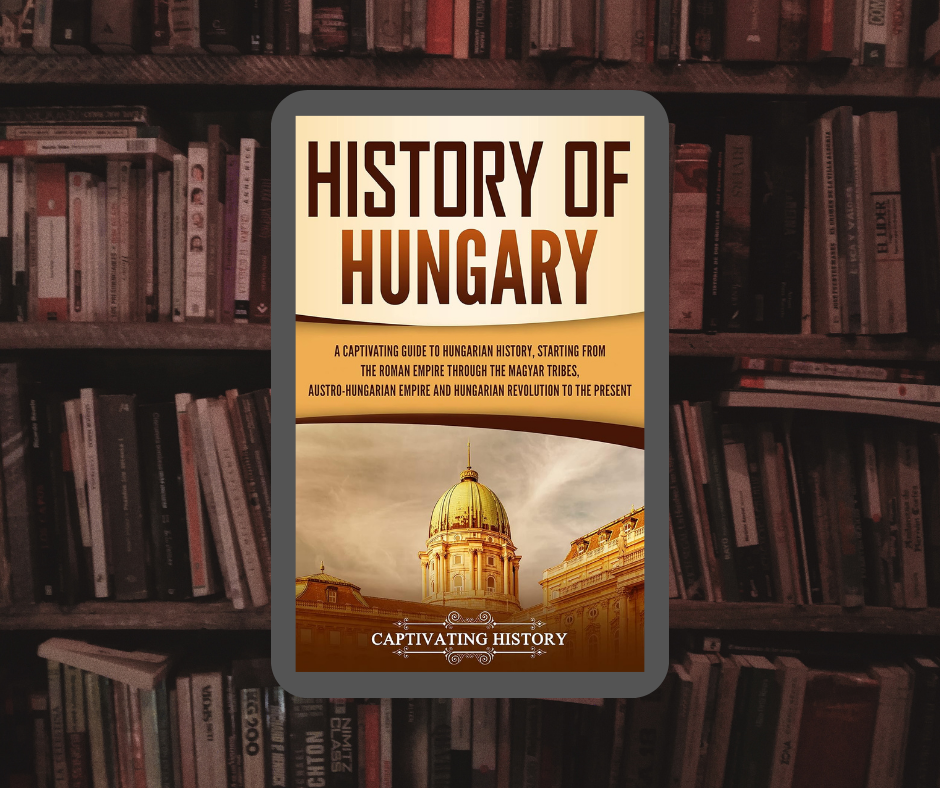
History of Hungary

A Captivating Guide to Hungarian History, Starting from the Roman Empire through the Magyar Tribes, Austro-Hungarian Empire and Hungarian … to the Present (European Countries)

Did you know that at one point in history, Hungary was considered one of the greatest powers in Europe?

Hungary is more than just vampire stories and cheesy violin-playing waiters named “Laszlo.” It has a rich history that goes back to the first wild Magyar horsemen, who arrived there in the late 9th century. For a time, the Magyars were both mercenaries and raiders, a horse-bound version of the Vikings in France and Britain. They terrorized the populations of Austria, Germany, and even Italy and eastern France.

Since the time of the Magyars, Hungary has been an important crossroads of goods, ideas, and armies. For a considerable time, about two-thirds of Hungary was controlled by the Ottoman Empire and the Austrian Empire, and that occupation had a serious economic, military, and cultural impact on the country.

In 1867, in response to the growing power of Prussia (the German-speaking state around which modern Germany was formed) and Russia, the Austrian Habsburg emperor offered its very independent-minded province of Hungary an “equal share” of the empire. The Austro-Hungarian Empire was born.

After the Austro-Hungarian defeat in WWI, Hungary became an independent nation. Unfortunately, its location makes it prey to the larger powers in the area, and during WWII, Hungary allied with Hitler. Following the Soviet invasion during the war, Hungary became a hardline communist state under Soviet control.

The story of the 1956 Hungarian Revolution is a sad one, but in 1989, Hungary broke free from Soviet/Russian influence. Since that time, the country has attempted to walk a fine line between the West and the East.

Inside Captivating History’s History of Hungary, you’ll discover:

  • The nomadic clans of the Magyar people who moved from central Asia into the areas we call Hungary today and its surroundings
  • How the Magyars rapidly changed from a semi-nomadic tribal organization, who terrified the people so much that some prayed to God to relieve them of the “curse of the Magyars” in much the same way that Western monks prayed from relief from the Vikings, to a settled Christian kingdom in the early 1000s.
  • That the first king of a unified Hungary is now the patron saint of the nation, Saint Stephen.
  • That despite his “saintliness,” Stephen often tortured his enemies and had their eyes gouged out
  • The story of Matthias I, known as the “Raven King” or “Matthias Corvinus” for his symbol and his belief that his family had Roman roots in the aristocrat Corvinii family of ancient Rome.
  • The dark day of August 29th, 1526, when the Hungarians were defeated by the Ottomans at Mohács, which changed Hungarian history forever.
  • How the Austro-Hungarian Empire began
  • Hungary’s part in WWI, WWII, and the Holocaust
  • The revolt of 1956
  • The end of communism in 1989

History, #Reviews, #WorldHistory,

Follow on Fediverse

BookReviews
BookReviews

I’m a Mom, a Grandmom, and a Veteran. Nothing scares me! That’s the saying on my favorite T Shirt. I’m enjoying life too much to let the little things slow me down. If you can’t tell from my Avatar, I live in Florida where I enjoy the sunshine and endure the hurricanes with good grace. Sometimes you have to take the bad with the good!

275 posts
4 followers
Posted in #History

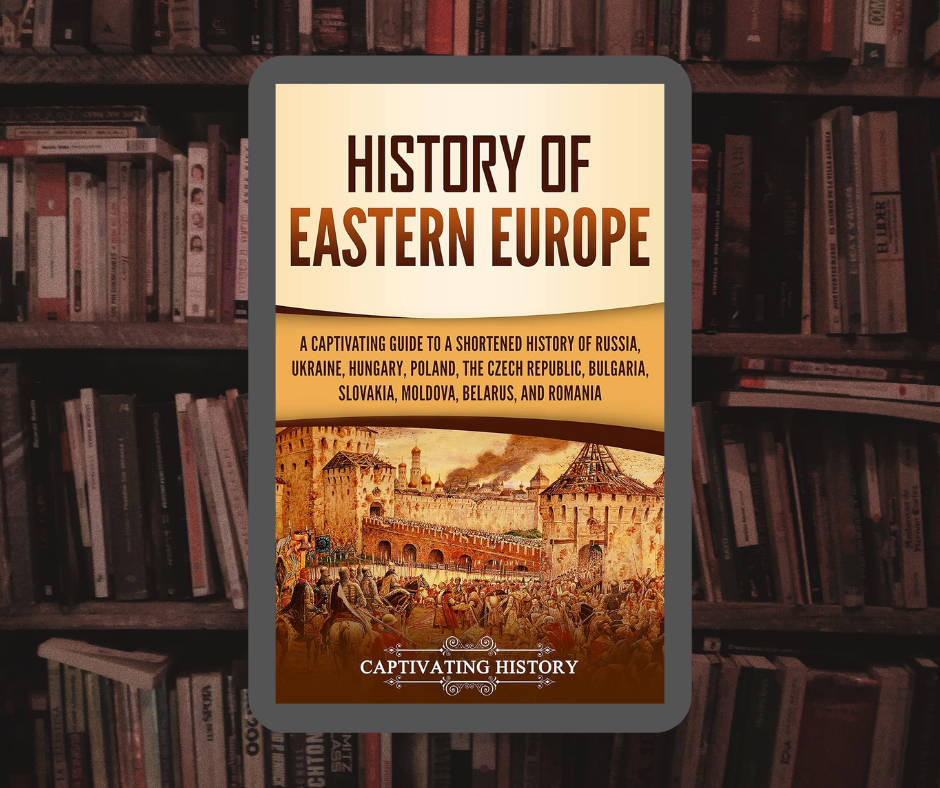
History of Eastern Europe

A Captivating Guide to a Shortened History of Russia, Ukraine, Hungary, Poland, the Czech Republic, Bulgaria, Slovakia, Moldova, Belarus, and Romania (European Countries)

How much Eastern European history do you know?

The story of Eastern Europe is one of successes and failures, competing interests, and the rise and fall of states and empires. The ancient Greek and Roman empires knew the importance of Eastern Europe for trade and settlement. Later, during the Migration Period, also known as the “Barbarian Invasions,” Eastern Europe became the stomping grounds for many people groups. The Visigoths, Huns, Slavs, and central Asian Turkic tribes like the Avars and Khazars all made their way into Eastern Europe.

With so many people moving in, the first states started to rise. Some of them would break apart as soon as they started, while others would form full-fledged empires. The medieval period would see some of the greatest empires of European history, like Kievan Rus, the Bulgarian Empire, Serbia, and the German Crusader states. By the early modern period, these great states would be replaced by Russia, the Polish-Lithuanian Commonwealth, and the Ottoman Empire.

In the coming centuries, the rise of Russia, Austria, and Prussia would spell doom for the Polish-Lithuanian Commonwealth, and the Ottomans would keep pressing into Eastern Europe. The 19th century would lay the foundations for the outbreak of World War I, which would itself lead to World War II. In the aftermath, Eastern Europe became part of the Eastern Bloc, which was dominated by the USSR until the fall of communism nearly five decades later. This book extends past contemporary histories of Eastern Europe, which usually end at the fall of the Berlin Wall, to cover more recent events, including the conflicts in Bosnia and Kosovo and the 2014 Crimean crisis.

In this book, you will learn about:

  • The Greek and Roman influence in Eastern Europe
  • The Migration Period, aka the “Barbarian Invasions”
  • Charlemagne and the Holy Roman Empire
  • The Mongol invasions
  • Christian Europe vs. the Ottoman Empire
  • The fall of Constantinople
  • The rise of Russia and its famous rulers, like Ivan the Terrible and Catherine the Great
  • The path to World War I and World War II
  • The Jewish experience in Eastern Europe
  • The Soviet Union and the Eastern Bloc
  • The fall of the Berlin Wall and the end of communism
  • The conflicts in Bosnia and Kosovo
  • The 2014 Russian annexation of Crimea

History, #Reviews, #WorldHistory,

Follow on Fediverse

BookReviews
BookReviews

I’m a Mom, a Grandmom, and a Veteran. Nothing scares me! That’s the saying on my favorite T Shirt. I’m enjoying life too much to let the little things slow me down. If you can’t tell from my Avatar, I live in Florida where I enjoy the sunshine and endure the hurricanes with good grace. Sometimes you have to take the bad with the good!

275 posts
4 followers
Posted in #History

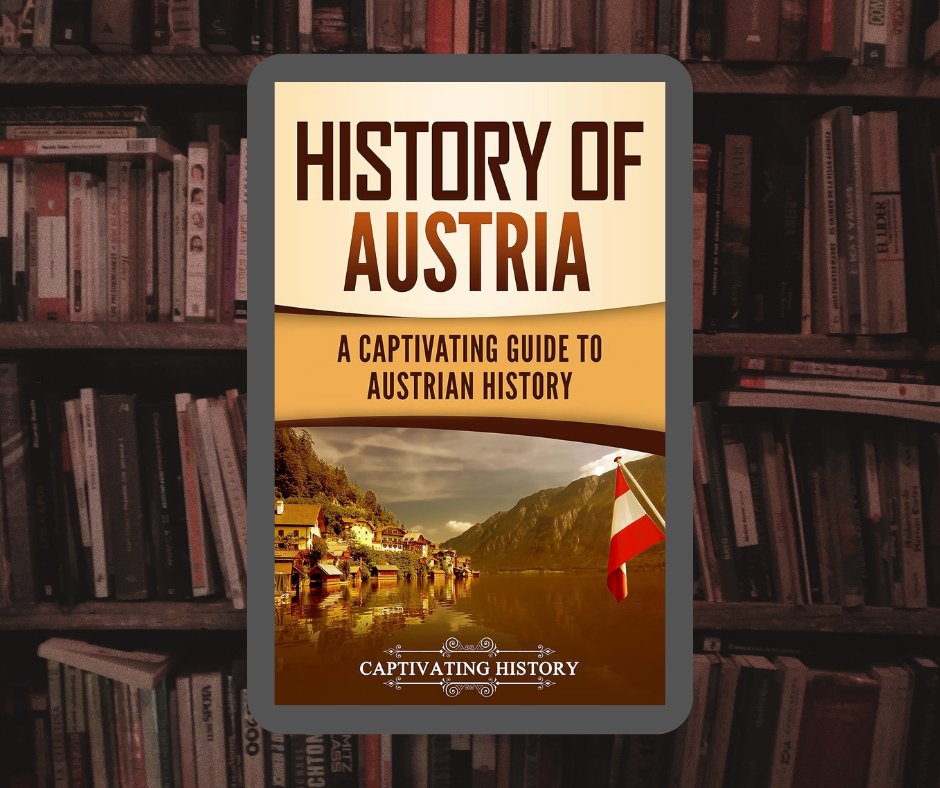
History of Austria

A Captivating Guide to Austrian History (European Countries)

If you want to discover the captivating history of Austria, then keep reading…

When Austrian President Franz Jonas visited the Vatican in 1971, Pope Paul VI named Austria “the Island of the Blessed.” He did so to emphasize Austria’s steep recovery. Only twenty-five years had passed since the end of the Second World War. Austria was already one of the most prosperous European countries.

Austria was always a rich country. During the times of its Habsburg rulers, it certainly was. But after the dissolution of the Austro-Hungarian Empire, Austria was lost between two worlds—its German heritage and its multi-ethnic nation. Therefore, Nazi Germany easily hijacked Austria. It integrated it into its anti-Semitic scheme and made it defy the whole Western world. Austria played a significant role in the atrocities of World War II. Surprisingly, it managed to recover and rise above much quicker than anyone would expect.

Austria began as the Eastern March. Through the rise of its ruling Habsburg dynasty, it faced many ideological and ethnic wars. Despite these challenges, Austria maintained its unique personality. However, it never really had a strictly defined identity. It is no wonder many scholars like to describe the history of Austria as one without a nation. In modern society, it is not always clear how a country could exist without a nation. If you are curious, continue reading to understand the complex series of events that led to the foundation of modern-day Austria. This will also help you grasp the modern Austrian identity.

Read Captivating History’s History of Austria to discover the incredible impact this small country had on central Europe, as well as:

  • When Austria was first mentioned by its name Österreich
  • The Roman Lime and how it related to Austria
  • The Babenbergs, the earliest rulers of Austria
  • How the Habsburgs took over the rule
  • What A.E.I.O.U. stands for and how it translates to the divine right to rule
  • Learn all about the Habsburgs as Holy Roman emperors
  • How Austria dealt with the Reformation and the Counter-Reformation
  • The enlightened rulers of the Habsburg Empire
  • How the dual monarchy of Austria-Hungary came to be
  • Learn more about the revolution in central Europe and the rise of the Slavs
  • Who shot Franz Ferdinand and how the Great War really started
  • How Austria joined Germany and became a Nazi state
  • Learn about the steep rise of Austria as one of the richest and most socially secure European states

#History, #Reviews, #WorldHistory,

Follow on Fediverse

BookReviews
BookReviews

I’m a Mom, a Grandmom, and a Veteran. Nothing scares me! That’s the saying on my favorite T Shirt. I’m enjoying life too much to let the little things slow me down. If you can’t tell from my Avatar, I live in Florida where I enjoy the sunshine and endure the hurricanes with good grace. Sometimes you have to take the bad with the good!

275 posts
4 followers
Posted in #History

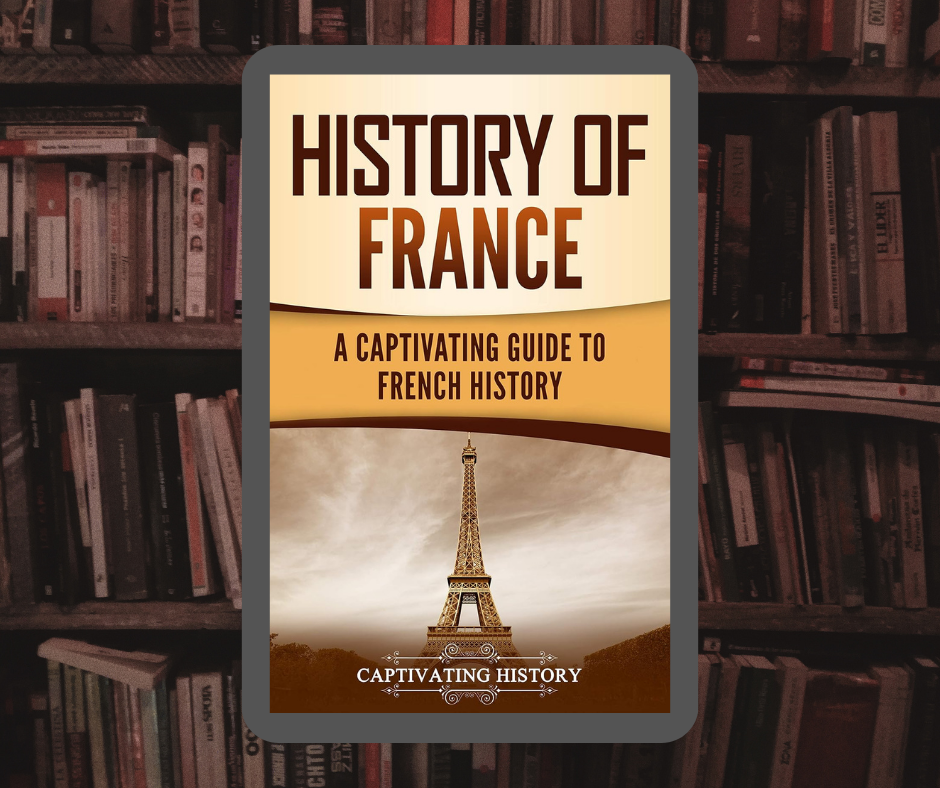
History of France

A Captivating Guide to French History (European Countries)

If you want to discover the influential and captivating history of France, then read on…

Free History BONUS Inside!

France has influenced the course of history in Europe and the world for centuries. France is considered one of the world’s most beautiful countries. It is home to some of the world’s most visited tourist locations. France has enthralled and fascinated the people who’ve discovered its allure. In many ways, the history of France encompasses both the good and bad in the human character.

The French have rightly prided themselves on their food, fashion, painting, sculpture, theater, films, and literature, among much else. The names Escoffier, Saint-Laurent, Monet, Rodin, Moliere, Truffaut, and Voltaire are known throughout the world. The famous Eiffel Tower is a symbol of France. It is recognized by people even in the most remote places of the globe. However, there is so much more to the history of France than escargot, wine, Impressionism, and movies. In this book, you’ll learn the history of France and of the French. Their history is one of the most fascinating. It is also frightening and inspiring.

In History of France: A Captivating Guide to French History, you will discover topics such as:

  • The simple facts about France—its population, economy, and geography
  • The surprisingly advanced world of the Gauls and their famous leader Vercingetorix, who waged a bloody war against the Romans and Julius Caesar
  • The great emperor Charlemagne, who created the largest and strongest military and the greatest empire after the fall of Rome and who was also the first “Holy Roman
  • The legendary Joan of Arc, the teenager who victoriously inspired the armies of France against the English in the 15th century
  • The amazing world of Louis XIV and his beautiful and grandiose Palace of Versailles
  • The bloody, inspiring struggle for freedom that was the French Revolution and how it still influences revolutions and politics today
  • The brilliant Napoleon Bonaparte, the Corsican-born “foreigner” who built an empire using the force of his will and who was ahead of his time, enacting military tactics that are still studied today in military academies around the world
  • The tragic Franco-Prussian War and how it led to the bloody wars of the 20th century in Europe
  • France’s brave role in World War I
  • The tragedy of WWII, the French Resistance, and collaboration
  • The internal struggles of France since the end of the Second World War
  • And much more!

#History, #Reviews, #WorldHistory,

Follow on Fediverse

BookReviews
BookReviews

I’m a Mom, a Grandmom, and a Veteran. Nothing scares me! That’s the saying on my favorite T Shirt. I’m enjoying life too much to let the little things slow me down. If you can’t tell from my Avatar, I live in Florida where I enjoy the sunshine and endure the hurricanes with good grace. Sometimes you have to take the bad with the good!
275 posts
4 followers