

Posted in #BookTours

America’s Women: 400 Years of Dolls, Drudges, Helpmates, and Heroines (P.S.)

Rich in detail, filled with fascinating characters, and panoramic in its sweep, this magnificent, comprehensive work tells for the first time the complete story of the American woman from the Pilgrims to the 21st-century

In this sweeping cultural history, Gail Collins explores the transformations, victories, and tragedies of women in America over the past 300 years. As she traces the role of females from their arrival on the Mayflower through the 19th century to the feminist movement of the 1970s and today, she demonstrates a boomerang pattern of participation and retreat.

In some periods, women were expected to work in the fields and behind the barricades—to colonize the nation, pioneer the West, and run the defense industries of World War II. In the decades between, economic forces and cultural attitudes shunted them back into the home, confining them to the role of moral beacon and domestic goddess. Told chronologically through the compelling true stories of individuals whose lives, linked together, provide a complete picture of the American woman’s experience, Untitled is a landmark work and major contribution for us all.

Editorial Reviews

Amazon.com Review

Well researched and well written, America’s Women: 400 Years of Dolls, Drudges, Helpmates, and Heroines is a powerful and important book. Starting with Pocahontas and Eleanor Dare (the first female colonist), this lively and fascinating history records the changes in American women’s lives and the transformations in American society from the 1580s through the 2000s.

A history of the oft-marginalized sex must often draw from diaries and journals, which were disproportionally written by whites; as a result, African-American and Native American women are not as well represented as white in the earlier chapters of America’s Women. However, Gail Collins writes about women of many races and ethnicities, and in fact provides more information about Native Americans, African-Americans, and Chinese, Jewish, and Italian immigrants than some general U.S. history books. She writes about rich and poor, young and old, urban and rural, slave and slave-owner, athlete and aviatrix, president’s wife and presidential candidate–and, of course, men and women. And some of these women–from the justly famous, like Clara Barton and Harriet Tubman, to the undeservedly obscure, like Elizabeth Eckford and Senator Margaret Chase Smith–will not only make any woman proud to be a woman, they will make any American proud to be American.

An editor at the New York Times, Gail Collins has also written Scorpion Tongues: Gossip, Celebrity, and American Politics and, with Dan Collins, The Millennium Book–Cynthia Ward

From Booklist

In a vibrant history of American women that is as vast and varied as the nation itself, Collins elegantly and eruditely celebrates the hard-won victories, overwhelming obstacles, and selfless contributions of a captivating array of influential women. Chronicling issues both critical and obscure, Collins demonstrates an uncommon appreciation of commonplace subjects, taking a “you are there” approach to illuminate the extraordinary challenges faced by pioneer women, such as needing to provide diapers for their babies, or to empathize with a young Pilgrim woman faced with forging a life in a hostile wilderness. From the first English child born in the “new world” to the birth of the “second wave” of feminism, the characters and subjects that have formed, and informed, women’s current status are presented from a broad perspective and personal viewpoint to create a thoroughly readable, often revelatory, and intimately refined account of the philosophical concepts and practical considerations that embody the past, enable the present, and empower the future of American women. Carol Haggas
Copyright © American Library Association. All rights reserved

Review

“Though America’s Women is an easy and entertaining read, it also fulfills the radical promise of women’s history.”

Posted in #BookTours

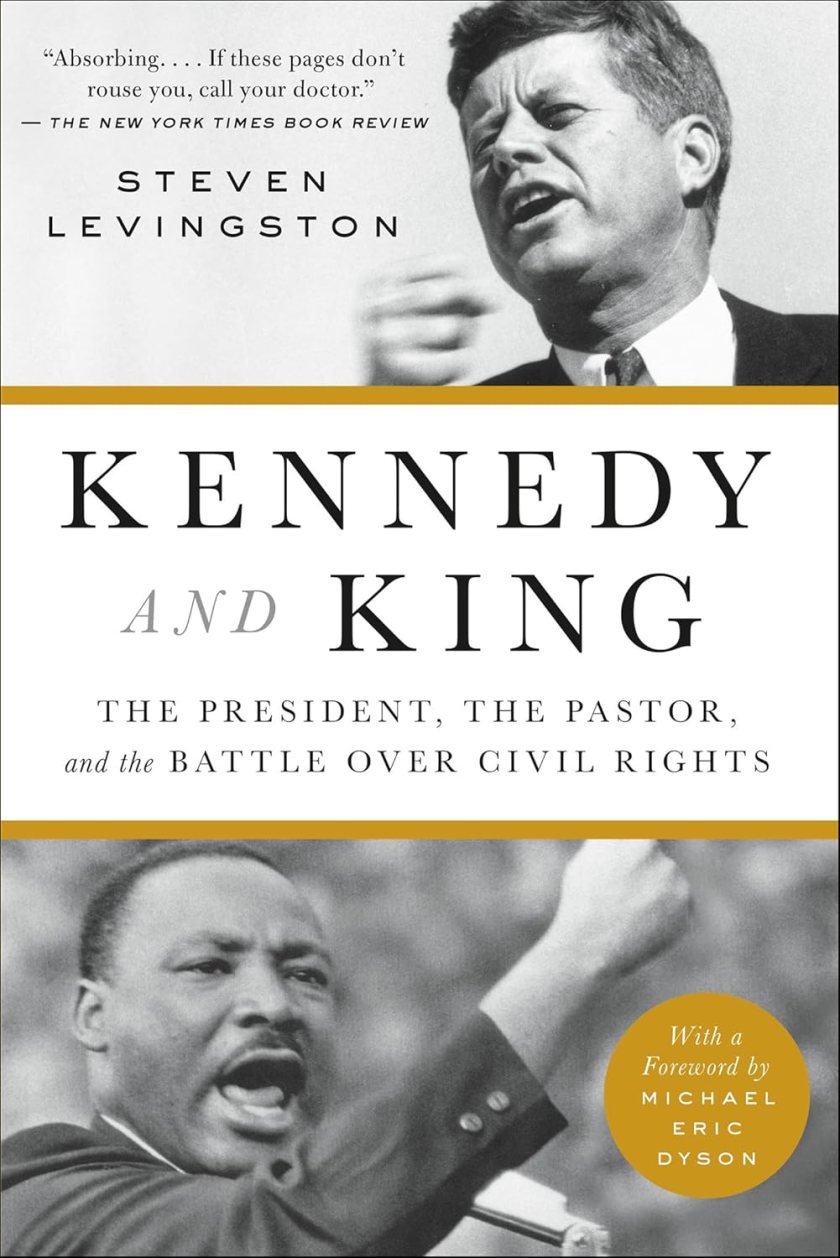
Kennedy and King: The President, the Pastor, and the Battle over Civil Rights

New York Times Editors’ Choice Pick

Kennedy and King is an unqualified masterpiece of historical narrative . . . A landmark achievement.” — Douglas Brinkley, New York Times bestselling author of Rosa Parks
Kennedy and King traces the emergence of two of the twentieth century’s greatest leaders, their powerful impact on each other and on the shape of the civil rights battle between 1960 and 1963. These two men from starkly different worlds profoundly influenced each other’s personal development. Kennedy’s hesitation on civil rights spurred King to greater acts of courage, and King inspired Kennedy to finally make a moral commitment to equality. As America still grapples with the legacy of slavery and the persistence of discrimination, Kennedy and King is a vital, vivid contribution to the literature of the Civil Rights Movement.

Continue reading “Kennedy and King: The President, the Pastor, and the Battle over Civil Rights”
Posted in #BookTours

The Anglo-Saxons: A History of the Beginnings of England: 400 – 1066 

A sweeping and original history of the Anglo-Saxons by national bestselling author Marc Morris.

Sixteen hundred years ago Britain left the Roman Empire and swiftly fell into ruin. Grand cities and luxurious villas were deserted and left to crumble, and civil society collapsed into chaos. Into this violent and unstable world came foreign invaders from across the sea, and established themselves as its new masters.

The Anglo-Saxons traces the turbulent history of these people across the next six centuries. It explains how their earliest rulers fought relentlessly against each other for glory and supremacy, and then were almost destroyed by the onslaught of the vikings. It explores how they abandoned their old gods for Christianity, established hundreds of churches and created dazzlingly intricate works of art. It charts the revival of towns and trade, and the origins of a familiar landscape of shires, boroughs and bishoprics. It is a tale of famous figures like King Offa, Alfred the Great and Edward the Confessor, but also features a host of lesser known characters – ambitious queens, revolutionary saints, intolerant monks and grasping nobles. Through their remarkable careers we see how a new society, a new culture and a single unified nation came into being.

Drawing on a vast range of original evidence – chronicles, letters, archaeology and artefacts – renowned historian Marc Morris illuminates a period of history that is only dimly understood, separates the truth from the legend, and tells the extraordinary story of how the foundations of England were laid.

Continue reading “The Anglo-Saxons: A History of the Beginnings of England: 400 – 1066 “
Posted in #BookTours

The Cherokee Diaspora: An Indigenous History of Migration, Resettlement, and Identity

The Cherokee are one of the largest Native American tribes in the United States, with more than three hundred thousand people across the country claiming tribal membership and nearly one million people internationally professing to have at least one Cherokee Indian ancestor. In this revealing history of Cherokee migration and resettlement, Gregory Smithers uncovers the origins of the Cherokee diaspora and explores how communities and individuals have negotiated their Cherokee identities, even when geographically removed from the Cherokee Nation headquartered in Tahlequah, Oklahoma. Beginning in the eighteenth century, the author transports the reader back in time to tell the poignant story of the Cherokee people migrating throughout North America, including their forced exile along the infamous Trail of Tears (1838–39). Smithers tells a remarkable story of courage, cultural innovation, and resilience, exploring the importance of migration and removal, land and tradition, culture and language in defining what it has meant to be Cherokee for a widely scattered people.

Continue reading “The Cherokee Diaspora: An Indigenous History of Migration, Resettlement, and Identity”
Posted in #BookTours

The American Revolution on Long Island (Military)

A history of the Revolutionary War and British occupation in this part of New York, from the Culper spy ring to the prison ships where thousands died.

 The American Revolution sharply divided families and towns on New York’s Long Island. Washington’s defeat at the Battle of Long Island in August 1776 started seven years of British occupation—and Patriot sympathizers were subject to loyalty oaths, theft of property, and the quartering of soldiers in their homes. 

 Those who crossed the British were jailed on prison ships in Wallabout Bay in Brooklyn, where an estimated eleven thousand people died of disease and starvation. Some fought back with acts of sabotage and espionage—and Washington’s famed Culper spy ring in Oyster Bay, Setauket, and other areas successfully tracked British movements. In this book, historian Joanne S. Grasso explores the story of an island at war.