

You’ve held onto a lot over the years, some of it tucked in drawers, some framed on the wall, and some living quietly in boxes you haven’t opened in a while. Every item has a story, a person, a place behind it. But keeping all of it can start to feel heavy, especially when your space and energy are focused on today. The good news? You don’t have to give up meaningful memories to live with less. You just need ways to keep the feeling without keeping all the stuff. This guide offers simple, clutter-free ways for seniors to preserve what matters most—with heart, not hassle.
Digital Memory Backup
Memories live in stories and snapshots, but they don’t need to take up your closet. If you’re looking to keep photos without clutter, the best move is to scan or digitize your collection and then follow the 3‑2‑1 photo backup rule. That means keeping three copies of each file, using two different media types, and storing at least one of those off-site—like in a cloud or external drive tucked in a family member’s home. It’s a set‑and‑forget move that adds real peace of mind. You’re not risking fading prints or forgotten folders anymore. Once uploaded, you can access memories from anywhere without digging through boxes.
Minimalist Memory Rituals
Some things you just can’t throw out. But you also don’t want them weighing down your living space. That’s where ritual helps. Before you let go of an object that holds emotional weight, take photos of keepsakes before releasing them. Whether it’s a handmade gift, a concert ticket, or a kitchen tool your kid used to play with, capture it. Write down a memory tied to it if you want to. Then let the object go. The power isn’t in the item, it’s in the connection you’ve preserved.
Memory Collage Crafting
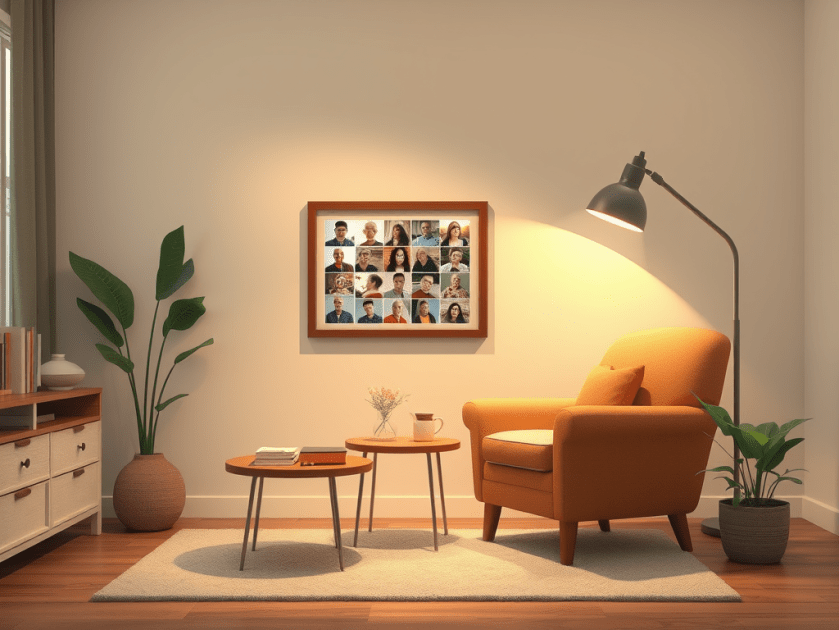
Some memories are too rich for a drawer and too important to scatter. That’s where a simple collage comes in. Pick a handful of photos that matter: a moment that shaped you, a person who steadied you, a place you still dream about. Arrange them together in one image, one page, one quiet tribute that holds more weight than clutter ever could. You can print it or keep it digital, frame it or save it to a screen, but it’s yours. A memory collage doesn’t just preserve, it curates, filters, and lifts what matters into focus.
Digital Picture Frames
You shouldn’t have to choose which memories get wall space. Instead, choose a frame that auto‑rotates images. Set it once and let it do the remembering for you. These digital frames loop through dozens—or even hundreds—of your favorite photos, quietly keeping them in your daily life. There’s no need to print, frame, and hang every single shot. You simply upload, hit play, and let the slideshow do its work. Birthdays, grandbabies, anniversaries, vacations—all of it, gently rotating without demanding space or dusting.
Digital Album Platforms
Sometimes what’s overwhelming isn’t the stuff, it’s the software. If that’s been your hold-up, skip the complicated options and pick platforms with intuitive features. Look for simple menus, large fonts, easy photo grouping, and, if you need it, voice commands. Once you’re in, the key is maintenance: make it a weekly routine to sit down and remove duplicates, blurry shots, or anything that no longer hits you in the heart. That’s how a digital album stays personal instead of bloated. A few favorites per month? That’s enough to build a timeline that actually means something.
Photo Calendars
It’s one thing to keep memories, it’s another to see them every day. One of the simplest, most space‑saving ways to do that is to create a calendar. Think of it as a living memory loop: Each month features a new photo, a fresh story, a new feeling. The best part? It replaces bulk with rhythm. All it takes is a few clicks. Choose a template, upload your photos, and personalize with text or stickers if you like. The final product gets mailed to you, ready to hang. One slim item, twelve quiet joys.
Choosing the Right System
Before you dive into any of these ideas, pause. Ask yourself what kind of system you’ll return to; what doesn’t just sound good but feels possible. Forget what works for your neighbor or what you saw online. You have to pick a system that you’ll use. That means knowing your habits. Are you likely to scan and upload weekly? Or would you rather print a set of photos once a year? Whatever the answer, build around it. Memory‑keeping only matters if you’re engaged with it.
Minimalism isn’t about erasing, it’s about distilling. It’s not about having less sentiment but giving each memory the space it deserves. Whether you back up your photos in the cloud, craft collages, or cycle through images on a digital frame, your stories remain yours—visible, alive, and unburdened by stuff. You can hold on to everything that matters without holding onto everything. Choose rituals that resonate, tools that fit, and rhythms you’ll keep. That’s how memories last, not by clinging, but by curating. And in that quiet clarity, the best parts of your life find room to breathe.

 Book Reviews by the Reluctant Retiree