
Posted in #Anthology

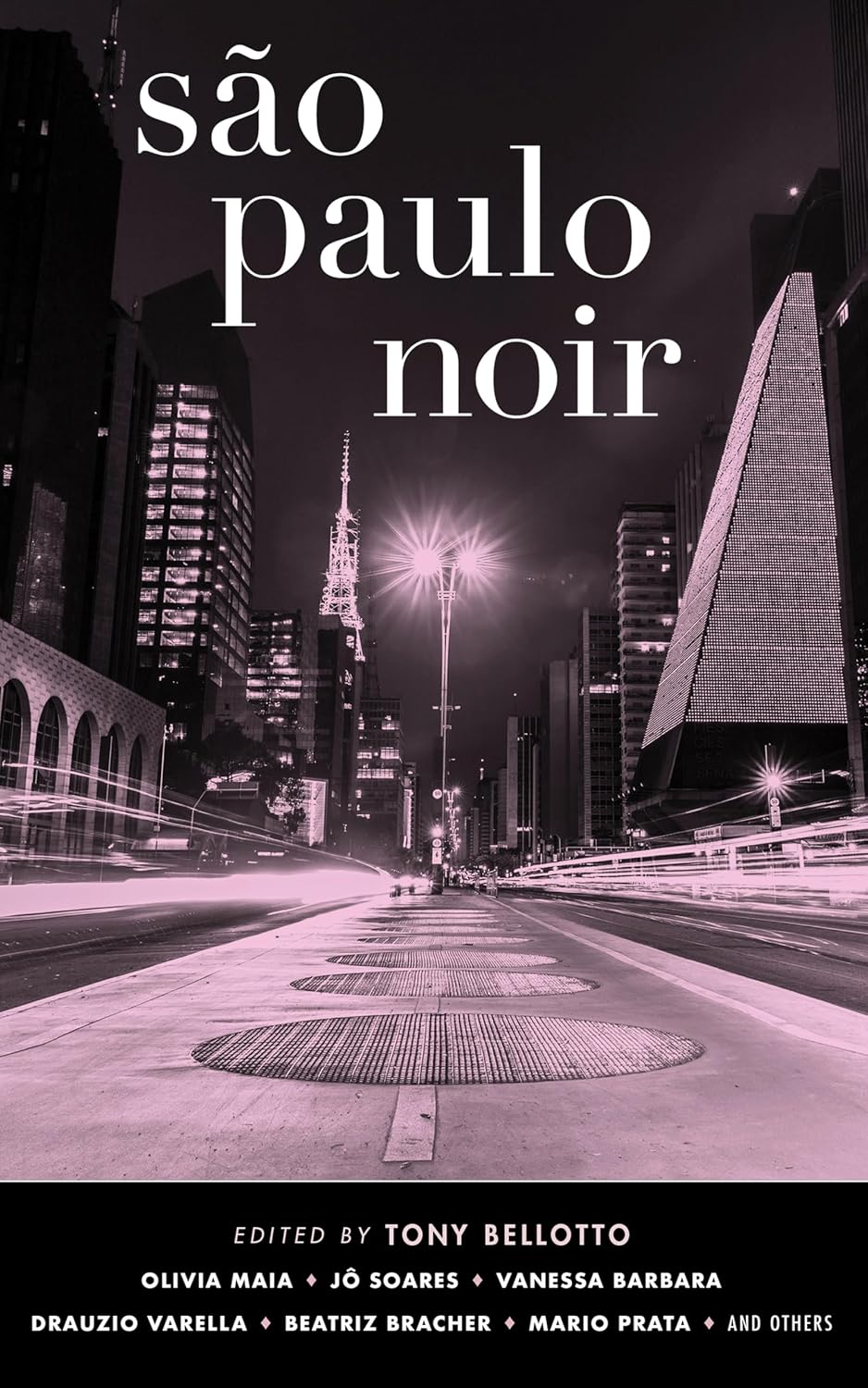
Orange County Noir

You may be disturbed—or possibly titillated—to discover what can happen once you cross the Orange Curtain . . .

“‘There’s a dark side to most places,’ even California’s sunny Orange County, Edgar-winner T. Jefferson Parker observes in his foreword to this outstanding entry in Akashic’s noir series, one of the stronger of the all-original anthologies. The crisp, often seductive prose of the 14 contributors, most of them relatively unknown, is a tribute to the critical judgment of the editor.” —Publishers Weekly, Starred Review

Akashic Books continues its groundbreaking series of original noir anthologies, launched in 2004 with Brooklyn Noir. Each story is set in a distinct neighborhood or location within the city of the book.

Brand-new stories by: Susan Straight, Robert S. Levinson, Rob Roberge, Nathan Walpow, Barbara DeMarco-Barrett, Dan Duling, Mary Castillo, Lawrence Maddox, Dick Lochte, Robert Ward, Gary Phillips, Gordon McAlpine, Martin J. Smith, and Patricia McFall, with a foreword by T. Jefferson Parker.

From the introduction by Gary Phillips:

“Orange County brings to mind McMansion housing tracts; massive shopping centers with their own zip codes where Pilates classes are run like boot camp and real-estate values are discussed at your weekly colonic; and ice-cream parlors on Main Street, U.S.A., side by side with pho shops and taquerías. Los Angeles has been and continues to be explored as the place where noir, if it wasn’t spawned there, sure as hell flowered. But what about its neighbor to the south? What secrets do Orange County’s denizens have to tell . . . or hide?

This volume, like coming in from a sudden storm and then being gripped by a heavy riff from Bird’s horn, takes you on a hard-boiled tour behind the Orange Curtain. Among those you’ll meet are a reclusive rock star who has lived way too long in his twisted head, a crooked judge who uses the court for illicit means, a cab driver prowling the streets with more than the ticking meter on his mind. In Orange County Noir, cultures clash, housewives want more than the perfect grout cleaner, and nobody is exactly who they seem to be.”


Editorial Reviews

Review

“Gordon McAlpine uses his narrator’s job as a security officer at Disneyland in “The Happiest Place” as an effective catalyst for a classic noir plot of betrayal.” — Publishers Weekly

About the Author

GARY PHILLIPS has published novels, comics, and short stories, and edited numerous anthologies. Violent Spring, first published in 1994, was named one of the essential crime novels of Los Angeles. Culprits, a linked anthology he coedited, has been optioned as a British miniseries, and he was a staff writer on FX’s Snowfall about crack and the CIA in 1980s South Central, where he grew up. He is the editor of Orange County Noir and the coeditor of The Cocaine Chronicles. He has contributed stories to Dublin Noir, Los Angeles Noir, Phoenix Noir, and The Heroin Chronicles. South Central Noir is his latest anthology.

Posted in #Anthology

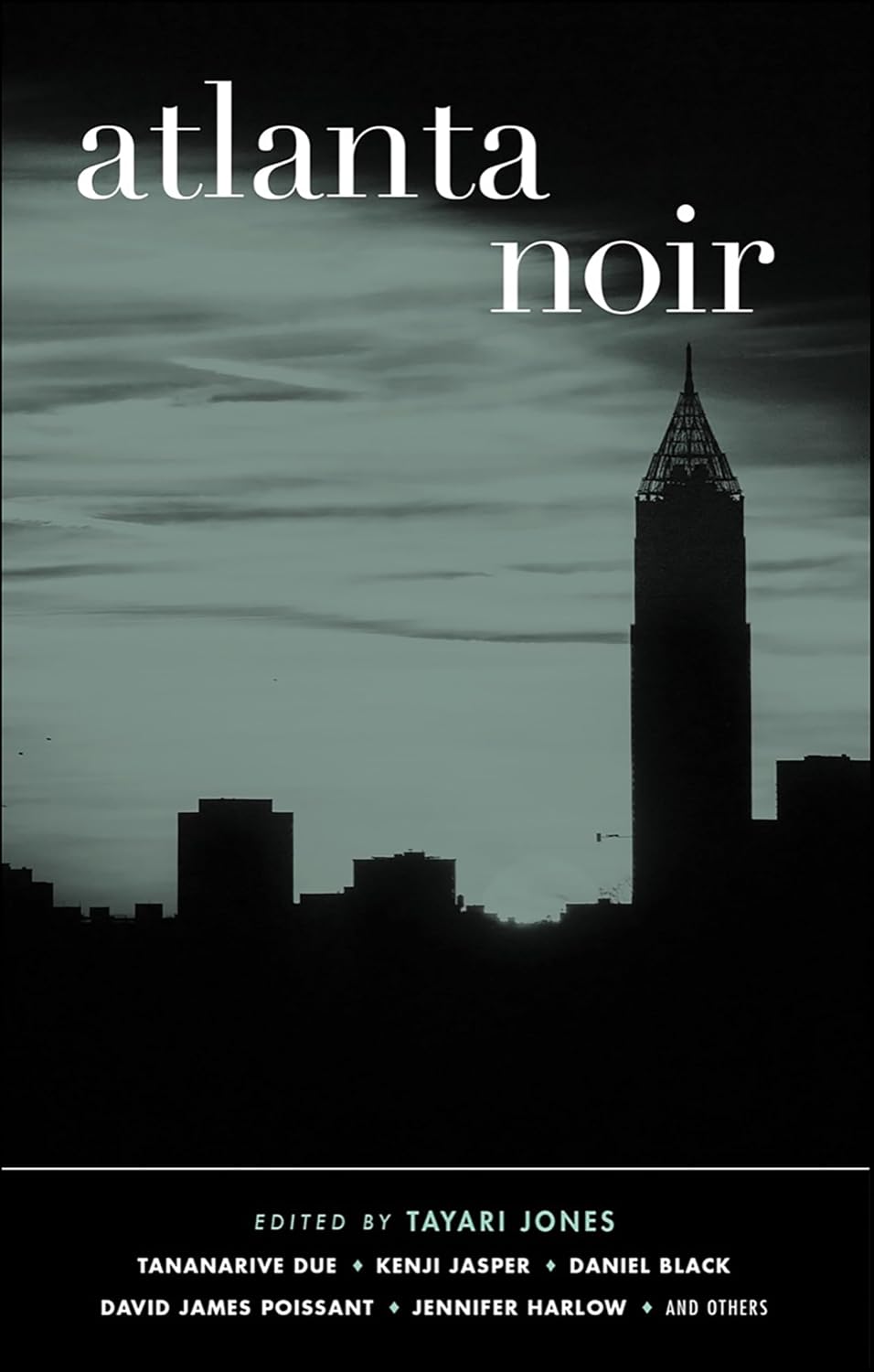
Mexico City Noir

Latin American noir at its finest. “[A] diverse collection of stories which reflect the harshness and also the brittle brilliance of life in Mexico City.”—MostlyFiction Book Reviews
 
Akashic Books’s acclaimed series of original noir anthologies has set a high standard for portraying cities and their neighborhoods in all their dark and violent splendor. Now, “Mexico City Noir surpasses that standard with phantasmagorical tales of double-dealing, corruption, violence and self-delusion . . . This collection is such a varied literary feast. Fans of Jorge Luis Borges will find surprises galore in the story ‘Violeta Isn’t Here Anymore.’ The noir-ish maze that Myriam Laurini constructs with her flair for the shifting realities of ‘magical realism’ is dazzling enough, and then up pops Borges . . .
“Peel back one layer and find something totally unexpected, these tales tell us again and again. As Eduardo Monteverde writes, ‘the heart of Mexico City is made of mud and green rocks, and the God of Rain continues to cry over the whole country.’ And standing on that ground, the 12 writers here find inspiration to die for” (Shelf Awareness).
 
This anthology includes brand-new stories by Paco Ignacio Taibo II, Eugenio Aguirre, Eduardo Antonio Parra, Bernardo Fernández Bef, Óscar de la Borbolla, Rolo Díez, Victor Luiz González, F.G. Haghenbeck, Juan Hernández Luna, Myriam Laurini, Eduardo Monteverde, and Julia Rodríguez.


Editorial Reviews

From Booklist

The latest entry in Akashic’s Noir series is centered on one of the largest and most violent cities in the world, Mexico City. For readers unfamiliar with Mexico City’s distinctive culture of crime and corruption, a short foreword by editor Taibo, himself a critically acclaimed crime novelist, provides background and sets the stage for the 12 stories. Set across Mexico City in a variety of neighborhoods, the stories feature a cast of characters as diverse as the city, from homeless people to young children to innocent passersby. This is a strong collection, both for the way it showcases outstanding short fiction in the noir style and for the way it demonstrates how a strong sense of place can drive a narrative. Contributors feature editor Taibo and an array of lesser-known but talented Mexican writers, including Eugenio Aguirre and Julia Rodriguez. Definitely one of the better entries in a sometimes uneven series. –Jessica Moyer

Review

“With volumes devoted to numerous US cities and quite a few foreign capitals, it sometimes seems as if Akashic Books’ expanding line of noir story anthologies will wind up covering virtually every major metropolis on earth . . . The warped humor here, especially in Taibo’s contribution about the struggle for the soul of an embattled street corner, is part of the survival mechanism of people who have seen too much of life at its worst but must keep laughing anyway.”
― San Francisco Bay Guardian

About the Author

Achy Obejas is the author of The Tower of the Antilles, the critically acclaimed novels Ruins and Days of Awe, and three other books of fiction. Her poetry chapbook, This Is What Happened in Our Other Life, was both a critical favorite and a bestseller. As a translator, she has worked with Junot Díaz, Wendy Guerra, Rita Indiana, and many others. In 2014 she received the USA Ford Fellowship from USA Artists for both her writing and her translations. She’s written for, among others, the New York Times, Vanity Fair, the Village Voice, In These Times, and the Chicago Tribune, where she was part of a 2001 Pulitzer Prize–winning team. Born in Havana, she currently resides in the San Francisco Bay Area.

Posted in #Anthology

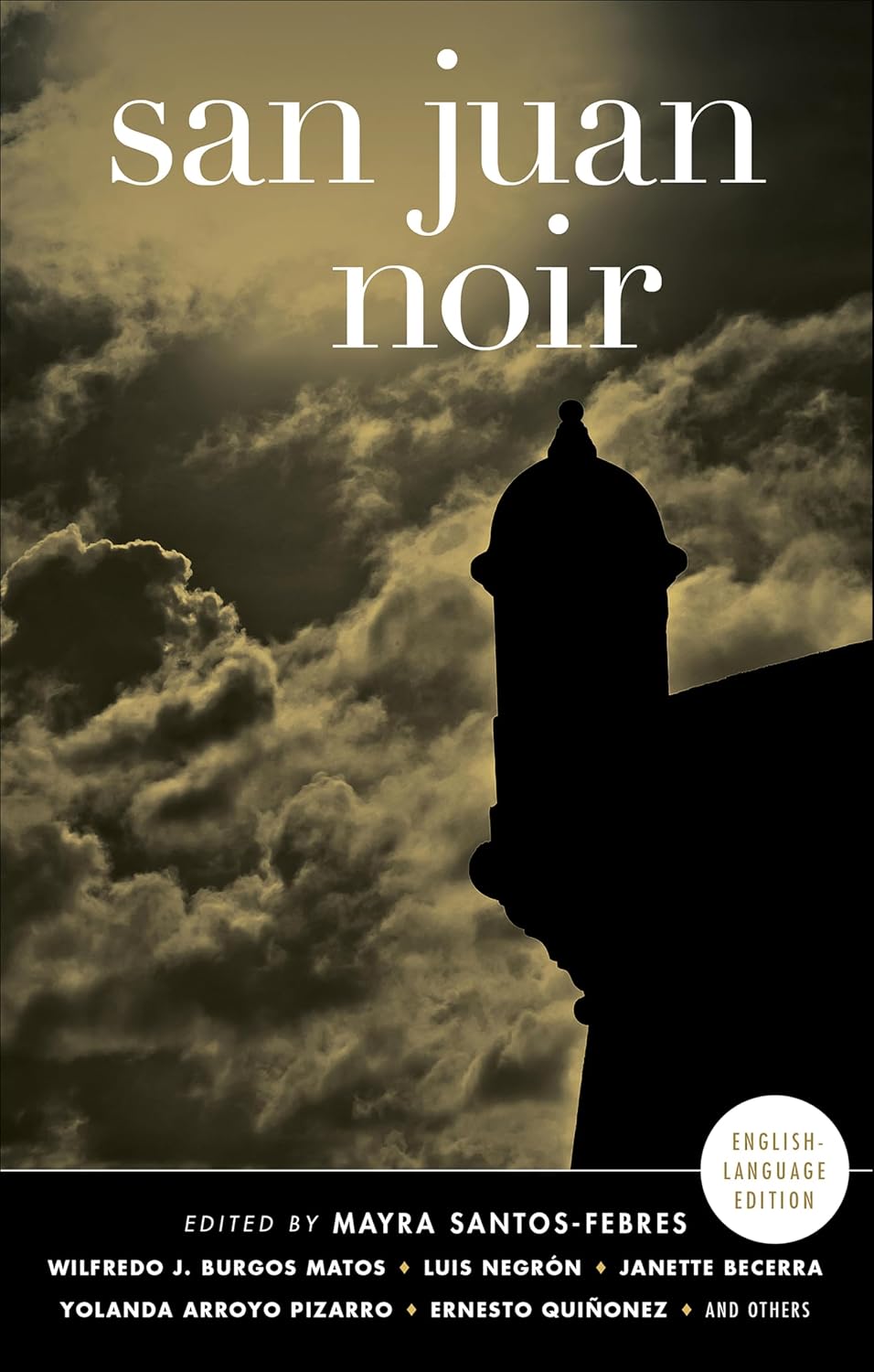
Boston Noir

Dennis Lehane steps up to the plate as editor and presents a scintillating collection of deep, dark fiction.

“Dennis Lehane advises us not to judge the genre by its Hollywood images of sharp men in fedoras lighting cigarettes for femmes fatales standing in the dark alleys . . . [Lehane] writes persuasively of the gentrification that has . . . left people feeling crushed.” —New York Times Crime Fiction Column

Akashic Books continues its groundbreaking series of original noir anthologies, launched in 2004 with Brooklyn Noir. Each story is set in a distinct neighborhood or location within the city of the book.

Brand-new stories by: Dennis Lehane, Stewart O’Nan, Patricia Powell, John Dufresne, Lynne Heitman, Don Lee, Russ Aborn, J. Itabari Njeri, Jim Fusilli, Brendan DuBois, and Dana Cameron.

From the introduction by Dennis Lehane:

“Boston is a city that produces guys—or, in the city’s vernacular, knuckleheads—who once stole the replica of a cow that sat in front of a Braintree steak house. The cow weighed what a car weighed, and yet these knuckleheads had the industry to get it onto a pickup truck, drive it back to South Boston, and deposit it in the middle of Broadway. They did this solely so they could then call the Boston Police Department and ask them to respond to a “beef going down on Broadway” . . .

So we have our distinct humor and our distinct accent and our distinct vocabulary. All of which—sadly, possibly—is now endangered by progress. Because one can’t ignore that Boston has been beset by a new class war of late, one you’ll see reflected in the stories herein. It’s a war of gentrification. As the city continues to lose its old-school parochialism and overt immigrant tribalism, it’s also losing a lot of its character. Whether that’s a bad thing or a good thing is up for debate, but what can’t be argued is that it is, in fact, happening . . .

That’s the paradox of the new Boston—what’s lost has, in many cases, been taken; what’s left is what people can’t sell. Noir is a genre of loss, of men and women unable to roll with the changing times, so the changing times instead roll over them . . .”


Editorial Reviews

From Booklist

The latest in Akashic’s noir anthologies focusing on specific cities—there have been more than 30 of them since the series’ inception in 2004—features 11 original stories, each set in a different Boston neighborhood. In his introduction, editor Lehane calls noir “working-class tragedy,” which is an apt description of these stories. A woman murders her boss over an oft-promised but never-delivered promotion; a man finds a dog in the garbage, adopts it, and winds up exacting punishment on the dog’s abusive former owner; a down-on-his-luck New York musician, forced by his wife to relocate to Boston, finds something very unusual to do to pass the time; a post–World War II private eye is hired by a beautiful woman whose hidden agenda has unexpected results. The stories, written by Lehane and a host of contributors (including Brendan DuBois, Stewart O’Nan, and Jim Fusilli), are uniformly solid, with characters, plots, and atmosphere that evoke the classic noirs of Cain, Woolrich, and Thompson. –David Pitt

Review

“Dennis Lehane advises us not to judge the genre by its Hollywood images of sharp men in fedoras lighting cigarettes for femmes fatales standing in the dark alleys…[Lehane] writes persuasively of the gentrification that has…left people feeling crushed.” –New York Times, November 15, 2009

From the Publisher

A Boston Globe Bestseller!

From the Back Cover

Qui mieux que Lehane le Bostonien pouvait composer cette anthologie autour d’une ville qui inspira aussi George V. Higgins, l’auteur des Copains d’Eddie Coyle ? Pour en brosser un portrait riche et contrasté, onze nouvelles, chacune ancrée dans un quartier. Onze voix, parmi lesquelles celles de Stewart O’Nan, Brendan DuBois, et Dennis Lehane lui-même. Des sujets, des époques et des tons variés et pourtant, un point commun : des personnages proches de la rupture, qui ont tous commis ou vont commettre des actes extrêmes, poussés par les circonstances vers des zones obscures dont ils ne soupçonnaient pas toujours l’existence. Le résultat : des nouvelles conçues comme des romans en miniature et qui échappent aux clichés du genre. Comme l’écrit Lehane dans sa préface, le roman noir n’est pas un

About the Author

DENNIS LEHANE is the author of the Patrick Kenzie and Angela Gennaro mystery series (A Drink before the War; Darkness, Take My Hand; Sacred; Gone, Baby, Gone; Prayers for Rain; and Moonlight Mile), as well as Coronado (five stories and a play) and the award-winning novels Mystic River, Shutter Island, and The Given Day. Mystic River, Shutter Island, and Gone, Baby, Gone have been made into award-winning films. He is the editor of Boston Noir and coeditor of Boston Noir 2: The Classics.

Posted in #Anthology

Portland Noir

Explore the dark, rainy underbelly of one of America’s most beautiful but enigmatic cities.

Akashic Books continues its groundbreaking series of original noir anthologies, launched in 2004 with Brooklyn Noir. Each story is set in a distinct neighborhood or location within the city of the book.

Brand-new stories by: Gigi Little, Justin Hocking, Christopher Bolton, Jess Walter, Monica Drake, Jamie S. Rich (illustrated by Joëlle Jones), Dan DeWeese, Zoe Trope, Luciana Lopez, Karen Karbo, Bill Cameron, Ariel Gore, Floyd Skloot, Megan Kruse, Kimberly Warner-Cohen, and Jonathan Selwood.

From the introduction by Kevin Sampsell:

“Settled in 1843 and named by a coin flip (we were almost named Boston), Portland had troubles from the start. The first sheriff, William Johnson, was busted for selling ‘ardent spirits.’ He had been ‘reduced by an evil heart,’ said the indictment. The first couple of decades were probably pretty rough, what with the constant flooding and muddy streets making all the citizens cranky . . . Later, in the 1940s and ’50s, the city practically thrived on criminal activity. Speakeasies, brothels, and gambling dens popped up across the downtown area . . . Portland became known as quite the decadent town, even prompting Bobby Kennedy to wrangle up its main bad guys for a televised Racketeering Committee meeting in 1957. One senator said at the hearings, ‘If I lived there, I would suggest they pull the flags down to half-mast in public shame.’

A lot of these places of ‘shame’ remain standing, and while many are occupied now by salons and offices, some of them are probably still home to gambling and stripping. (Portland does, after all, have more strip clubs per capita than any other city in America—and yep, they take it all off here.) . . . Portland continues to update its own version of a contemporary utopian society as more and more people flock here. But even in utopia, crime and unrest are always bubbling right under the surface.”


Ed Battistella

5 out of 5 stars

Gritty Portland

Reviewed in the United States on July 4, 2014

Format: Paperback

In Portland Noir, editor Kevin Sampsell takes us through the Rose City’s wilted flowers with 16 stories by Oregonians including one illustrated story and another set in Powell’s City of Books. Some of my favorite Oregon writers were represented including Bill Cameron, Flood Skloot, Karen Karbo and Monica Drake, and I was introduced to some new-to-me folks—like Gigi Little, Justin Hocking, Zoe Trope, and Luciana Lopez. Great crime fiction, gritty local color, an edge depiction of the seamy side of present dya Portland and a fine tribute to Portland’s noirish history.

Posted in #BookTours

Dark Ugly Places


Some wounds don’t heal. They take over.

A Beverly Hills psychological thriller about grief, female rage, fractured identity, and revenge.


Dark Ugly Places

by Ashley Mansour

Genre: Psychological Thriller, Domestic Suspense


Some wounds don’t heal. They fester. They whisper. They take over.

In Dark Ugly Places, trauma isn’t something you survive — it’s something that survives you.

Thirty-four-year-old Nicola Holiday loses everything in a hit-and-run: her husband dead, her body broken, her fourteen-year-old daughter Emmy forever changed. With no one held accountable, she spirals into grief, panic attacks, and financial ruin — awakening a hereditary darkness she’s spent her life trying to outrun.

That darkness has a voice now. Her name is Martha, and she aches for revenge.

As Nicola’s grip on reality loosens, Martha slips into another life — one of wealth, glamour, and moral rot. When she crosses paths with the wife of a famous actor, Nicola’s suspicions ignite.

Pulled between vengeance and annihilation, Nicola and Martha collide with a woman whose secrets may be the key to everything — or the thing that destroys them both.

Dark, provocative, and deeply unsettling — a haunting psychological portrait of female rage, obsession, and the terrifying lengths the mind will go to survive unbearable pain.

Because sometimes the most dangerous place isn’t the past. It’s inside your own head.


“A suspenseful and relentless tale of troubled Californians.”

– Kirkus Reviews


“A tense, viciously readable psychological thriller about the violence that lurks beneath polished surfaces.”

 – BookLife Reviews


“With fast-paced thrills and gripping psychological drama, Ashley Mansour’s Dark Ugly Places serves up vengeance for morally complex characters.” – Indiereader


**Releases September 15 – PreOrder Now!**

Amazon * Author’s Site * Apple * B&N * Google * Kobo * Bookshop.org * Bookbub * Goodreads


PROLOGUE

No one likes to be kept in the dark.

In the dark, everything is murky, even the Los Angeles sky.

But the day of Nicola’s accident, I had a pretty clear view of things. It tends to be that way—clear—when Nicola isn’t.

Nicola, Ben, and their daughter, Emmy, were walking holding hands, something the three of them hadn’t done since Emmy was a little kid. I felt the itch in Nicola’s palm, like she didn’t want to hold hands. But Emmy insisted. She was between them, arms outstretched, making that little humming sound she sometimes made when she was nervous or lost in thought. Ben walked on slightly ahead, his head down, eyes focused on the phone in his hand. I could almost hear his teeth grinding.

Up ahead, the road was clear. The sun covered everything in butter-yellow light. Crows perched in the bare-barked trees and made long, scratchy cries like a group of smokers laughing. They rustled leaves and crossed the pavement before them. But the trees were still, like the air had been sucked out of the city. Up ahead, the road was clear.

The three of them approached the corner, Emmy and Nicola chatting aimlessly. Ben narrowed his eyes and squinted at the screen as if the sky was too bright. He stepped out into the road first. Emmy, next. She skipped slightly—braids flying—and pulled her mom’s arm.

Nicola looked up and saw one of the crows overhead, its beak open, making a dreadful sound. When she looked back at the road, her gut pinged with a horrible dread she couldn’t place.

Then she—we—saw it.

From the middle distance, something large and hurtled into view, its body glinting in the sun. Emmy screamed. Nicola tried to pull her back, but one by one, her fingers slipped out of her grasp.

It was too late.

Nicola’s body collided with the big, thing, and in the next moment, she was airborne, tumbling through the air as if she had been taken by a tornado. Her thoughts spiraled with her, spinning out of control.

I’m going to die.

I’m going to live.

Don’t let me die.

I’m going to die.

She kept spiraling, around and around, until I stopped her with a simple suggestion: Breathe, Nicola. Breathe. We have this power, those of us who live in the darkness.

The asphalt grated her spine. It must have hurt, but Nicola did not cry. Perhaps because the air was too full of Emmy’s screams.

She rolled to her left, her left arm pinned against her chest like a piece of limp fabric. Her left leg lay stretched out before her perfectly straight, but dead. Cold. Frozen in place. She rolled to her side and saw Emmy, blood coating half of her face as though she were wearing a mask. Five feet away, Ben lay in the road unmoving, his body contorted, his face turned away.

Overhead, the stretch of blue sky angled down Beverly Boulevard and went on forever. Cars passed, some honking, others slowing to stop and help or to get a better look. Nicola grunted and heaved herself along the ground, her jaw gritting with pain. She reached for Emmy, reached for Ben.

The body of the car stirred. A door opened. A black polished shoe emerged onto the asphalt as the driver leaned out, then disappeared again as the door shut. I heard the engine as the car started and rolled backwards, slow at first, then picking up speed until it was gone.


Ashley Mansour writes dark, cinematic psychological suspense and domestic suspense about dangerous relationships, buried truths, and the chaos waiting beneath the surface of ordinary lives.