Posted in #non-fiction

Unraveling the 1937 Alice Parsons Kidnapping Mystery

A new look at the 1937 abduction of a wealthy wife and mother, based on previously classified FBI documents—includes photos.

In 1937, Alice McDonell Parsons was kidnapped from Long Meadow Farm in Stony Brook, New York. She was the heir to a vast fortune among Long Island’s wealthy elite. The crime shocked the nation and was front-page news for several months.

J. Edgar Hoover personally assigned his best FBI agents to the case. Within a short time, Parsons’s husband and their live-in housekeeper, Anna Kupryanova, became prime suspects. Botched ransom attempts, clashes between authorities, and romantic intrigue kept the investigation mired in drama. The crime remained unsolved. Now, in this book, former Suffolk County detective Steven C. Drielak reveals previously classified FBI documents—and pieces together the mystery of the Alice Parsons kidnapping.

About the Author

Matt Weisgerber is the narrator of over a dozen audiobooks, including YA, children’s, horror, western, sci-fi, and comedy titles. His voice has been described as friendly, smooth, unique, and conversational, and he has a knack for character voices. Matt is easy to work with, and loves creating engaging and believable performances.

Steven C. Drielak is an internationally recognized expert in the area of Hot Zone Forensic Attribution. He received his master’s degrees from John Jay College of Criminal Justice in New York City. He has more than thirty years of law enforcement experience. Steven established the Suffolk County Environmental Crime Unit in New York. He commanded that unit for sixteen years. Steven has directed within the EPA’s Office of Criminal Enforcement, Forensics and Training. His role spanned both the Homeland Security and Criminal Enforcement national programs. As the director of the EPA’s National Criminal Enforcement Response Team, he led the effort. He deployed environmental forensic evidence collection teams. These teams responded to BP Alaska’s Prudhoe Bay oil pipeline failures. They also addressed the BP Deepwater Horizon disaster. Steven has served as a senior forensic attribution instructor. He worked at the Department of Homeland Security’s Federal Law Enforcement Training Center in Glynco, Georgia. There, he was a program developer. He served for seventeen years as a National Academy Instructor for the EPA’s criminal enforcement program. He has also provided environmental forensic attribution training for the FBI’s Hazardous Materials Response Unit. He has provided international training to numerous countries within the European Union. He has authored and coauthored six textbooks in the areas of environmental crimes, weapons of mass destruction and forensic attribution. He has also authored two historical fiction novels. He was an appointed member of the International Association of Chiefs of Police Environmental Crimes Committee. He served on the President’s Interagency Microbial Forensics Advisory Board.

Posted in #History

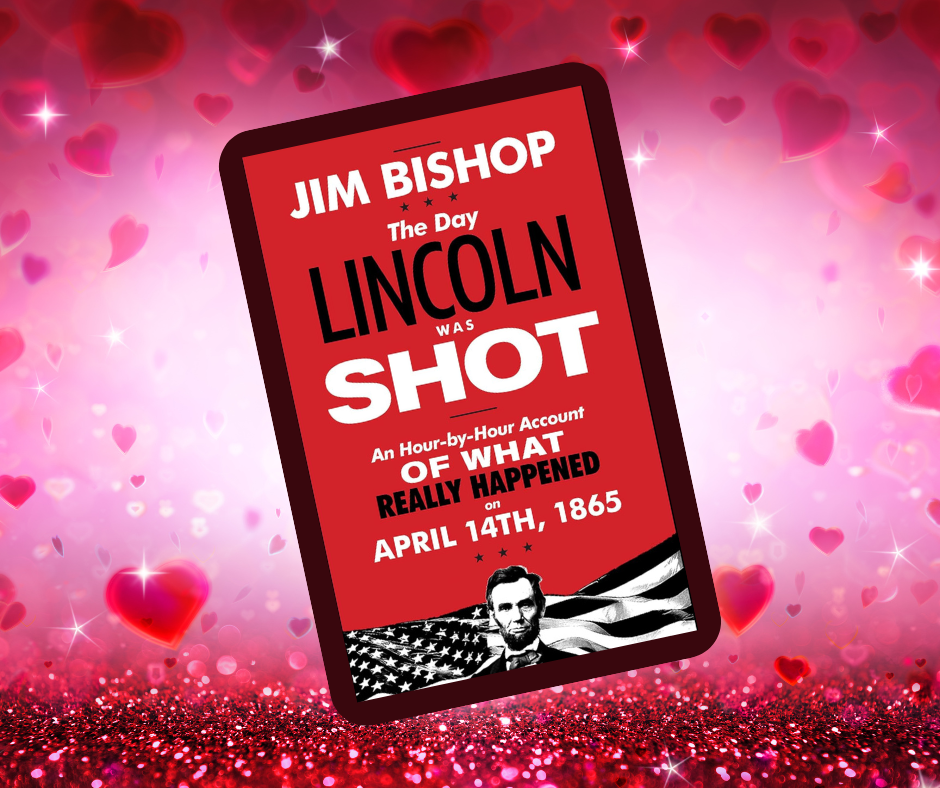
The Day Lincoln Was Shot

“This classic of popular history vividly dramatizes a pivotal moment in the life of our country . . . a happy blend of good scholarship and good storytelling.” —AudioFile

The Day Lincoln Was Shot is a gripping, hour-by-hour account of April fourteen, 1865: the day President Abraham Lincoln was tragically assassinated.

It chronicles the movements of Lincoln and his assassin John Wilkes Booth during every movement of that fateful day. Author and journalist Jim Bishop has fashioned an unforgettable tale of tragedy, more gripping than fiction, more alive than any newspaper account.First published in 1955, The Day Lincoln Was Shot was a huge bestseller, and in 1998 it was made into a TNT movie, with Rob Morrow as Booth.

“Everything that concerned Lincoln’s assassination from 7:00 A.M. Friday until 7:22 A.M. Saturday, the moment of his death. A new kind of Lincoln book.” —The New York Times

“Startling, tabloid immediacy . . . police-blotter facts.” —Time

“A great news story brilliantly recaptured.” —New York Herald Tribune

“Reads like a novel—holds you in suspense like a detective story!” —Pittsburgh Press

“History with the impact of a Page One news story.” —Syracuse Herald American

“Terror and suspense.” —Cleveland News

Posted in #History

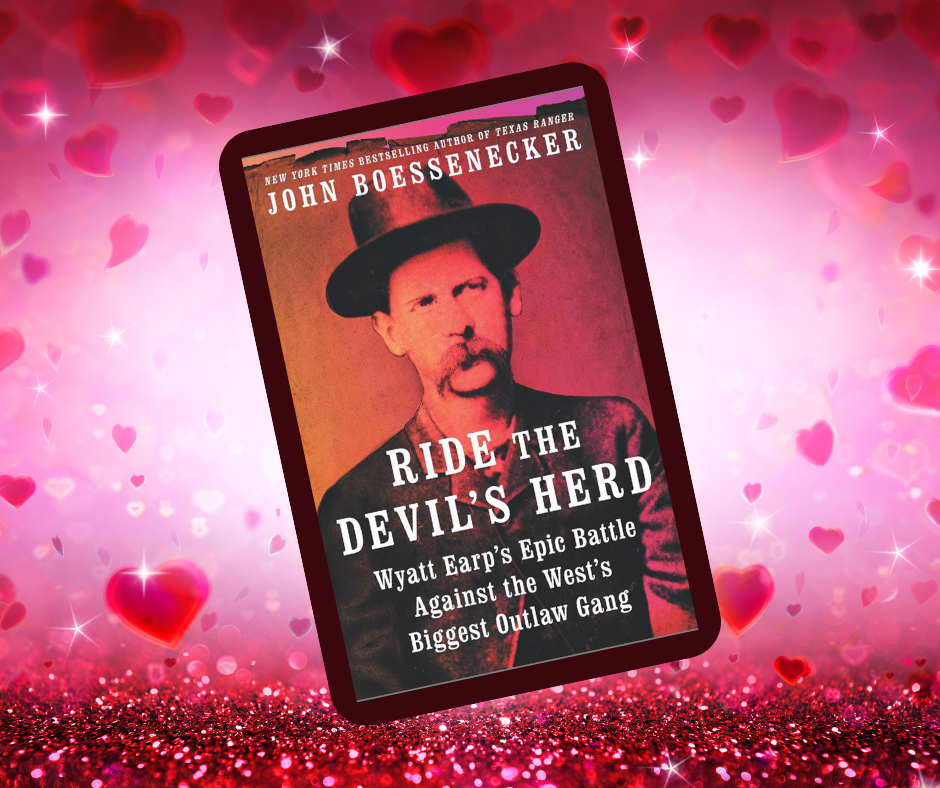
Ride the Devil’s Herd

Wyatt Earp’s Epic Battle Against the West’s Biggest Outlaw Gang

The story of how a young Wyatt Earp and his brothers defeated the Old West’s biggest outlaw gang, by the New York Times–bestselling author of Texas Ranger.
Wyatt Earp is regarded as the most famous lawman of the Old West, best known for his role in the Gunfight at the O.K. Corral in Tombstone, Arizona. But the story of his two-year war with a band of outlaws known as the Cowboys has never been told in full.
The Cowboys were the largest outlaw gang in the history of the American West. After battles with the law in Texas and New Mexico, they shifted their operations to Arizona. There, led by Curly Bill Brocius, they ruled the border, robbing, rustling, smuggling and killing with impunity until they made the fatal mistake of tangling with the Earp brothers.
Drawing on groundbreaking research into territorial and federal government records, John Boessenecker’s Ride the Devil’s Herd reveals a time and place in which homicide rates were fifty times higher than those today. The story still bears surprising relevance for contemporary America, involving hot-button issues such as gang violence, border security, unlawful immigration, the dangers of political propagandists parading as journalists, and the prosecution of police officers for carrying out their official duties. Wyatt Earp saw it all in Tombstone.
Praise for Ride the Devil’s Herd
A Pim County Public Library Southwest Books of the Year 2021
True West Reader’s Choice for Best 2020 Western Nonfiction
Winner of the Best Book Award by the Wild West History Association
“A marvelous book. By means of meticulous research and splendid writing John Boessenecker has managed to do something never before attempted or accomplished, tying together the many violent clashes between lawmen and outlaws in the American southwest of the 1870-1890 period and showing how depredations by loosely organized gangs of outlaws actually threatened “Manifest Destiny” and the successful taming of the Wild West.” —Robert K. DeArment, author and historian
“A ripsnortin’ ramble across the bloodstained Arizona desert with Wyatt Earp and company. . . . Boessenecker displays a fine eye for period detail. . . . A pleasure for thoughtful fans of Old West history, revisionist without being iconoclastic.” —Kirkus Reviews

Posted in #BookTours

Wyatt Earp: A Vigilante Life

This acclaimed biography separates history from myth to reveal the man behind the enduring Western legend.

In popular culture, Wyatt Earp is the hero of the Gunfight at the O.K. Corral in Tombstone, Arizona, and a beacon of rough cowboy justice in the tumultuous American West. The subject of dozens of films, he has been invoked in battles against everything from organized crime in the 1930s to al-Qaeda after 9/11. Yet as the historian Andrew C. Isenberg reveals here, the Hollywood Earp is largely a fiction—one created by none other than Earp himself.

The lawman played on-screen by Henry Fonda and Burt Lancaster is stubbornly duty-bound; in actuality, Earp led a life of impulsive lawbreaking and shifting identities. When he wasn’t wearing a badge, he was variously a thief, a brothel bouncer, a gambler, and a confidence man.

By 1900, Earp’s involvement as a referee in a fixed heavyweight prizefight brought him notoriety as a scoundrel. Determine to rebuild his reputation, he spent his last decades in Los Angeles, spinning yarns about himself for credulous silent film actors and directors. Isenberg argues that Hollywood’s embrace of Earp as a paragon of law and order was his greatest confidence game of all.

Finalist for the 2014 Weber-Clements Book Prize for the Best Non-fiction Book on Southwestern America

Continue reading “Wyatt Earp: A Vigilante Life”
Posted in #BookTours

After Etan: The Missing Child Case that Held America Captive

“Unravels a complex and tangled mystery while seamlessly telling the heart wrenching story of a family trying to cope with every parent’s worst nightmare.”*
“Every American needs to know Etan’s story.” —John Walsh
With a New Chapter
In After Etan, author Lisa R. Cohen draws on hundreds of interviews and nearly twenty years of research—including access to the personal files of the Patz family—to reveal, for the first time, the entire dramatic tale of Etan’s disappearance.

On the morning of May 25, 1979, six-year-old Etan Patz left his apartment to go to his school bus stop. But he never made it to school that day. He vanished somewhere between his home and the bus stop, and was never seen again.

The search for Etan quickly consumed his family’s downtown Manhattan neighborhood. “Missing” posters with Etan’s smiling face blanketed the city, followed by media coverage that turned Etan’s disappearance into a national story—one that would change our cultural landscape forever.

Thirty years later, in Etan’s honor, May 25 is recognized as National Missing Children’s Day. But despite the overwhelming publicity his case received, the public knows only a fraction of what happened. That’s because the story of Etan Patz is more than a heartbreaking mystery.

It is also the story of the men, women, and children who were touched by his life in the months and years after he vanished. It’s the story of the agonies and triumphs of the Patz family, and of all the heroic investigators who, to this day, continue to seek justice for Etan.

*Award-winning journalist John Miller

Continue reading “After Etan: The Missing Child Case that Held America Captive”