
Posted in #History

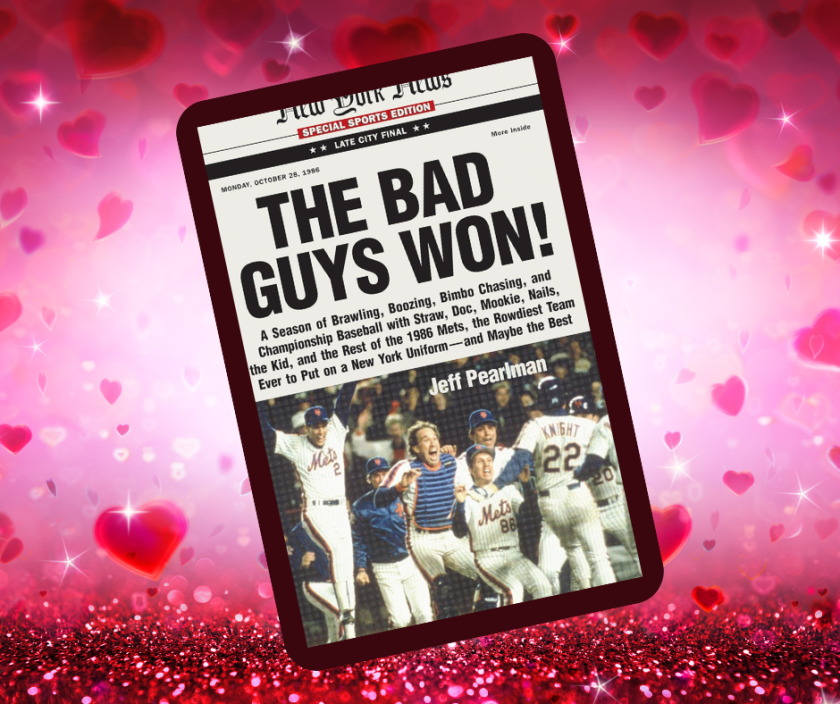
The Bad Guys Won!

A season filled with brawling, boozing, and bimbo chasing. It showcases championship baseball with Straw, Doc, Mookie, Nails, the Kid, and the rest wearing a New York uniform. They might be the best.

“Jeff Pearlman has captured the swagger of the ’86 Mets. You don’t have to be a Mets fan to enjoy this book—it’s a great read for all baseball enthusiasts.”—Philadelphia Daily News

Award-winning Sports Illustrated baseball writer Jeff Pearlman takes us back to an innocent time. The city worshipped a man named Mookie then. At that time, the Yankees were the second-best team in New York.

It was 1986. The New York Mets won 108 regular-season games. They won the World Series, capturing the hearts (and other assorted body parts) of fans everywhere. But their greatness on the field was nearly eclipsed by how bad they were off it. The team was led by the indomitable Keith Hernandez. The young dynamic duo of Dwight Gooden and Darryl Strawberry joined him. Along with the gallant Scum Bunch, the Amazin’s left a wide trail of wreckage in their wake. They damaged hotel rooms and charter planes. There was also a bar in Houston, and most famously, Bill Buckner and the hated Boston Red Sox.

This book features an unforgettable cast of characters—including Doc, Straw, the Kid, Nails, Mex, and manager Davey Johnson. It presents an affectionate look at this exciting season. However, it is also critical. It celebrates the last of baseball’s arrogant and insane teams. These teams were rock-and-roll and partied all night. It explores what could have been, what should have been, and what never was.


Editorial Reviews

Review

The Bad Guys Won is designed to delight any Mets fan—at least the less prudish ones. Pearlman…keeps a tight focus on the championship season.” — New York Times Book Review

“Pearlman has done his homework: he breaks down the wall that separates the ballplayer from the fan.” — Newsday

“As a reminder that most of us know absolutely nothing about the people we cheer for, except that they wear our hometown colors, this is a worthwhile read for any sports fan.” — Sports Illustrated

“Baseball aficionados, especially Mets fans, will enjoy this affectionate but critical look at this exciting season.” — Publishers Weekly

“Everything a diehard Mets fan…could want.” — Daily News

“A great read! Jeff Pearlman skillfully takes you deep into the silly and goofy and gross and slightly scary world that was the New York Mets clubhouse.” — Rocky Mountain News

“Jeff Pearlman has captured the swagger of the ’86 Mets. You don’t have to be a Mets fan to enjoy this book—it’s a great read for all baseball enthusiasts.” — Philadelphia Daily News

About the Author

Jeff Pearlman is the New York Times bestselling author of seven books. He is a former Sports Illustrated senior writer, a former ESPN.com columnist, and a former staff writer for Newsday and the Tennessean. He is a regular contributor to Bleacher Report and CNN.com.

Posted in #History

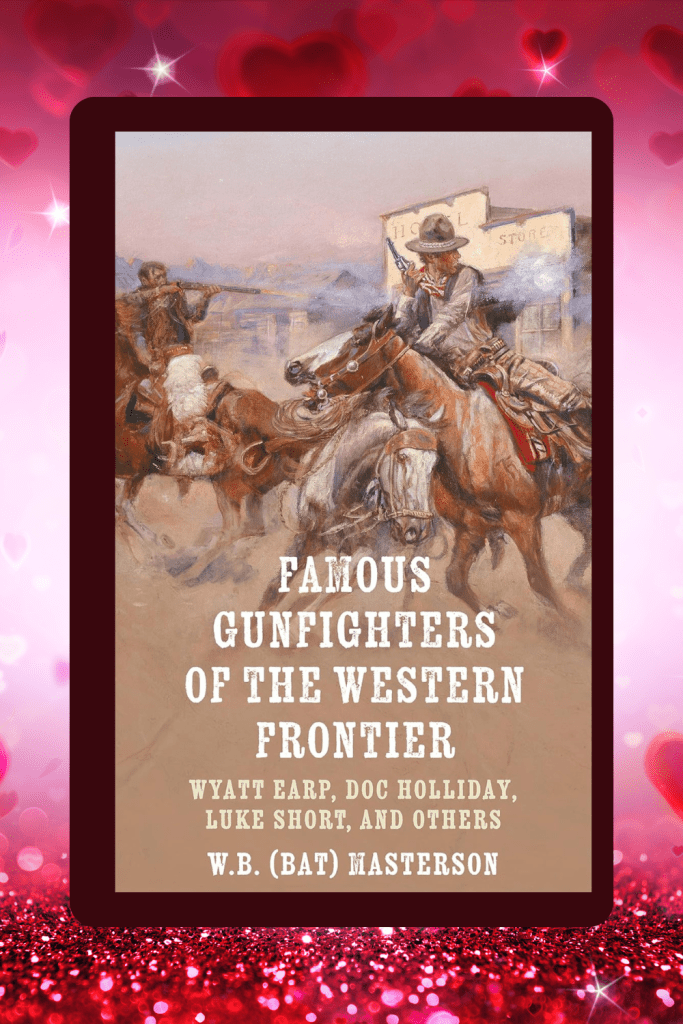
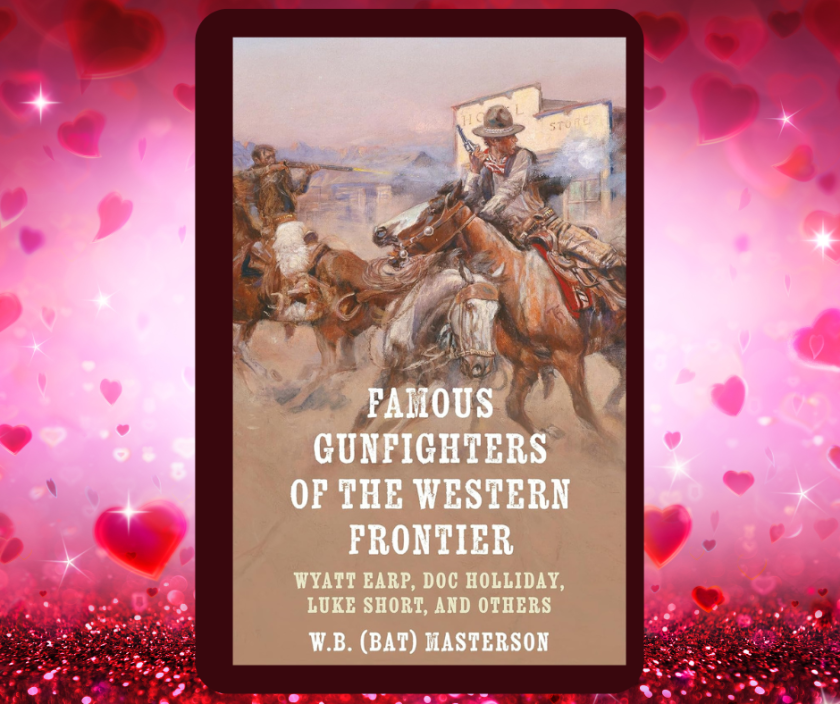
Famous Gunfighters of the Western Frontier: Wyatt Earp, Doc Holliday, Luke Short and Others

Discover these tales of frontier justice and life-and-death struggles will transport you to a bygone era of adventure and excitement. Originally published in 1907, Bat Masterson’s gripping collection of short biographies introduces you some of the most famous lawmen and notorious outlaws of the Wild West, including cattle rustlers, sharpshooters, and gunslingers. From Doc Holliday and Wyatt Earp to lesser known figures like Luke Short, Famous Gunfighters of the Western Frontier is packed with daring feats and larger-than-life characters.

Posted in #History

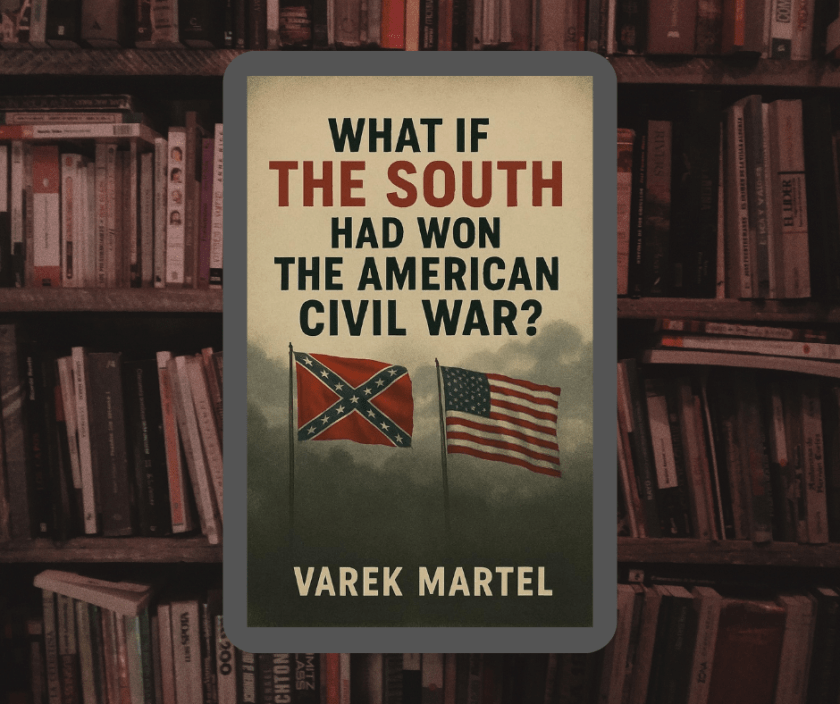
What If the South Had Won the American Civil War

(What If? Turning Points of History) 

What If the South Had Won the American Civil War

What if one of the most pivotal conflicts in history had ended differently?
This gripping work of alternate history dares to imagine a world where the Confederacy emerged victorious. This victory reshapes not just the fate of the United States, but also the course of global events.

Through vivid storytelling and thought-provoking scenarios, What If the South Had Won the American Civil War explores the ripple effects of a Confederate triumph:

  • How would slavery have evolved—or endured—in a victorious South?
  • Would the United States have fractured permanently into rival nations?
  • How might this alternate America have influenced world wars, diplomacy, and the rise of global powers?

This book blends historical detail with bold imagination. It offers readers a chance to step into a parallel timeline. In this timeline, the familiar story of America takes a dramatic turn. Perfect for fans of counterfactual history, political thrillers, and anyone fascinated by the delicate hinges on which history turns.

If you’ve ever wondered what could have been, this book delivers a compelling answer.

Discover a world that almost was—and imagine the consequences.

Marko Roostalu
4.0 out of 5 stars.
A Thoughtful “What If” That Sparks Real Historical Thinking.
Reviewed in the United States on January 25, 2026.
Format: Kindle
Verified Purchase.
As a history teacher, I’m always cautious with alternate-history books—done poorly, they oversimplify complex events or drift into speculation without grounding. This one does a better job than most. What If the South Had Won the American Civil War treats the question seriously and uses it as a lens to explore the causes, consequences, and contingencies of history.
What I appreciated most is how the book doesn’t just stop at a Confederate victory and call it a day. It follows the ripple effects forward: politics, economics, global power shifts, and—crucially—the unresolved moral and social questions around slavery. Even when the scenarios are imaginative, they’re rooted in real historical tensions and documented debates from the era.
This isn’t a substitute for studying what actually happened, and it shouldn’t be read without context. But as a supplement, it’s excellent for older students or curious readers who want to understand why outcomes matter in history. It encourages critical thinking, comparison, and discussion—exactly the kinds of skills we want students to develop.
Used thoughtfully, this book can spark meaningful conversations about historical turning points, unintended consequences, and how fragile the paths of history really are.
Posted in #History

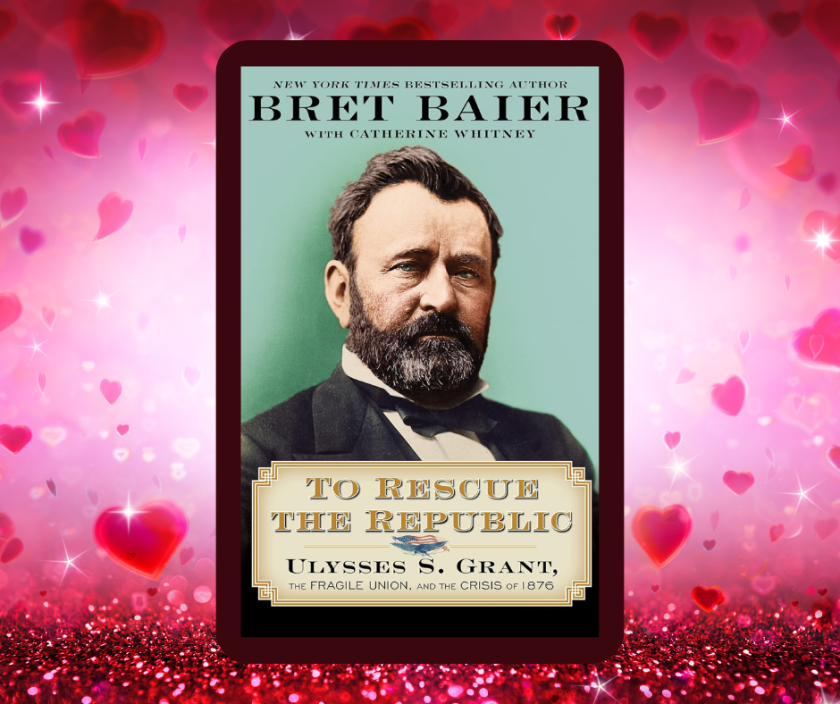
To Rescue the Republic

Ulysses S. Grant, the Fragile Union, and the Crisis of 1876 (The Presidential Series)

#1 New York Times Bestseller

Fox News Channel’s Chief Political Anchor illuminates the heroic life of Ulysses S. Grant

“To Rescue the Republic is narrative history at its absolute finest. A fast-paced, thrilling and enormously important book.” Douglas Brinkley

An epic history spans the battlegrounds of the Civil War and the violent turmoil of Reconstruction. It also covers the forgotten electoral crisis that nearly fractured a reunited nation. Bret Baier’s To Rescue the Republic dramatically reveals Ulysses S. Grant’s essential yet underappreciated role in preserving the United States during an unprecedented period of division.

Born a tanner’s son in rugged Ohio in 1822, Grant was battle-tested by the Mexican American War. He met his destiny on the bloody fields of the Civil War. His daring and resolve as a general gained the attention of President Lincoln, then desperate for bold leadership. Lincoln appointed Grant as Lieutenant General of the Union Army in March 1864. Within a year, Grant’s forces had seized Richmond and forced Robert E. Lee to surrender.

Four years later, the reunified nation faced another leadership void after Lincoln’s assassination and an unworthy successor completed his term. Again, Grant answered the call. At stake once more was the future of the Union. The Southern states had been defeated. However, it was uncertain if the former Confederacy could be reintegrated into the country. It was also uncertain if the Union could ensure the rights and welfare of African Americans in the South. Grant met the challenge by boldly advancing an agenda of Reconstruction and aggressively countering the Ku Klux Klan.

In his final weeks in the White House, however, Grant faced a crisis that threatened to undo his life’s work. The contested presidential election of 1876 produced no clear victory for either Republican Rutherford B. Hayes or Democrat Samuel Tilden, who carried most of the former Confederacy. Soon Southern states vowed to revolt if Tilden was not declared the victor. Grant was determined to use his influence to preserve the Union, establishing an electoral commission to peaceably settle the issue. Grant brokered a grand bargain. He arranged for Republican Hayes to be installed as president. Concessions were made to the Democrats, which effectively ended Reconstruction. This painful compromise saved the nation, but tragically condemned the South to another century of civil-rights oppression.

Deep with contemporary resonance, the book is brimming with fresh detail. It takes readers from the battlefields of the Civil War to the corridors of power. Here, men decided the fate of the nation in back rooms. To Rescue the Republic reveals Grant, for all his complexity, to be among the first rank of American heroes.

Posted in #History

History of Virginia

A Captivating Guide to the History of the Mother of States, Starting from Jamestown through the American Revolution and the Battle … Court House to the Present (U.S. States)

If you want to discover the captivating history of Virginia, then keep reading…

Virginia was home to some of the first people in America. It became the birthplace of the United States. Virginia has had an incredibly rich and interesting history. This was even before its inauguration as a state. Virginia was once the most populous state in the country. It was also the most affluent. It was the birthplace of many important figures in early United States’ history. Yet, despite Virginia’s successes and great heritage, it has often been a divided state. Throughout much of history, it has debated even the most basic rights and issues. This is clearly illustrated by the splitting of Virginia into Virginia and West Virginia. This occurred in the years following the American Civil War.

Generational Virginians take pride in every aspect of their state’s legacy. In contrast, newcomers arrive to work for the Pentagon, the CIA, and other important government and military hubs in Virginia. These newcomers do not look so fondly on Virginia’s history. Yet, Virginia’s history is incredibly interesting. It captivates all those wondering how this southern US state became the way it is today. It remains intriguing regardless of how right or politically correct it may appear.

In this book, you will discover:

  • Virginia’s first people and their complex cultural, social, economic, spiritual and political systems and traditions
  • The colonization of America and the United States’ first settlement in Jamestown, Virginia
  • Interactions between the state’s first settlement and first people
  • Virginia’s culture under colonial rule
  • Virginia’s journey towards developing its own culture, economy and political system, separate from that of England, mostly surrounding the culture of tobacco farming
  • The state’s involvement in the American Revolution and the years post war
  • Virginia’s involvement in the American Civil War and the effects of the war on the state
  • The state’s many social movements
  • Virginia’s involvement in the First and Second World Wars and the effects of the war on the state and country
  • Virginia’s development in the 20th century into the military hub of America