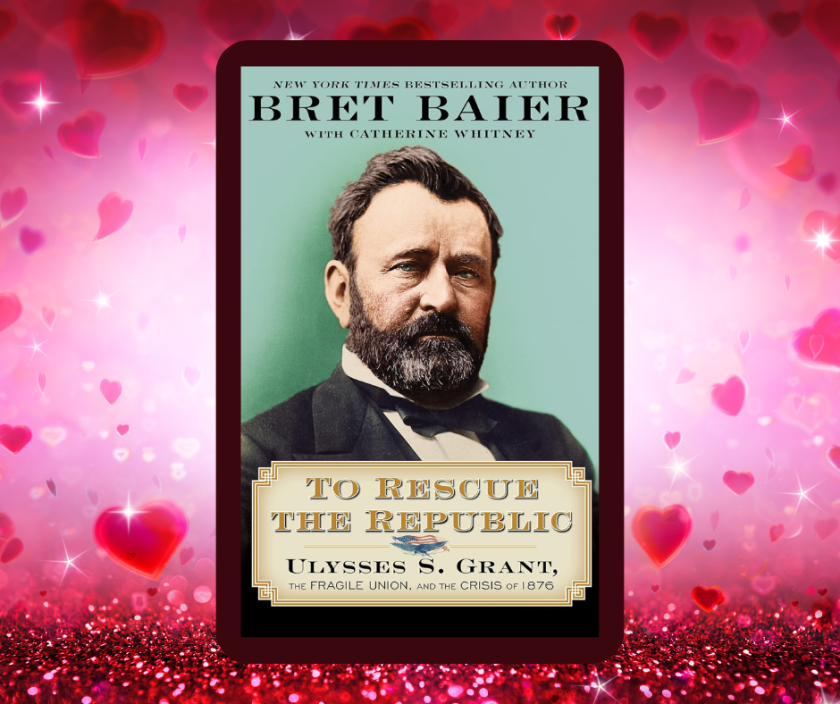
Ulysses S. Grant, the Fragile Union, and the Crisis of 1876 (The Presidential Series)
#1 New York Times Bestseller
Fox News Channel’s Chief Political Anchor illuminates the heroic life of Ulysses S. Grant
“To Rescue the Republic is narrative history at its absolute finest. A fast-paced, thrilling and enormously important book.” —Douglas Brinkley
An epic history spans the battlegrounds of the Civil War and the violent turmoil of Reconstruction. It also covers the forgotten electoral crisis that nearly fractured a reunited nation. Bret Baier’s To Rescue the Republic dramatically reveals Ulysses S. Grant’s essential yet underappreciated role in preserving the United States during an unprecedented period of division.
Born a tanner’s son in rugged Ohio in 1822, Grant was battle-tested by the Mexican American War. He met his destiny on the bloody fields of the Civil War. His daring and resolve as a general gained the attention of President Lincoln, then desperate for bold leadership. Lincoln appointed Grant as Lieutenant General of the Union Army in March 1864. Within a year, Grant’s forces had seized Richmond and forced Robert E. Lee to surrender.
Four years later, the reunified nation faced another leadership void after Lincoln’s assassination and an unworthy successor completed his term. Again, Grant answered the call. At stake once more was the future of the Union. The Southern states had been defeated. However, it was uncertain if the former Confederacy could be reintegrated into the country. It was also uncertain if the Union could ensure the rights and welfare of African Americans in the South. Grant met the challenge by boldly advancing an agenda of Reconstruction and aggressively countering the Ku Klux Klan.
In his final weeks in the White House, however, Grant faced a crisis that threatened to undo his life’s work. The contested presidential election of 1876 produced no clear victory for either Republican Rutherford B. Hayes or Democrat Samuel Tilden, who carried most of the former Confederacy. Soon Southern states vowed to revolt if Tilden was not declared the victor. Grant was determined to use his influence to preserve the Union, establishing an electoral commission to peaceably settle the issue. Grant brokered a grand bargain. He arranged for Republican Hayes to be installed as president. Concessions were made to the Democrats, which effectively ended Reconstruction. This painful compromise saved the nation, but tragically condemned the South to another century of civil-rights oppression.
Deep with contemporary resonance, the book is brimming with fresh detail. It takes readers from the battlefields of the Civil War to the corridors of power. Here, men decided the fate of the nation in back rooms. To Rescue the Republic reveals Grant, for all his complexity, to be among the first rank of American heroes.
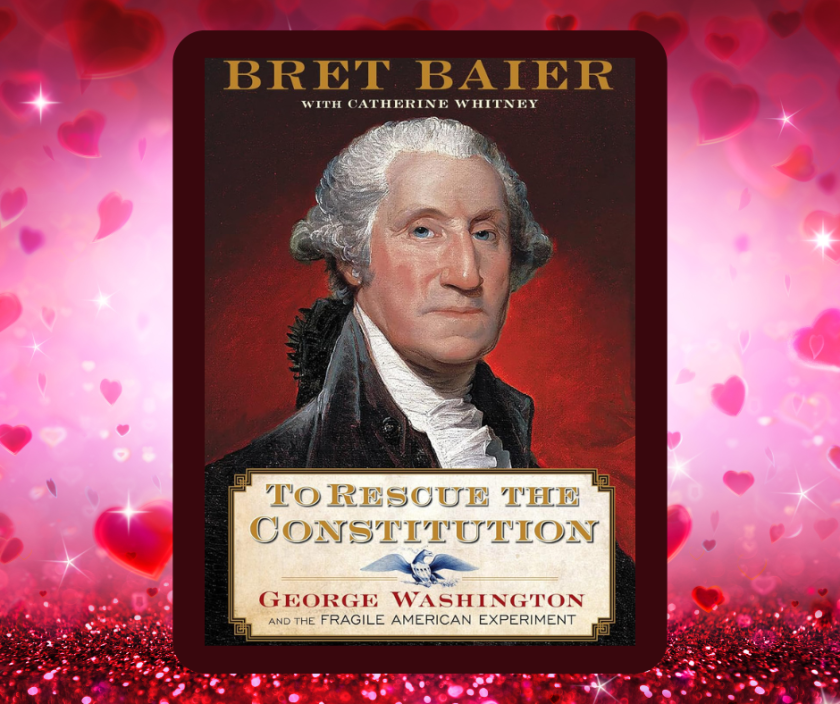
George Washington and the Fragile American Experiment (The Presidential Series)
Instant New York Times Bestseller
#1 New York Times bestselling author Bret Baier reveals how George Washington saved the Constitution–and the American experiment
“To Rescue The Constitution is a masterful exploration of the electrifying struggle to unite a young United States.” —Jay Winik
A sweeping narrative ranges from the unsettled early American frontier and the battlefields of the Revolution. It also covers the history-making clashes within Philadelphia’s Independence Hall. Bret Baier’s To Rescue the Constitution dramatically illuminates the life of George Washington. He was the essential Founding Father. He did more than perhaps any other individual to secure the future of the United States.
George Washington rescued the nation three times. First, he led the Continental Army to victory in the Revolutionary War. Second, he presided over the Constitutional Convention that set the blueprint for the United States. He also ushered the Constitution through a fractious ratification process. Third, he led the nation as its first president. In this compelling work of American history, the struggling new nation needed to be rescued. Washington was the only American who could bring them together.
After the victorious War of Independence, the nation fractured. A spirit of unity and patriotism might have been expected. However, division took place instead. The states were no more than a loosely knit and contentious confederation, with no strong central union. The urgent need for nation building prompted the calling of a Constitutional Convention. This gathering was to meet in Philadelphia during the summer of 1787.
Setting aside his plan to retire to Mount Vernon, Washington agreed to be a delegate at Philadelphia. There he was unanimously elected president of the convention. Washington successfully brought the Constitution into being. He then sacrificed any hope of returning to private life. He accepted the unanimous election to be the nation’s first president. Washington was not known for brilliant oratory or prose. However, his quiet and steady leadership gave life to the Constitution. He demonstrated how it should be enacted.
In this vivid and moving portrait of early America’s struggles, Baier captures the critical moments that defined the nation. Washington’s leadership brought the nation back from the brink of collapse. Baier exposes an early America that is grittier and far more divided. This is a depiction often different from what is portrayed. We can see this division reflected in today’s conflicts.
This gripping work of narrative nonfiction reveals:
A Leader Forged in War: Follow George Washington from the battlefields of the Revolution to the presidency, as he rescues the young nation not once, but three separate times.
The Fight for the Constitution: Go inside Philadelphia’s Independence Hall for the history-making clashes and fractious debates that defined the Constitutional Convention and the future of the American experiment.
The First Presidency: Discover how Washington’s quiet, steady leadership as the nation’s first president gave life to the Constitution, showing a fledgling country how its new government should be enacted.
A Nation Divided: Uncover an early America that is grittier and far more divided than often portrayed—a searching look into our past that holds a mirror to the conflicts of today.
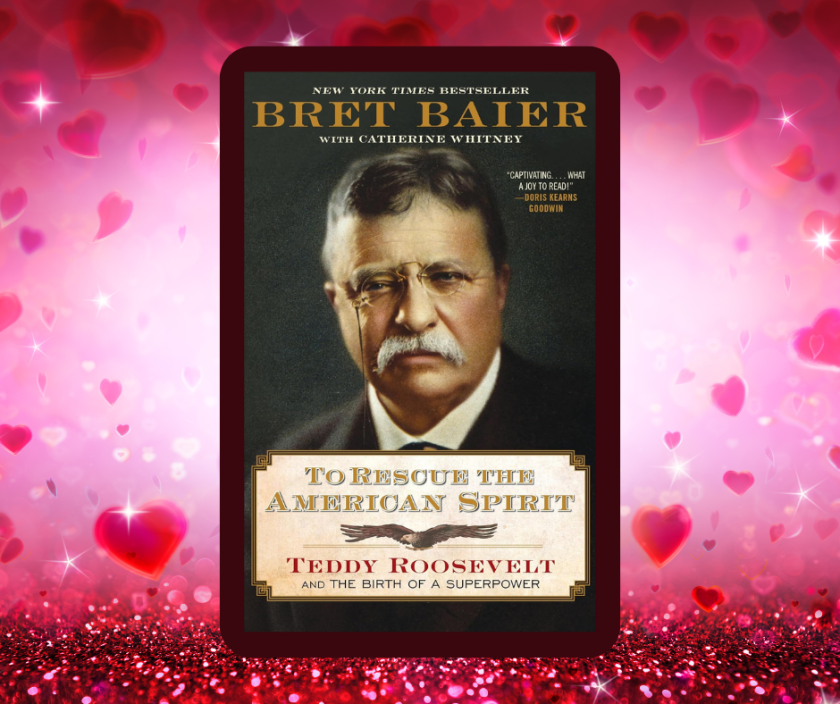
Teddy Roosevelt and the Birth of a Superpower—The New York Times Bestselling Biography of the Former President from the … Political Anchor (The Presidential Series)
New York Times Bestseller
“This captivating portrayal of Teddy is Bret Baier’s gift to us. From Roosevelt’s resilience over tragedy to his heroism in war, from his midnight rambles as police commissioner to his dramatic fights for reform as governor and president, Baier summons the irrepressible spirit of the man. What an engaging storyteller! What a joy to read!” —Doris Kearns Goodwin
From #1 bestselling author and Fox News Channel’s Chief Political Anchor, a fresh and fascinating exploration of the extraordinary life of Teddy Roosevelt, revealing how his bold leadership thrust America onto the world stage and changed the course of world history. “As Bret Baier shows in this wonderfully readable biography, Theodore Roosevelt has many lessons for today.” —Walter Isaacson There has never been a president like Theodore Roosevelt. An iconoclast shaped by fervent ideals, his early life seems ripped from the pages of an adventure novel. He abandoned his place in the New York aristocracy. He was drawn to the thrill of the West. He became an honorary cowboy. He won the respect of the rough men of the plains. He adopted their code of authenticity and courage. As a New York State legislator, he fought corruption and patronage. As New York City police commissioner, he walked the beat at night. He wanted to hold his men accountable. As New York governor, he butted heads with the old guard. He aimed to bring fresh air to a state mired in political corruption. He was a passionate naturalist and conservationist. He also loved hunting. He collected hundreds of specimens of birds and animals throughout his life. He was a soldier and commander. He led a regiment of “Rough Riders” to victory in the Spanish-American War. This show of leadership and bravery put him on the national map. As president, he brought energy, laughter, and bold ideas to the White House. He pursued a vigorous agenda that established America as a leader on the world stage. He advanced the Panama Canal, brokered peace with Russia, and took on business elites. Bret Baier’s exquisite book uncovers the storied life of a leader. His passion, daring, and prowess left an indelible mark on the fabric of our country. He reimagined the possibilities of the presidency.
Editorial Reviews
Review
“If joy in living was nature’s gift to Theodore Roosevelt, then this captivating portrayal of Teddy is Bret Baier’s gift to us. From Roosevelt’s resilience over tragedy to his heroism in war, from his midnight rambles as police commissioner to his dramatic fights for reform as governor and president, Baier summons the irrepressible spirit of the man. What an engaging storyteller! What a joy to read!” – Doris Kearns Goodwin, author of The Bully Pulpit: Theodore Roosevelt, William Howard Taft, and the Golden Age of Journalism “As Bret Baier shows in this wonderfully readable biography, Theodore Roosevelt has many lessons for today. In his New Nationalism, he combined patriotism with a sense of stewardship, both of our land and institutions. And he embraced the challenge of having the U.S. speak softly but be in service to the world. Like all of Baier’s biographies, he makes our great presidents relevant to the present.” – Walter Isaacson, author of Benjamin Franklin: An American Life “Bret Baier’s To Rescue the American Spirit is a riveting biographical portrait of Theodore Roosevelt in full. Our 26th U.S. president’s maverick instincts, multi-sided intellect and political acumen gallop across these fast-paced pages with bravado for the ages. Expertly researched and colorfully written, this is the story of true American leadership, brave, brilliant and mythic. Never pulling a punch, Baier leads readers to conclude that TR — our cowboy president — truly belongs enshrined on Mount Rushmore. Highly recommended!” – Douglas Brinkley, Professor of History at Rice University and author of The Wilderness Warrior: Theodore Roosevelt and the Crusade for America. “To Rescue the American Spirit is an inspiring portrait of Theodore Roosevelt and the promise of our nation at the turn of the twentieth century. Roosevelt’s vision of American leadership — that our strength is in our values — was a bold principle that shaped our nation for more than a century. Bret Baier brings that vision to life and shows how it still has tremendous relevance for today.” – Mark Levin, #1 New York Times Bestselling Author “With To Rescue the American Spirit, Bret Baier adds yet another terrific volume to his now-extraordinary series of six books written about key moments of transition in American politics and history. As with his other books, Bret Baier combines the journalist’s instinct for narrative with a real flair for identifying critical passages in American history and the people who guided America through those passages. As a journalist, Baier is interested in the way America’s history illuminates the present; as an historian, Baier observes Kipling’s maxim ‘if history were taught in the form of stories, it would never be forgotten.’ The result — this book — is the fascinating and unforgettable portrait of one of America’s greatest presidents which is also an assessment of America’s rise to superpower status in the decades after the civil culminating with TR’s presidency.” – David Eisenhower, Director, the University of Pennsylvania’s Institute for Public Service, and author of Eisenhower: At War, a finalist for the Pulitzer Prize in History “With To Rescue the American Spirit, Bret Baier adds yet another terrific volume to his now-extraordinary series of six books written about key moments of transition in American politics and history. As with his other books, Bret Baier combines the journalist’s instinct for narrative with a real flair for identifying critical passages in American history and the people who guided America through those passages.” – David Eisenhower, Director, the University of Pennsylvania’s Institute for Public Service, and author of Eisenhower: At War, a finalist for the Pulitzer Prize in History “Bret Baier has done it again, bringing another giant of American history to life. Many Americans think they know ‘T.R.’ but Teddy Roosevelt has sometimes defeated even earnest biographers because of the vast nature of his life an achievements. Bret brings the whole story to these pages, including some of the chapters about the ‘Bull Moose’ T.R. that few know it understand: Why did Roosevelt split with his hand-picked successor, President Taft? Turns out that as T.R. watched Taft, first from far off Africa and then during a long progress through Europe, Roosevelt’s famous temper and even more famous enthusiasm grew and grew and burst back on to the American political scene. That’s just one of many examples of Bret’s deft handling of a man of indomitable will and courage. But the joy T.R. brought to life, Bret Baier brings to these pages. Enjoy the ride!” – Hugh Hewitt, Washington Post columnist and host of The Hugh Hewitt Show “Celebrity. Disruptor. Larger-than-life. New Yorker. Assassination survivor. Lawfare target. World peacemaker. Theodore Roosevelt’s story is ripe for our time as we revive the American spirit for America’s 250th celebrations. Bret Baier brings his signature journalist eye and voice to paint a vivid and engaging narrative of Theodore Roosevelt, the president who rescued the American spirit. This is Baier at his very best.” – Jane Hampton Cook, former White House staffer and author of American Phoenix
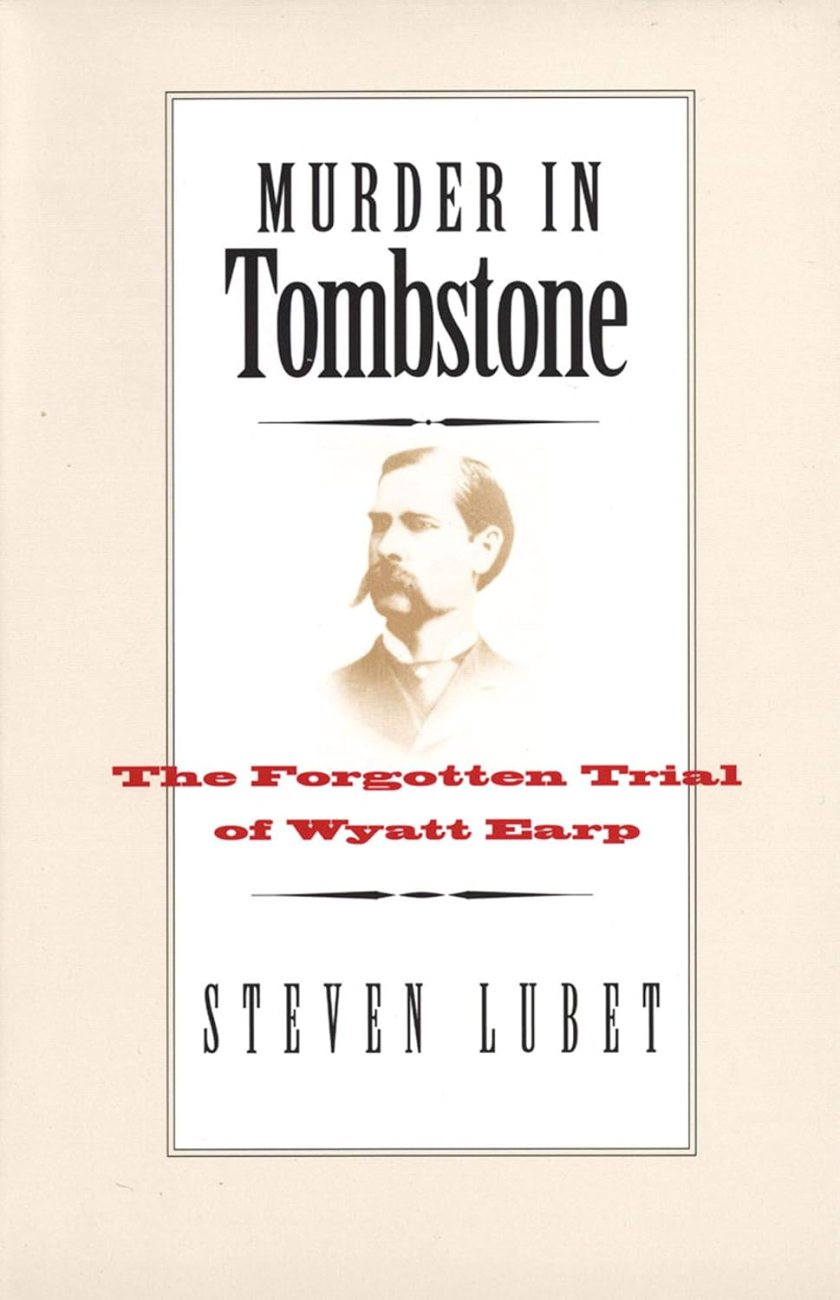
The gunfight at the OK Corral lasted less than a minute—yet it became the basis for countless stories about the Wild West. At the time of the event, however, Wyatt Earp was not universally acclaimed as a hero. Among the people who knew him best in Tombstone, Arizona, many considered him a renegade and murderer.
This book tells the nearly unknown story of the prosecution of Wyatt Earp, his brothers, and Doc Holiday following the famous gunfight. To the prosecutors, the Earps and Holiday were wanton killers. According to the defense, the Earps were steadfast heroes—willing to risk their lives on the mean streets of Tombstone for the sake of order.
The case against the Earps, with its dueling narratives of brutality and justification, played out themes of betrayal, revenge, and even adultery. Attorney Thomas Fitch, one of the era’s finest advocates, ultimately managed, against considerable odds, to save Earp from the gallows. But the case could easily have ended in a conviction—and Wyatt Earp would have been hanged or imprisoned instead of celebrated as an American icon.






 Book Reviews by the Reluctant Retiree