Posted in About Me

More Ways to Find Your Next Great Read!

I’ve discovered a wonderful tool called Linktr.ee, and it’s opening up a whole new world of possibilities for sharing the books I feature here on the blog!

Until now, most of my book links have pointed to Amazon, but I’d like to give you more choices. With Linktr.ee, I can now connect you to multiple retailers and help you find the books you want in the format you prefer.

Looking for an ebook? A paperback or hardcover? An audiobook for your next road trip or while you’re busy doing other things? There are lots of possibilities!

And here’s something that surprised me: Linktr.ee offers links to retailers and services such as Spotify, Walmart, Target, and many others! That opens the door to more ways for you to find your next great read.

📚 I Want to Hear From You!

Not everyone reads the same way, and I want to make finding your next book as easy as possible.

I’d love for you to tell me which services you use!

Do you read ebooks on Kindle, Kobo, Apple Books, Google Play Books, or another platform? Do you listen to audiobooks on Spotify or another service? Perhaps you prefer buying your paperbacks and hardcovers from a particular bookstore or retailer.

Whatever your preference, send me a message and let me know!

Here are three things I’d especially like to know:

  • Ebooks: Which app or service do you use to read or purchase ebooks?
  • Audiobooks: Where do you go to find and listen to audiobooks?
  • Print books: Where do you prefer to buy your paperbacks and hardcovers?

You don’t have to use all three formats. Just tell me what works best for you!

I’ll do my best to include your preferred services when they’re available for the books I feature. While not every book will be available in every format or through every retailer, I want to give you as many options as possible.

After all, we may enjoy our books in different ways, but we all share a love of a good story!

Help me help you find your next great read. Send me a message, tell me what you use, and let’s make Book Reviews by the Reluctant Retiree an even better place for readers to discover their next favorite book.

Happy reading! 📖❤️

Posted in #History

My Old Confederate Home: A Respectable Place for Civil War Veterans

“A welcomed addition to the growing literature on the care of disabled Civil War veterans . . . cleverly conceived, ably crafted and eloquently written.” —R.B. Rosenburg, author of Living Monuments
 
In the wake of America’s Civil War, homeless, disabled, and destitute veterans began appearing on the sidewalks of southern cities and towns. In 1902 Kentucky’s Confederate veterans organized and built the Kentucky Confederate Home, a luxurious refuge in Pewee Valley for their unfortunate comrades. Until it closed in 1934, the Home was a respectable—if not always idyllic—place where disabled and impoverished veterans could spend their last days in comfort and free from want.
 
In My Old Confederate Home, Rusty Williams frames the lively history of the Kentucky Confederate Home with the stories of those who built, supported, and managed it: a daring cavalryman-turned-bank-robber, a senile ship captain, a prosperous former madam, and a small-town clergyman whose concern for the veterans cost him his pastorate. Each chapter is peppered with the poignant stories of men who spent their final years as voluntary wards of an institution that required residents to live in a manner which reinforced the mythology of a noble Johnny Reb and a tragic Lost Cause. Based on thorough research utilizing a range of valuable resources, including the Kentucky Confederate Home’s operational documents, contemporary accounts, unpublished letters, and family stories, My Old Confederate Home reveals the final, untold chapter of Kentucky’s Civil War history.
 
“Teems with humanity. Williams has a storyteller’s gist for making historical characters come alive . . . It offers a new angle on the South’s Lost Cause.” —Charles Reagan Wilson, author of The New Encyclopedia of Southern Culture

Editorial Reviews

Review

Won the Douglas Southall Freeman Award in 2011.

“My Old Confederate Home is a good story well told.”Gaines M. Foster, author of Ghosts of the Confederacy: Defeat, the Lost Cause, and the Emergence of the New South, 1865-1913

“Williams’s book is a welcomed addition to the growing literature on the care of disabled Civil War veterans and the Confederate soldiers’ home movement. He narrates a compelling, true story, cleverly conceived, ably crafted and eloquently written.”―R. B. Rosenburg, author of Living Monuments: Confederate Soldiers’ Homes in the New South

“Teems with humanity. Williams has a storyteller’s gist for making historical characters come alive. This well-researched account of the establishment of a Confederate veterans’ home in a state, Kentucky, that did not even support the Confederacy is a dramatic story of a diverse range of people who responded to the needs of Civil War veterans. It offers a new angle on the South’s Lost Cause.”―Charles Reagan Wilson, author of Baptized in Blood: The Religion of the Lost Cause, 1865-1920

“[My Old Confederate Home tells] of the nuances and “byway” stories involving the war – the personal stories, the oddities, the forgotten. . . . about a forgotten and overlooked aspect of the War Between the States.”Old Virginia Blog

“This well-written book is highly recommended to Civil War enthusiasts.” -Daily Oklahoman

“Based on the Kentucky Confederate Home’s operational documents, contemporary accounts, unpublished letters, family stories, and other valuable resources, My Old Confederate Home reveals an unwritten chapter of Kentucky’s Civil War history.” ―Joseph-Beth Newsletter

“Williams provides the history of this home and what happened during its existence. This well-written book is highly recommended to Civil War enthusiasts.” ―Benet Exton, The Oklahoman

“Rusty Williams’ definitive account of the Kentucky Confederate Home was written from extant original sources and documents . . . and is intended for both general readers and scholars.” ―Marion B. Lucas, Bowling Green Daily News

“Williams rekindles the significance of respecting veterans and honoring their contribution to history. He also emphasizes the importance of average Americans supporting veterans despite the political tensions and economic hardships that follow war. As the story of the Kentucky Confederate Home shows, caring for veterans is the first step to repairing an injured nation.” ―civilwar.com

“Rusty Williams’ My Old Confederate Home demonstrates how the Kentucky Confederate Home in Pewee Valley was forged and maintained through a mutually beneficial partnership between government and private organizations. By profiling a shining example of how societies can and should honor and care for veterans in need, it highlights important lessons for present and future generations.” ―cwba.com

“Freelance writer Rusty Williams has written the first history of the Kentucky Confederate Home, which operated in Pewee Valley, near Jefferson County, for thirty-two years during the early 1900s. . . .This book will provide some very worthwhile insight on the experiences the Confederate veteran might have had while living there.” ―Kentucky Ancestors

“Williams tells how Kentucky tried to provide some support for its needy Confederate veterans long after the cannons were quiet but while many of the older Rebel soldiers were still alive during the emotional “Lost Cause” era. This entertaining narrative utilizes the individual stories of many of the home’s benefactors, managers and residents.” ―Berkeley Scott, Kentucky Monthly

“Provide readers with an excellent account of efforts made by ex-Confederate who were business and political leaders in the state to provide a place for their comrades who had fallen on hard times.” ―Post and Courier

“This book is a real jewel for your Confederate Library, just as the Confederate home in Kentucky was the jewel of all the places that were set up across the southern veterans.” ―Lone Star Book Review

“Williams provides an excellent summarization about Confederate veterans’ organizations in Kentucky after the war.” ―Bits and Pieces

“This book is a real jewel for your Confederate library, just as the Confederate home in Kentucky was the jewel of all places that were set up across the south for southern veterans.” ―The Lone Star Book Review

“This interesting tale of late-19th-century Kentucky politics, the workings of Civil War veterans’ organizations, and the careers of institutionalized Civil War veterans is sure to hold your attention.” ―Civil War News

“William’s book teems with human interest stories that undergird an institutional history. My Old Confederate Home will find broad appeal among scholarly and popular audiences who have an interest in thepost-Civil War lives of Kentucky’s Confederate veterans, social welfare, the United Daughters of the Confederacy, and the mythology of the Lost Cause…Williams makes great strides in unraveling the Lost Cause mythology that encased the Kentucky Confederate Home, it’s inhabitants, and its supporters…Williams story and its lively characters illuminate Kentucky’s responses to its needy veterans and how these efforts ensured a proper place for the states’ citizen-soldiers.” ―H-Net Reviews

“…a fascinating read. . . . No library on Kentucky Civil War history will be complete without this book.”―The Journal of America’s Military Past

“Using detailed records of the home, Mr. Williams is able to cover the entire period of operation from inception to the death of the final Veteran. . . . an interesting and moving read.” ―DCV Today

“All readers…will appreciate Williams’s descriptive writing and colorful storytelling which brings his many subjects, and the time period in which they lived, to life.”―Register of the Kentucky Historical Society

“Williams reveals the final, untold chapter of Kentucky’s Civil War history.”―Appalachian News-Express

“Williams should be commended for his energetic and very readable history of one of the South’s most successful postwar efforts to provide solace and assistance to Confederate veterans as they ambled toward the grave.”―Journal of Southern History

“A useful introduction into the grassroots formation, organization, and management of Confederate homes. Throug his meticulous research and a cast of lively characters, Williams has indeed created a respectable place for Civil War veterans.”―West Virginia History

“This work is a captivating narrative and a fine addition to several burgeoning sub-fields in southern history, including the Lost Cause, social welfare, women’s history, and progressive reform.”―Louisiana History

From the Inside Flap

In the wake of America’s Civil War, hundreds of thousands of Confederate veterans trudged back to their homes in the South, where the nation whose ideals they had fought for no longer existed. Lingering war wounds, missing limbs, or the horrors of brutal warfare left some unable to care for themselves. Homeless, disabled, and destitute veterans began appearing on the sidewalks of southern cities and towns, unwanted and unsupported by the government.

Driven by compassion for their less fortunate comrades, in 1902 Kentucky’s Confederate veterans organized and built the Kentucky Confederate Home, a luxurious refuge that sheltered almost a thousand needful men who had worn the gray decades before. For three decades the Home was a respectable — if not always idyllic — place where invalid, decrepit, and impoverished veterans could spend their last days in comfort and security. Part military encampment and part rest home, the Home became a tourist destination and a living museum where twentieth-century schoolchildren could meet the men who marched at Shiloh or defended Atlanta.

In My Old Confederate Home: A Respectable Place for Civil War Veterans, Rusty Williams frames the lively history of the Kentucky Confederate Home through the stories of those who built, managed, and inhabited it: a daring cavalryman-turned-bank robber, a small-town clergyman whose concern for the veterans cost him his pastorate, a senile ship captain, a wealthy benefactress with a scandalous secret, and more.

Based on the Kentucky Confederate Home’s operational documents, contemporary accounts, unpublished letters, family stories, and other valuable resources, My Old Confederate Home reveals an unwritten chapter of Kentucky’s Civil War history. Each chapter is peppered with the poignant stories of men who spent their final years as voluntary wards of an institution that required residents to live in a manner which reinforced the mythology of a noble Johnny Reb and a tragic Lost Cause.

From the Back Cover

In the wake of America’s Civil War, hundreds of thousands of Confederate veterans trudged back to their homes in the South, where the nation whose ideals they had fought for no longer existed. Lingering war wounds, missing limbs, or the horrors of brutal warfare left some unable to care for themselves. Homeless, disabled, and destitute veterans began appearing on the sidewalks of southern cities and towns, unwanted and unsupported by the government.

Driven by compassion for their less fortunate comrades, in 1902 Kentucky’s Confederate veterans organized and built the Kentucky Confederate Home, a luxurious refuge that sheltered almost a thousand needful men who had worn the gray decades before. For three decades the Home was a respectable — if not always idyllic — place where invalid, decrepit, and impoverished veterans could spend their last days in comfort and security. Part military encampment and part rest home, the Home became a tourist destination and a living museum where twentieth-century schoolchildren could meet the men who marched at Shiloh or defended Atlanta.

In My Old Confederate Home: A Respectable Place for Civil War Veterans, Rusty Williams frames the lively history of the Kentucky Confederate Home through the stories of those who built, managed, and inhabited it: a daring cavalryman-turned-bank robber, a small-town clergyman whose concern for the veterans cost him his pastorate, a senile ship captain, a wealthy benefactress with a scandalous secret, and more.

Based on the Kentucky Confederate Home’s operational documents, contemporary accounts, unpublished letters, family stories, and other valuable resources, My Old Confederate Home reveals an unwritten chapter of Kentucky’s Civil War history. Each chapter is peppered with the poignant stories of men who spent their final years as voluntary wards of an institution that required residents to live in a manner which reinforced the mythology of a noble Johnny Reb and a tragic Lost Cause.

About the Author

Rusty Williams, a freelance writer and historian, has written for the Dallas Morning News, Fort Worth Star-Telegram, San Antonio Express-News and the Associated Press. He lives in Dallas, Texas.

Posted in #BookTours

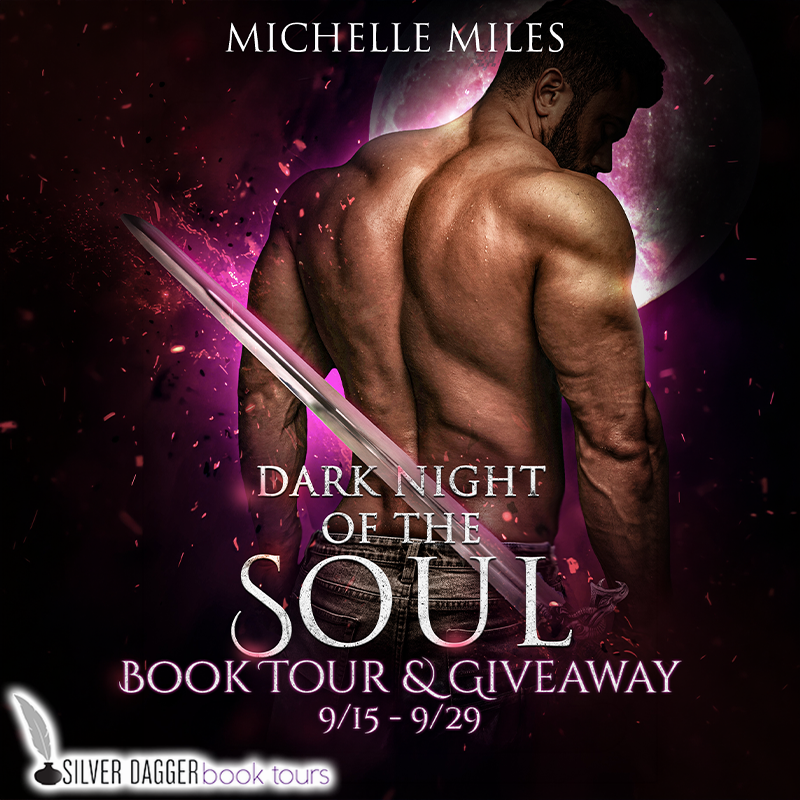
Dark Night of the Soul


Love made him dangerous.

Devotion will make him unstoppable.


Dark Night of the Soul

War of the Brotherhood Book 1

by Michelle Miles

Genre: Dark Paranormal Romance


Love made him dangerous. Devotion will make him unstoppable.

For centuries, Kincade survived by control.

Forged by the Brotherhood, he learned to bury his humanity, suppress his instincts, and become exactly what they needed him to be—a weapon. Darkness was safer than feeling. Obedience was survival.

Then she changed everything.

When the woman he loves is taken, restraint shatters. The careful balance he’s fought to maintain slips—and the Brotherhood sees their opening. They want the monster he used to be. The weapon they never quite lost.

To save her, he may have to become exactly that.

As ancient secrets rise and factions fracture, the line between protector and destroyer begins to blur. Every step closer to her pulls him deeper into the war he tried to escape—and toward the darkness he swore would never rule him again.

Because this time, love isn’t his weakness. It’s his point of no return.

Dark Night of the Soul is a dark paranormal romance set within the War of the Brotherhood—a high-stakes spin-off arc in the Dream Walker universe. You do not need to read the previous Dream Walker books to enjoy DARK NIGHT OF THE SOUL. This spinoff is designed to stand on its own.


Perfect for readers who love:

* Dark, emotionally intense paranormal romance

* Immortal antiheroes and devotion-driven stakes

* Secret orders, hidden wars, and found family

* Love that becomes defiance


Content Note: This book contains dark themes and intense scenes, including violence, injury and blood, torture / forced restraint, psychological trauma, and situations involving coercion / control. It also includes threats to a loved one. Reader discretion is advised.


“Dark Night of the Soul by Michelle Miles is everything dark paranormal romance should be—intense, emotional, and completely consuming. I devoured it.”

— Michelle M. Pillow, NYT Bestselling Author


Available in eBook, paperback, and audio! 


Author’s Site * Amazon * Apple * B&N * Smashwords * Books2Read * Bookbub * Goodreads


MICHELLE MILES believes in fairy tales, true love, and a little bit of magic in every story. She writes fantasy, paranormal, and young adult books packed with adventure, action, and swoon-worthy romance—because what’s a story without a bit of danger and a whole lot of heart? From angels and demons to dragons, elves, and time travelers, her books are filled with epic quests, fierce heroines, and the kind of heroes worth falling for.

When she’s not crafting new adventures, she brings stories to life as a narrator and hosts Miles Beyond the Page, a podcast where she chats with authors about their writing journeys. A Texas girl through and through, she loves getting lost in a good book, binge-watching movies, hiking the trails, and sipping a glass of wine. Come hang out with her on Facebook, Instagram, Pinterest, and more!


Website * Facebook * X * Instagram * TikTok * Bookbub * Amazon * Goodreads


Follow the tour HERE for special content and a giveaway!


Enter the Dark Night of the Soul Giveaway Here


Posted in #History, #non-fiction

Saved at the Seawall: The 9/11 Boatlift Story We Should Remember

There are certain dates that don’t need a year attached to them.

September 11 is one of them.

For those of us old enough to remember that day, the memories can still be surprisingly close. We remember where we were. We remember the television coverage. We remember trying to reach people we loved.

And we remember the overwhelming sense that something had happened that we didn’t yet understand.

Twenty-five years later, I still find some stories about September 11 difficult to read.

So I wasn’t looking for another book about 9/11.

I was looking for something else entirely.

And then I discovered the boats.

The Story I Didn’t Know

I recently came across a History Channel article about the September 11 Boatlift.

I stopped.

I had never heard this story.

I knew about the towers. I knew about the firefighters, police officers and other first responders. I knew about the people who were trapped and the people who escaped.

But somehow, I had never learned about what happened along the waterfront.

While Lower Manhattan was becoming increasingly isolated, hundreds of thousands of people were trying to find a way off the island.

The bridges and tunnels had closed.

Public transportation was disrupted.

And people began moving toward the water.

Then the boats started coming.

That discovery led me to Jessica DuLong’s book, Saved at the Seawall: Stories from the September 11 Boat Lift.

And I realized I had found one of those pieces of history that deserves to be remembered.

When the Boats Became the Way Out

The water surrounding Manhattan suddenly became an escape route.

Ferries.

Tugboats.

Dinner boats.

Fireboats.

Commercial vessels.

Private boats.

The maritime community of New York Harbor began responding to the crisis.

Some vessels were already nearby.

Others came from across the harbor.

They carried people away from Lower Manhattan and brought them to safety.

And the extraordinary thing is that this massive evacuation wasn’t the result of some perfectly executed emergency plan.

People simply saw what was happening and responded.

The U.S. Coast Guard eventually called for “all available boats.”

But vessels were already moving toward Manhattan before that call went out.

Nearly Half a Million People

This is where the numbers become almost difficult to comprehend.

The U.S. Coast Guard’s official history describes the operation as the evacuation of more than 500,000 people from Manhattan, using hundreds of local ferries as well as commercial and private craft. The Coast Guard calls it the largest maritime evacuation in recorded history, completed in less than eight hours without a loss of life during the maritime evacuation.

The National September 11 Memorial & Museum gives a somewhat more conservative estimate of 300,000 to 500,000 people transported to safety.

That difference isn’t surprising.

There wasn’t one central passenger manifest for every boat involved. The evacuation was an enormous, rapidly developing operation involving vessels of many different types.

But whether you use 300,000, 400,000, nearly 500,000, or the Coast Guard’s figure of more than 500,000, the scale is astonishing.

Hundreds of thousands of people were carried away from Lower Manhattan by water in a matter of hours.

And Then There’s Dunkirk

This is the part of the story that really stopped me.

When we think about a dramatic evacuation by boat, many of us immediately think of Dunkirk.

Operation Dynamo, conducted from May 26 through June 4, 1940, has become one of the best-known maritime rescues in history.

More than 338,000 British and Allied troops were evacuated from Dunkirk.

The story became known as the “Miracle of Dunkirk.”

And rightly so.

The evacuation was an extraordinary achievement carried out under wartime conditions, with hundreds of naval and civilian vessels involved.

But here’s something I didn’t know until I started digging into the 9/11 Boatlift:

The number of people evacuated from Manhattan on September 11 was greater than the number evacuated from Dunkirk itself.

Dunkirk: 338,226 people.

9/11 Boatlift: approximately 300,000–500,000 people, with the U.S. Coast Guard reporting more than 500,000.

The comparison needs a little care because the broader 1940 evacuation also involved Allied troops being rescued from other French ports.

But when we compare the famous Dunkirk evacuation with the evacuation from Manhattan, the numbers make one thing very clear:

The 9/11 Boatlift belongs in the same conversation.

In fact, by the commonly cited figures, it was larger.

And yet I had never heard of it.

The Little Ships of New York Harbor

The comparison to Dunkirk is more than just about numbers.

At Dunkirk, civilian vessels became part of a desperate rescue effort.

In New York Harbor, ordinary working vessels did something remarkably similar.

But there is another difference.

The people being evacuated from Manhattan weren’t soldiers retreating from a battlefield.

They were commuters.

Residents.

Visitors.

Office workers.

People who had simply been in Lower Manhattan that morning.

They were trying to get home.

And the people operating the boats were, for the most part, doing something very ordinary:

They were doing their jobs.

Except this wasn’t an ordinary day.

The People Behind the Number

This is where Jessica DuLong’s book becomes especially important.

A statistic can tell us that nearly half a million people were evacuated.

A book can tell us what it was like to be one of them.

Saved at the Seawall is built around eyewitness accounts and the stories of both the people who were evacuated and the mariners who carried them away.

That’s one of the reasons I think this book belongs on the shelf of anyone interested in history.

It brings the story down to the human level.

People standing along the waterfront.

People looking for a way out.

People trying to find family members.

People who didn’t know what would happen next.

And then a boat arrives.

About 800 Mariners

One of the details in Saved at the Seawall that really brings the scale of the response into focus is the number of people involved on the water.

According to the foreword by Mitchell Zuckoff, approximately 800 mariners aboard at least 150 watercraft participated in the Boatlift.

Think about that.

Hundreds of people who knew New York Harbor.

People who understood tides and currents and docks and ferries.

People who knew how to move boats through crowded waters.

People whose ordinary knowledge suddenly became critically important.

They didn’t have a magic solution.

They had boats.

They had experience.

And they had people who needed help.

That was enough.

The Courage to Go Toward the Trouble

There is a question at the center of the Boatlift that I can’t quite shake:

What makes someone turn toward a disaster when everyone else is trying to get away from it?

The mariners didn’t know exactly what they were heading into.

The situation was still unfolding.

There was no guarantee that the harbor would remain safe.

Yet they went.

The boats came toward Manhattan.

They took people aboard.

They carried them away.

Then they turned around and came back.

And did it again.

That doesn’t sound like the kind of heroism we see in movies.

There’s no swelling soundtrack.

No dramatic speech.

Sometimes courage is simply recognizing that somebody needs help and deciding to go.

The Book Behind the Story

Jessica DuLong is particularly well suited to tell this story.

She is a journalist, historian and mariner, and she served as chief engineer of the historic New York City fireboat John J. Harvey.

That detail matters.

DuLong wasn’t writing about the maritime world from a distance.

She knew it.

She understood the harbor, the vessels and the culture of the people who work on the water.

And she had her own September 11 experience.

The John J. Harvey, a retired 1931 fireboat that was being restored by volunteers, was brought back into service after the attacks. It pumped seawater to Ground Zero for four days, helping provide water for firefighting after the city’s water infrastructure had been damaged.

DuLong was one of the boat’s engineers.

That personal connection gives Saved at the Seawall another layer.

She wasn’t simply researching an interesting historical event.

She was writing about a community she knew—and about a day she experienced.

From Dust to Deliverance to Saved at the Seawall

There’s another piece of the book’s history worth knowing.

The book was originally published in 2017 under the title Dust to Deliverance: Untold Stories from the Maritime Evacuation on September 11.

In 2021, Cornell University Press published a new edition under the title Saved at the Seawall: Stories from the September 11 Boat Lift.

The newer edition includes a new preface by DuLong and a foreword by Mitchell Zuckoff.

I actually like the new title.

Saved at the Seawall captures the image at the heart of the story: people reaching the waterfront and finding that someone had come to get them.

Why This Story Matters

I don’t think remembering the Boatlift makes September 11 a “feel-good” story.

There is nothing feel-good about that day.

Nearly 3,000 people died.

Families were shattered.

First responders gave their lives.

Thousands of people were injured or traumatized.

The consequences continued long after the smoke cleared.

Remembering the Boatlift doesn’t change any of that.

But it does remind us that the story of September 11 isn’t made up exclusively of destruction.

It also contains extraordinary acts of courage, compassion and cooperation.

The people who operated those boats didn’t undo the tragedy.

They simply helped people survive it.

And sometimes that’s what courage looks like.

Why I Wanted to Read This Book

I found Saved at the Seawall because I happened to read about the Boatlift.

That’s one of the things I love about books.

They have a way of opening doors into parts of history we didn’t even realize were missing.

I thought I knew the story of September 11.

Then I discovered the boats.

Then I discovered the mariners.

Then I discovered that hundreds of thousands of people had escaped Lower Manhattan by water.

And suddenly there was an entire story I had never heard.

That’s exactly the kind of discovery that makes me want to read a book.

My Recommendation

I recommend Saved at the Seawall.

I would, however, give prospective readers the same warning I would give myself:

This is a book about September 11.

Some of the stories are difficult.

If you’re someone who finds personal accounts of that day especially hard to read, you may want to take your time with it.

That’s not a criticism.

In fact, I think it’s part of why the book is meaningful.

DuLong isn’t asking us to forget what happened.

She’s asking us to remember something else that happened, too.

People helped people.

The Story We Should Remember

Twenty-five years after September 11, there are stories from that day that almost everyone knows.

And there are stories that still haven’t received the attention they deserve.

The 9/11 Boatlift is one of them.

When the bridges and tunnels closed and hundreds of thousands of people found themselves stranded in Lower Manhattan, the harbor became a way out.

And the boats came.

They came before there was a fully organized plan.

They came when the situation was still unfolding.

They came because mariners saw people in distress and responded.

Approximately 800 mariners aboard at least 150 vessels helped carry hundreds of thousands of people to safety.

The U.S. Coast Guard calls it the largest maritime evacuation in recorded history.

And the number of people evacuated from Manhattan was greater than the number rescued from Dunkirk itself.

I think that’s a story worth knowing.

I think it’s a story worth reading.

And, perhaps most importantly, I think it’s a story worth remembering.

Because on one of the darkest days in American history, there were people standing at the seawall.

And when they looked out at the harbor, the boats came.


Book Details

Title: Saved at the Seawall: Stories from the September 11 Boat Lift
Author: Jessica DuLong
Foreword: Mitchell Zuckoff
Publisher: Cornell University Press / Three Hills
Publication: 2021 edition
Original title: Dust to Deliverance: Untold Stories from the Maritime Evacuation on September 11
Genre: History / Oral History / Maritime History

My Rating: ⭐⭐⭐⭐⭐

Find the Book

If you’d like to read Saved at the Seawall, you can find it through these retailers:

Learn More

The 9/11 Boatlift

The Book

Dunkirk

One Last Thought

Some stories are difficult because of what happened.

Others are difficult because of what they ask us to imagine.

The 9/11 Boatlift does both.

But it also gives us something else to hold onto.

On a day when so much was lost, people still found ways to help one another.

Sometimes history remembers the people at the center of an event.

Books like Saved at the Seawall remind us to look toward the edges, too.

Because sometimes, at the edge of the story, there is a seawall.

And beyond it, there are boats coming home.