Posted in #Anthology

Portland Noir

Explore the dark, rainy underbelly of one of America’s most beautiful but enigmatic cities.

Akashic Books continues its groundbreaking series of original noir anthologies, launched in 2004 with Brooklyn Noir. Each story is set in a distinct neighborhood or location within the city of the book.

Brand-new stories by: Gigi Little, Justin Hocking, Christopher Bolton, Jess Walter, Monica Drake, Jamie S. Rich (illustrated by Joëlle Jones), Dan DeWeese, Zoe Trope, Luciana Lopez, Karen Karbo, Bill Cameron, Ariel Gore, Floyd Skloot, Megan Kruse, Kimberly Warner-Cohen, and Jonathan Selwood.

From the introduction by Kevin Sampsell:

“Settled in 1843 and named by a coin flip (we were almost named Boston), Portland had troubles from the start. The first sheriff, William Johnson, was busted for selling ‘ardent spirits.’ He had been ‘reduced by an evil heart,’ said the indictment. The first couple of decades were probably pretty rough, what with the constant flooding and muddy streets making all the citizens cranky . . . Later, in the 1940s and ’50s, the city practically thrived on criminal activity. Speakeasies, brothels, and gambling dens popped up across the downtown area . . . Portland became known as quite the decadent town, even prompting Bobby Kennedy to wrangle up its main bad guys for a televised Racketeering Committee meeting in 1957. One senator said at the hearings, ‘If I lived there, I would suggest they pull the flags down to half-mast in public shame.’

A lot of these places of ‘shame’ remain standing, and while many are occupied now by salons and offices, some of them are probably still home to gambling and stripping. (Portland does, after all, have more strip clubs per capita than any other city in America—and yep, they take it all off here.) . . . Portland continues to update its own version of a contemporary utopian society as more and more people flock here. But even in utopia, crime and unrest are always bubbling right under the surface.”


Ed Battistella

5 out of 5 stars

Gritty Portland

Reviewed in the United States on July 4, 2014

Format: Paperback

In Portland Noir, editor Kevin Sampsell takes us through the Rose City’s wilted flowers with 16 stories by Oregonians including one illustrated story and another set in Powell’s City of Books. Some of my favorite Oregon writers were represented including Bill Cameron, Flood Skloot, Karen Karbo and Monica Drake, and I was introduced to some new-to-me folks—like Gigi Little, Justin Hocking, Zoe Trope, and Luciana Lopez. Great crime fiction, gritty local color, an edge depiction of the seamy side of present dya Portland and a fine tribute to Portland’s noirish history.

Posted in #BookTours

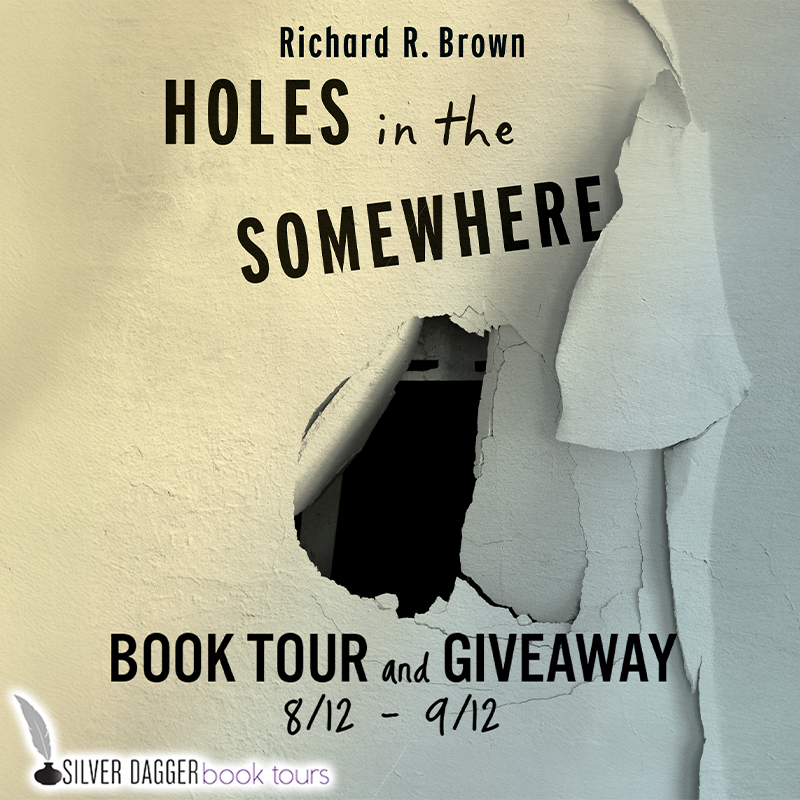
Holes in the Somewhere


Sometimes grief sneaks up on you and hunts you down.

Sometimes it walks right up and punches you.


Holes in the Somewhere 

by Richard R. Brown

Genre: Speculative Fiction, Horror Stories


Holes In The Somewhere is a collection of short works, anchored by a personal memoir of the author’s own experience with grief and loss after the passing of his father from cancer, by speculative fiction author Richard R. Brown.

A single mother encounters insanity in the worst possible person; an estranged parent loses his reunited family to a mysterious bathroom wall; a group of strangers come together to fight a fungal pandemic; college students prepare for the extinction of the Sun… these are a few of the challenges faced by the desperate characters in Holes In The Somewhere. The choices they make, the dilemmas they wrestle with, all have very supernatural consequences, but are felt with very human emotions.

These stories will tug at strings your heart thought were too well-hidden for anyone to know about, and cause the mind to probe the gray areas between wrong and right. Between normal and paranormal. Behind what’s real and only to the side of what’s unreal. A perfect mix of quick, unsettling reads, and longer, heart-wrenching escapes.


What readers are saying:

“The debut is speculative fiction in form: weird, unsettling, occasionally cosmic. But it reads less like a genre exercise than like grief that has been given permission to take unusual shapes.” – Justine Castellon, Author/Reviewer

“I guarantee there is a ‘gotcha’ story in there for just about anybody, and if you don’t find at least one that bothers you just as you’re about to fall asleep, you’re made of sterner stuff than I am.” – Kenneth Crist, editor-in-chief, Black Petals Magazine

“These stories are weird and creepy and heart-wrenching in all the best ways. If you enjoy fiction that makes you question everything and wrecks you emotionally, this is for you!” – Valerie S., 5 star Amazon Review


Amazon * B&N * Kobo * IngramSpark * Bookbub * Goodreads


Excerpt from ‘A Hole In The Somewhere’, a story in ‘Holes In The Somewhere’


When he hung up, he saw the answer to his problem of Tony’s dead body. He picked Tony up and wrestled him into the wall where the blurred patch was. Pieces seemed to fall off into the wall, but that just made Tony easier to handle. He just had time to change into a clean shirt and slide the gun back under the couch before there came a soft knock on his door.

Jack wiped sweat from his forehead and opened the door. Before him stood the same little girl who held his hand twenty years ago and asked him, “Why, Daddy?” about absolutely everything. Only now she had green eyes when she used to have brown eyes. 

“Mommy says you’re my grandpa,” she said to him now. “Why is your door all bubbly and brown, Grandpa?”

Jack looked up and past his granddaughter at Mary, who was smiling anxiously at both of them.

“Hi, Daddy,” was all she said. It was enough.

Jack burst into tears, picked his granddaughter up in his left arm, and trotted down the steps to embrace his daughter with his right arm. They hugged for several moments before a muffled, “Why are you crying, Grandpa?” came from his shoulder.

Jack laughed, and put her down on the ground again. “I’m crying because I’m so happy to meet you!” he said.

“Oh. My name’s Emily, but you can call me Emmy. Why do you live by the train tracks, Grandpa?”

“Actually, Dad, I’m curious, too. This address came up as ‘Condemned.’ How is it that you live here?” 

Jack led them inside and told them his story, forcing himself to be honest about his decisions and his reasons. Recent events disappeared from his awareness as the last twenty years enveloped him. He told them about his depression and anger from the divorce, and how losing everything seduced him into giving up everything. He hadn’t wanted to try to replace what he had lost because that would be admitting that he had lost it to begin with. After a few minutes, Emmy wanted to explore, so Jack gave a tour while he talked. It only took a minute.

In the bathroom, Mary shot him an alarmed look when she saw the cracked mirror. “Oh! It was like that when I found this place. I got a new one last month. I just forgot about hanging it up.”

“Let’s do it now, Daddy. I don’t like that crack, for some reason. It creeps me out.”

They hung the new mirror while Jack entertained them with stories from his train-hopping days. Mary leaned the cracked mirror against the wall below the new one, stood up, and proclaimed, “Much better!”

Jack and Mary returned to the main room. Mary told Jack about her short, failed marriage to Emmy’s father, her job at CyberSolutions, and her academic career. “Where is Emmy?” Jack wondered aloud.

“She was fascinated by that old mirror, so I leaned it against the wall so she could look at it.”

Jack felt a moment of unease at this, but had no ready explanation for it, so he let it go. “Are you hungry, kiddo?” he asked Mary. “I’m sure Emmy probably is. Want to go to lunch?”

“Sure, but I’m pay-“Mary was interrupted by a tremendous whipcrack coming from the bathroom.

The gun!, Jack thought, and leapt to his feet as Mary called out, “Emmy?  Emmy!” They both ran into the bathroom, only to find it empty. There was nothing to hide behind, but Mary made a close search of every corner, anyway, all the while calling her daughter’s name, “Emmy! Emmeeee!”


Richard R. Brown is a legally-blind author of speculative fiction, horror, and thrillers. He writes from experience, having lived through paranormal events, alien attacks, and cosmic horrors — at least, in his mind and in the books he listens to. He and his Guide Dog live in the Pacific Northwest. Richard is between Guide Dogs at the moment as Edison retired last summer. Edison was at Richard’s side through every story in his book. Richard has no such guidance for his current novel, but will likely have one for editing help.
Posted in #BookTours

How Do You Live Without Love?


A newly hired, grief-burdened local pastor relocates to Asheville to revive a struggling Methodist church, only to collide with small-town politics, scandal, and a media-fueled public crisis; his efforts to build community and heal himself meet resistance, tragedy, and unexpected solidarity.

How Do You Live Without Love?

The Dying Church Series Book 1

by Anthony Bradshaw

Genre: Contemporary Fiction, Found Family


Wesley Aames shows up to New Covenant as a man who has already lost everything—wife, daughter, and the will to keep going. Hired to revive a sleepy Appalachian church, he finds a congregation on life support: dwindling funds, fractious trustees, and a choir director who distrusts the new pastor from day one.

When a teenager dies by suicide and her mother’s humiliation explodes online, Rosa Lee becomes a magnet for cameras and contempt. Wesley, barely a pastor and twice a stranger to mercy, steps into the storm—counseling teens, calming old ladies, cutting the grass, answering crisis hotline calls—trying to make faith look like rescue instead of rhetoric.

As the church’s finances and patience run out, a vote looms: keep the earnest, flawed pastor or replace him with steadier hands. But when the outside world shows up with microphones and accusations. Wesley’s choices become literal life or death. Can a man who still blames himself for his family’s deaths save strangers—and in doing so, finally forgive himself? This is a story about grief, messy grace, and the small acts that sometimes hold a town together.


**Only .99cents!**

Amazon * Apple * Kobo * Bookshop.org * Smashwords * Bookbub * Goodreads


Wesley walked today rather than ran. Too tired to run, he needed time for introspection, processing, and perhaps a re-balancing of his inner psyche. He had always prided himself on his self-control and equilibrium. Rarely did he lose his temper or act without thought. Wesley started the play list that featured Janiva Magness and walked the streets of Asheville with her sultry voice soothing his savage breast.

Then Wesley saw him. The ugliest, mangiest looking dog Wesley ever. The few spots where he had hair were brown. One leg was missing. One ear looked chewed off and the way he cocked his head made Wesley think the dog was blind in one eye. “Hey there,” Wesley said. The dog took a step back. Wesley kneeled on the damp ground. “Hey boy.”

The dog held his ground this time. He cocked his head and watched Wesley with his good eye. Using the universal and timeless signal between dogs and the people they owned everywhere, Wesley clucked his tongue. The dog’s one good ear twitched. A little.

Turning around, Wesley took a few steps away from the three-legged, one-eyed, one-eared dog and whistled. The dog barked. Wesley kept walking. The dog barked again. Twice. Louder this time. Wesley turned back and looked at the dog. “Come on, if you want to,” said Wesley with a smile. The dog barked at Wesley, and then he trotted to where Wesley stood, looked up at him and barked. Man and dog walked the streets of Asheville.

Back at the parsonage, Wesley knew he would be late for work, but he did not care. The dog needed to eat.

“As funny as it would be to watch you eat a peanut butter and jelly sandwich, how about I give you corned beef hash? It’s canned. I haven’t had time to make fresh–but I will, I promise. Just for you. Well, and me. I’ll have some of this as well for my breakfast. You won’t care if I heat it or not. So, let’s rough it and eat it straight out of the can. You know, like the cavemen did.” The dog sat back on his one good haunch and waited–like dogs do.

“Here you go, pal.” Wesley spooned half of the can onto a paper plate. “You know, missing a couple body parts like you do, looks like you have stories to tell. You may be the luckiest dog alive.” Wesley kept up a constant stream of chatter to put the dog at ease. The dog barked and moved closer. Wesley took the opportunity, while the dog devoured his food, to check the dog’s collar and tag.

“George.”

The dog stopped eating, backed up, and growled.

Wesley looked at the dog and said it again. “George.”

The dog growled and barked. It was a different bark from any of the earlier barks.

Wesley pointed at the collar and tag. “The tag says your name is George,” reasoned Wesley.

George growled and barked.

Wesley squatted and clicked his tongue. “Come here, boy.”

He placed a slight emphasis on the last word. George wagged his tail and inched close enough to resume eating, which he did.

“George,” said Wesley. “George” backed up a few feet–out of Wesley’s reach. His one good eye darted between Wesley and the half-eaten corned beef hash.

“Come here.” Wesley clicked his tongue.

The dog stared at Wesley for a moment before coming close enough to eat his few remaining bites.

“Well, it looks like you don’t care much for your old name. I bet I can call you anything if I feed you. How about…Lucky?”

Wesley looked over “Lucky’s” three-legged, one-eared, and one-eyed body and just shook his head at the irony of calling this dog “Lucky.” That sealed it. “I wonder if you only have one nostril working?” Wesley laughed. “You oughta see the other dog, huh? Right, Lucky?”

Wesley kneeled and scratched behind the dog’s good ear and repeated his new name — Lucky. Before Wesley left for work, he pulled up the picture of his family on his cell phone and introduced the newest member of his family to the picture of his wife and daughter.

Lucky finished the can of cold corned beef hash and drank water from the empty can.


I’ve had several “careers.” I’ve taught robotics; been a hospital administrator, served in the National Guard, bussed tables and flipped burgers. Above all else, I am a husband, father, and grand-pere’. I am a native of North Carolina and currently reside near Asheville.

Posted in #Anthology

Wall Street Noir

This anthology explores the dark side of finance from Manhattan to Bangkok and Tel Aviv, featuring new stories by Jim Fusilli, Lauren Sanders and more.
 
Wall Street often looks like a gleaming world of high-end professionalism where decisions to buy or sell are guided by expertise, formulas and dispassionate strategy. And sure, that’s one version of Wall Street. Let’s call it the CNBC edition. But this book is about another place, just beneath that shiny surface: a place where fear and greed have always held sway. Think WorldCom or Tyco; think Enron. Think Gordon Gekko.
 
Wall Street Noir illuminates a place whose boundaries have spread well beyond Trinity Church and the East River. In today’s global economy, Wall Street is everywhere: a borderless, virtual city encompassing Midtown Manhattan, Main Street, U.S.A., the maquilas of Honduras, the office towers of Shanghai, and the brothels of Bangkok. It’s a shadowy metropolis, as the stories in this exciting collection reveal, and one that’s far more Jim Thompson than Warren Buffet.
 
Wall Street Noir includes brand-new stories by John Burdett, Henry Blodget, Peter Blauner, Jason Starr, Megan Abbott, Reed Farrel Coleman, Stephen Rhodes, Twist Phelan, Tim Broderick, Jim Fusilli, David Noonan, Richard Aleas, Lawrence Light, James Hime, Mark Haskell Smith, Peter Spiegelman, and Lauren Sanders.

Posted in #Anthology

Los Angeles Noir

Los Angeles Noir brings you tales of crime and passion and betrayal from some of the most innovative and celebrated writers working today.

—A Los Angeles Times best seller, Book Sense Notable Pick, and SCIBA Book Award Winner

Akashic Books continues its groundbreaking series of original noir anthologies, launched in 2004 with Brooklyn Noir. Each story is set in a distinct neighborhood or location within the city of the book.

Brand-new stories by: Michael Connelly, Janet Fitch, Susan Straight, Héctor Tobar, Patt Morrison, Emory Holmes II, Robert Ferrigno, Gary Phillips, Christopher Rice, Naomi Hirahara, Jim Pascoe, Neal Pollack, Scott Phillips, Diana Wagman, Lienna Silver, Brian Ascalon Roley, and Denise Hamilton.

From the introduction by Denise Hamilton:

“Los Angeles is the birthplace of all things noir . . . Maybe it’s the seductive blur of artifice and reality, the possibility of shucking off the past like last year’s frock and reinventing yourself beyond your wildest dreams. Maybe it’s the desperation that descends when the dream goes sour, the duplicity that lurks behind the beauty, the rot of the jungle flowers, the riptides off the sugar sand beaches that carry off the unwary. Writers like James Cain, Dorothy B. Hughes, Nathanael West, Chester Himes, and Raymond Chandler understood both the hope and the horror that Los Angeles inspires, and they harnessed this duality to create their masterpieces . . .

With Los Angeles Noir, we’ve brought you the ethos of Chandler and Cain filtered through a contemporary lens, showcasing some of the most innovative and celebrated writers working today. Open these pages and you’ll embark on a literary travelogue that stretches from the mountains through the hardscrabble flats to the barrios and middle-class suburbs, the mansions of the wealthy, and the shores of the Pacific Ocean where we finally run out of continent. The breadth of talent on display is as exciting and diverse as the city itself.”