Posted in #BookTours

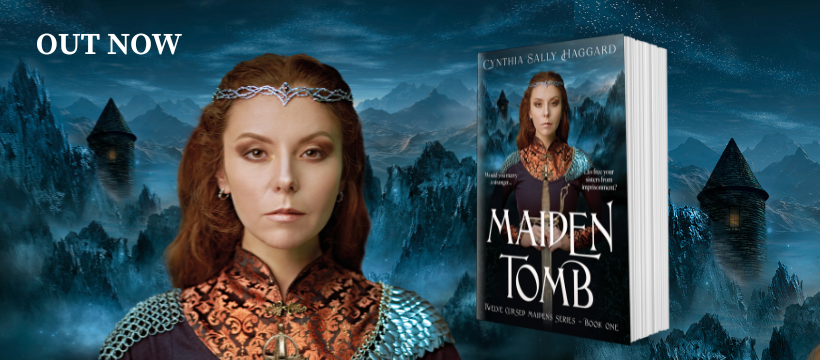
MaidenTomb

Maiden Tomb
Cynthia Sally Haggard
(Twelve Cursed Maidens, #1)
Publication date: February 5th 2025
Genres: Adult, Fairy Tales, Fantasy, Historical, Retelling, Romance

Follow twelve princesses down a dark tunnel into a grove of jeweled trees to a too-placid lake, where a prince will row you across to a gleaming castle to dance the night away. This historical fantasy—a retelling of the Twelve Dancing Princesses folktale—drifts backwards in time from the Early Middle Ages of Sicily to the Bronze Age of the Trojan War. It is perfect for fans of Circe and Spinning Silver.

Sixteen-year-old Justice wants to release her sisters from the jaws of Father’s imprisonment. But what can she do? The easiest way would be to find suitors for them.

However, that is not so easy, for Justice’s elder sisters are strange. What with All-Gifted’s madness, Protectress’s hair writhing with snakes, Death-Bringer’s grief (not to mention her strange name), Shining’s scandalous doings, Maiden’s tart tongue, Shadow’s crippling shyness, no sensible man would want her sisters as wives. Which leaves Justice, the seventh daughter, the one who possesses a quiet authority.

Maiden Tomb, Book One of the Twelve Cursed Maidens series, is a clean enemies-to-lovers romance.

The original fairytale—about twelve young ladies dancing all night—sounds so jolly doesn’t it? But I don’t think Twelve Dancing Princesses is about dancing at all.

I think it is about death.

Why do I think that? Well there appear to be some elements to the tale that go back, way back, hundreds, no, thousands of years, back into the Ancient World.

First of all, being rowed across a body of water sounds like a thread of Greek Mythology found its way into this tale. It is very reminiscent of Charon the boatman rowing the souls of the newly dead across the River Styx.

Then there are those jeweled trees. Where do they come from? Several scholars believe that element of the story comes from the Tale of Gilgamesh, which may have been originally composed around 1800 BCE. It tells the story of Gilgamesh, a King of Uruk a city-state in Sumeria, who is grieving for the death of his best friend. According to scholars, Gilgamesh ruled the Kingdom of Uruk in around 2700 BCE.

Then there are the princesses themselves. Have you ever wondered why their are twelve princesses? Again, the answer points towards the ancient kingdom of Sumeria, which existed in what is now present day Iraq, beginning in around 6,000 BCE. The Sumerians were renowned astronomers who used a base-12 numerical system, unlike the base-10 or decimal system we use today.

And so, there you have it. When you dig below the surface, a charming story from Europe has roots in the Middle East and seems to be thousands of years old!

And so, when I came to write Maiden Tomb, a piece of women’s fiction that explores the all-too-often captivity of women, I put back all those elements. We have the Gilgamesh epic, and elements of Greek Mythology, complete with snakes, ancient gods, and powerful goddesses. And far from being a jolly novel about young people dancing, as the title suggests, I made it a book about death.

I hope you find this coming-of-age novella as enjoyable to read as I found it fascinating to write.

Goodreads / Amazon / Barnes & Noble / iBooks / Kobo

EXCERPT:

In the past week or so since we’ve arrived, life has taken on a predictable rhythm. I spend the mornings entertaining the ladies of the castle, with the lyre, my singing, playing knucklebones, and listening to their gossip. Truth to tell, nothing they say is particularly interesting as high-born ladies spend their time inside. When they are not diverting themselves with such pastimes as I provide, they are spinning, weaving, running the household, and caring for their children. They talk incessantly about their children. They know little of the outside world.

I escape after the midday meal, taking advantage of the ladies’ habit of resting as the sun’s chariot crests at the highest point of the day. While they sleep, I head out into the scorching countryside looking for Father.

We sit together in the shade, while Father does some task, usually repairing something, while I tell him everything I’ve learned the evening before. It is not that hard. Because I am small, and people are now familiar with my face, no one pays me any mind as I take my seat at the bench that runs along the side of the huge table where all the working folk of the castle eat their meals.

Father has told me never to be inquisitive, but I am dying to know more about the twelve mysterious ladies locked up in the castle tower, the ones people whisper about behind their hands when they think no-one is noticing.

As the light of the sun drains from the sky, as the king’s men sink lower onto wooden benches eating dish after dish, quail, pheasant, peacock, duck, eggs, bread, olive oil, wine, and olives, the noise of seven hundred men sharing jokes, laughing, and swilling wine reverberates around the hall.

Finally, I can take it no more.”Is it true what they say about the King’s daughters?”

The grizzled stranger on the bench next to me wipes the grease off his mouth with the back of a hand and spits out an olive pit.

“Where’ve you popped up from? You shouldn’t be here. You’re only a young lad.”

I am used to these remarks. After I left home I took a ship that was blown off course, taking me west to the land of the Italoi. I had to beg for money in the streets and in the taverns and it was not long before I heard news of Father, who was sailing to the west of this land.

And so I made my way across steep mountains before coming down to a lush plain. Playing my lyre to entertain strangers I followed their directions to the sea, to a wide bay within sight of a simmering, high, conical-shaped mountain.

And there, in a tavern, I met Father.

Now we are traveling home together. But Father is not here on the bench beside me, as he should be, but outside at a nearby farm pretending to be a stable hand.

This is one of Father’s clever strategies. He is a master at extracting information. He calls his strategy “divide and conquer” and it means that I have to use my lyre to find a berth for the night in some local chieftain’s house. This is not usually difficult, especially if there are ladies around because for some reason they always want to pet me.

Meanwhile, Father finds work on the outside as a shepherd, farmhand, or stable boy. By concealing his origins and pretending to be dumb, drunk, or both, Father is able to overhear a great many things. We have a plan to meet every day at noon, I escaping the blandishments of the ladies to visit the local farm for milk, cheese, eggs where I could happen upon the new stable boy, farmhand, or shepherd.

The only fly in the ointment is my age. I am only twelve years old and to my great annoyance, I look it. So Father made me memorize some phrases to offer when this issue arises.

“Father is here with me, but is suffering with an ache to his belly.”

One sentence is usually enough for most people. Father has instructed me never to offer explanations that are not asked for as it only makes people more curious.

But the fellow is staring at me, waiting for more.

I turn my eyes down. “Father told me to eat supper and then berth with him in the stable yard.”

“He’s the new stable hand, is he?”

I nod.

“Much good he’ll be with a bellyache.”

I look up. “Do you have a remedy for that good sir?”

Father always stresses the importance of asking for advice when a conversation turns sour, as it flatters the vanity.

The fellow hawks and spits, rising from his seat. “You’ll have to go to the kitchens for that, son.” He ambles off.

Author Bio:

Cynthia Sally Haggard was born and reared in Surrey, England. About 40 years ago, she surfaced in the United States, inhabiting the Mid-Atlantic region as she wound her way through four careers: violinist, cognitive scientist, medical writer, and novelist.

Her first novel, Thwarted Queen, a saga set in 1400s England with a Game of Thrones vibe, won the 2021 Gold Medal IPPY Award for Audiobook. Her second novel, Farewell My Life, a dark historical about a hidden murderer, won the 2021 Independent Press Award for Women’s Fiction and was the 2019 Distinguished Favorite for the New York City Big Book Award.

Cynthia graduated with an MFA in Creative Writing from Lesley University, Cambridge MA, in June 2015.

When she’s not annoying everyone by insisting her fictional characters are more real than they are, Cynthia likes to go for long walks, knit something glamorous, cook in her wonderful kitchen, and play the piano.

Website / Goodreads / Facebook / Instagram


GIVEAWAY!


Maiden Tomb Blitz


Posted in #non-fiction

To Climb a Distant Mountain


One woman’s inspirational tale about expressing joy amid loss and suffering.


To Climb a Distant Mountain:

A Daughter’s Tribute to Her Diabetic Mother

by Laurisa White Reyes

Genre: Historical True Memoir


In 1974, at the age of twenty-six, Cynthia Ball White was diagnosed with Juvenile Diabetes. Today, it is estimated that 1.25 million Americans suffer from what is now referred to as Type I diabetes, compared to 38 million who have Type 2 (adult onset) diabetes. It is a merciless disease that often leads to blindness, neuropathy, amputations, and a host of other ailments, including a shortened life span.

Despite battling diabetes for forty-five years, Cyndi beat the odds. Not only did she outlive the average Type I diabetic, but until her last week of life in 2021, she had all her “parts intact”. Her daughter often called her a walking miracle. But more impressive was Cyndi’s positive outlook on life, even in the midst of tremendous loss and suffering.

The author hopes that in sharing Cyndi’s story, others may be inspired to face their own struggles with the same faith, courage, and joy as her mother did.


Amazon * B&N * Bookbub * Goodreads


I’m going to tell you about my mother. Yes, that is the story I will tell. No other story really matters. I know that now. Funny, how you can spend a lifetime conjuring up magical tales of dragons and enchanters and heroes who will never exist except in your own head and on sheets of paper, when the stories that matter most happen every day all around us. I’ve spent most of my life making up stories. It’s what I do. But now that Mom is gone, I have no stories left. At least none that I care about more than hers.

My first distinct memory of my mother (I was five or six) was in the hospital. I’d come to know that hospital well. It’s in Panorama City, half an hour from where I live now, half an hour from where I lived then, two different cities—two points on the circumference of a circle with the hospital at its center. It’s where all five of my children were born, where my youngest brother was born—and died. It’s where Mom would spend too much of her life. But not yet. That would come later.

I remember the elevator doors opening and Dad pushing Mom out in a wheelchair. She wore a yellow robe that a friend had bought her when she got sick. She had crocheted me a hat. It was yellow too, criss-crossed strands like a spider’s web, with a green band. She gave it to me there. I wore it often as a child. Somewhere, I have a picture of me wearing it. The hat is in my mother’s hope chest now, the one she passed on to me when I got married. Been in there for years. Decades. It’s still a treasure.

I remember her disappearing back inside the elevator, waving, the doors sliding shut, swallowing her. I still feel sick, tight and hollow inside, when I think of that memory.

In the weeks leading up to that hospital stay, which would be the first of dozens, she’d been sick. She’d lost weight and felt very ill. She thought she was dying of cancer, but she postponed seeing a doctor because she had recently enrolled in Kaiser Permanente medical insurance through Dad’s employer, and she thought they had to wait for their membership cards to come in the mail. By the time she walked into the ER, she was on death’s door.

Her doctor smelled her breath, which Mom thought was an odd thing to do. And then he called in other doctors to smell her breath. It smelled sweet, like decaying fruit. Mom was diagnosed with Type 1 diabetes, which they used to call Juvenile Diabetes. It meant that her pancreas had completely malfunctioned, and she would be insulin-dependent the rest of her life. She learned how to give herself insulin by injecting oranges. She was twenty-six years old.

Mom actually felt relieved because it wasn’t cancer. There was no way to know then what diabetes would do to her, how it would shape not only her life but the lives of her husband and children and grandchildren, how it would gradually destroy her body a little at a time until it finally robbed her of life itself.


Last Summer in Algonac

by Laurisa White Reyes

Genre: Fictionalized Family Biography


From the Spark Award-winning author of The Storytellers & Petals

The summer of 1938 is idyllic for fourteen-year-old Dorothy Ann Reid. She’s spent every summer of her life visiting her grandparent’s home on the banks of the St. Clair River in Algonac, Michigan. But unbeknownst to her, this will be her last. As Dorothy and her family pass their time swimming, fishing, and boating, they are blissfully unaware that tragedy lurks just around the corner.

Last Summer in Algonac is a fictionalized account of the author’s grandmother and her family’s final summer before her father’s suicide, which altered their lives forever. Inspired by real people and events, Laurisa Reyes has woven threads of truth with imagination, creating a “what if” tale. No one living today knows the details leading to Bertram Reid’s death, but thanks to decades of letters, personal interviews, historical research, and a visit to Algonac, Reyes attempts to resolve unanswered questions, and provide solace and closure to the Reid family at last.


Amazon * B&N * Bookbub * Goodreads


That last summer in Algonac, there was little water play for Father, who was now fifty-seven. Alberta, who had married less than two years earlier and had recently given birth to her first child, had opted to stay in Cleveland. She and Charles had been my grandest playmates while I was growing up, but now they both had new adult lives and families of their own. Even Charles, who was eleven years my senior (Alberta fourteen years), would prove too occupied with his wife Alice and their baby to venture into any games with me. I supposed Father might have played that role with me when I was young, but I was thirteen now, practically a woman, and neither he nor I dared suggest something so childish as to jump into the river for a splash—except for that one last wonderful afternoon.

Looking back, I wish that I had done it every day—that I had taken his hand and walked with him along the bank under the trees, or sat in the grass and taken off our shoes, letting our feet dangle in the chilled, meandering water. I wish that I had had the courage to ask him more about that old rowboat, whether he had ever taken it all the way across the river to Ontario, Canada, where he and his family had come from originally. I would have liked to have been in that boat with him rowing, his muscles taut under his shirt, his sleeves rolled to the elbow.

We wouldn’t have talked much. Father was a man of few words. But I would have listened to the ripples of the St. Clair lapping against the boat, the gentle cut of the oars through the water, the calls of birds overhead. It would have been enough just to be with him, to see his face turned to the sun, the light glinting off his spectacles, and to have seen traces of a smile on his lips.

1939, the year Father died, was a big year for America. It was the year the World’s Fair opened in New York, and the first shots of World War II were fired in Poland.  The Wizard of Oz premiered at Groman’s Chinese Theater in Hollywood, California, and Lou Gehrig gave his final speech in Yankee Stadium. Theodore Roosevelt had his head dedicated on Mt. Rushmore, and John Steinbeck published The Grapes of Wrath. All in all, it was a monumental year, one I would have liked to have shared with my father. He did live long enough for Amelia Earhart to be officially declared dead after she disappeared over the Atlantic nearly two years earlier, but otherwise, he missed the rest of it.

No child should have to mourn a parent. And if she does, at least things about it should be clear. Unanswered questions that plague one for the rest of one’s life shouldn’t be part of the picture.

Death is normally simple, isn’t it? Someone has a heart attack, or dies in a car accident, or passes away in their sleep from old age. Everyone expects to die sometime, and they wonder how it will happen and why. And when it does, as sad as it is for those left behind, the wonder is laid to rest.

Most of the time.

1939 was a blur. I’d prefer to forget it, quite frankly. But 1938 was worth remembering, especially that summer we spent in Algonac with Grandmother Reid and the family. As long as I could remember, we’d spent every summer on the banks of the St. Clair. As it turned out, it would be my final summer in Algonac. Our last summer together. Of course, I didn’t know it at the time, and I’m glad. If I could have seen seven months into the future, if I had known then how the world as I knew it would all come crashing down, it would have spoiled everything.


Laurisa White Reyes is the author of twenty-one books, including the SCBWI Spark Award-winning novel The Storytellers and the Spark Honor recipient Petals. She is also the Senior Editor at Skyrocket Press and an English instructor at College of the Canyons in Southern California. Her next release, a non-fiction book on the Old Testament, will be released in August 2026 with Cedar Fort Publishing.


Website * Facebook * Bookbub * Amazon * Goodreads


Follow the tour HERE for special content and a giveaway!


Enter the To Climb a Distant Mountain Giveaway Here


Posted in #History

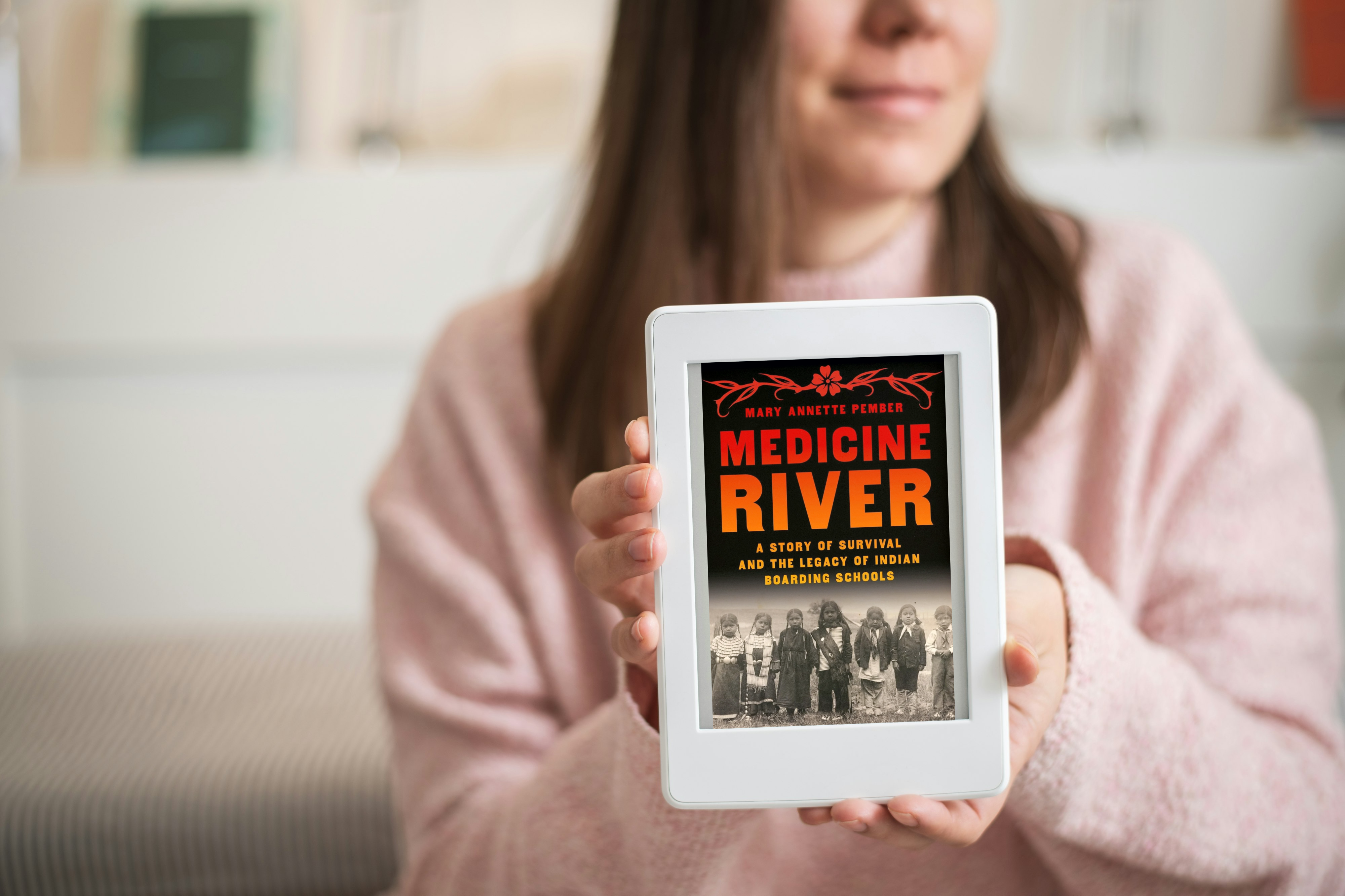
Medicine River

A Story of Survival and the Legacy of Indian Boarding Schools

A sweeping and deeply personal account of Native American boarding schools in the United States, and the legacy of abuse wrought by them in an attempt to destroy Native culture and life

FINALIST FOR THE PEN OPEN BOOK AWARD • A BEST BOOK OF THE YEAR: NPR, TIME, Smithsonian, The History Channel

“With a government that is rewriting history in real time, Medicine River stands as a testament to the truth.”—The New York Times

“Powerful. . . . An important work.”—Los Angeles Times

“Everyone, absolutely everyone, should read this book.”—Javier Zamora, author of Solito


From the mid-nineteenth century to the late 1930s, tens of thousands of Native children were pulled from their tribal communities to attend boarding schools whose stated aim was to “save the Indian” by way of assimilation. In reality, these boarding schools—sponsored by the U.S. government, but often run by various religious orders with little to no regulation—were a calculated attempt to dismantle tribes by pulling apart Native families. Children were beaten for speaking their Native languages; denied food, clothing, and comfort; and forced to work menial jobs in terrible conditions, all while utterly deprived of love and affection.

Amongst those thousands of children was Ojibwe journalist Mary Pember’s mother, who was sent to a boarding school in northern Wisconsin at age five. The trauma of her experience cast a pall over Pember’s own childhood and her relationship with her mother. Highlighting both her mother’s experience and the experiences of countless other students at such schools, their families, and their children, Medicine River paints a stark but hopeful portrait of communities still reckoning with the trauma of acculturation, religion, and abuse caused by the state. Through searing interviews and careful reporting, Pember traces the evolution and continued rebirth of Native cultures and nations in relation to the country that has been intent on eradicating them.

Posted in #History

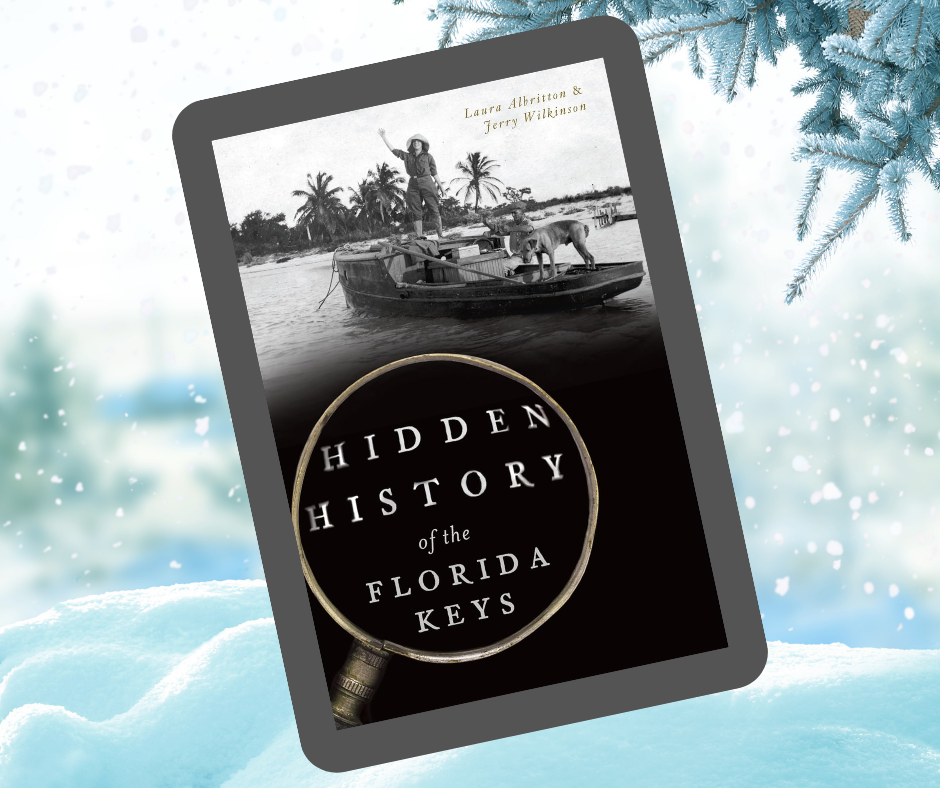
Hidden History of the Florida Keys

“Seldom-told tales of the ‘lively and unusual cast of historic figures’ who helped shape the Florida Keys from the 1820s through the 1960s.”—Keys News
 
The Florida Keys have witnessed all kinds of historical events, from the dramatic and the outrageous to the tragic and the comic. In the nineteenth century, uncompromising individuals fought duels and plotted political upsets. During the Civil War, a company of “Key West Avengers” escaped their Union-occupied city to join the Confederacy by sailing through the Bahamas. In the early twentieth century, black Bahamians founded a town of their own, while railway engineers went up against the U.S. Navy in a bid to complete the Overseas Railroad. When Prohibition came to the Keys, one defiant woman established a rum-running empire that dominated South Florida. 
 
Join Laura Albritton and Jerry Wilkinson as they delve into tales of treasure hunters, developers, exotic dancers, determined preservationists and more, from the colorful history of these islands.
Includes photos

Editorial Reviews

Review

“Hidden History on the Florida Keys,” a new volume penned by Laura Albritton and Upper Keys historian Jerry Wilkinson, reveals seldom-told tales of the “lively and unusual cast of historic figures” who helped shape the Florida Keys from the 1820s through the 1960s.” Keys News

About the Author

Fifth-generation Floridian Laura Albritton is a writer, book reviewer, and writing teacher. Her work has appeared in publications such as the Miami Herald, Sculpture magazine, Harvard Review and the Florida Keys Weekly, while her award-winning short fiction has been published in many literary journals. She wrote the travel book Miami for Families (University Press of Florida) and co-authored Marathon: The Middle Keys and Key West’s Duval Street (Arcadia Publishing) with Jerry Wilkinson. Laura holds a degree in comparative literature from Columbia and an MFA in creative writing from the University of Miami.

Fourth-generation Floridian Jerry Wilkinson arrived in Key West in 1947. He served in the U.S Air Force for twenty-four years before operating his own business. For decades, Jerry has researched and documented Florida Keys history, particularly that of the Upper Keys. He has contributed to books, films and television programs and created an extensive Keys history website (www.keyshistory.org). Jerry is president of the Historical Preservation Society of the Upper Keys and serves on the boards of the Historic Florida Keys Foundation and the Florida Keys History and Discovery Center. Jerry’s previous books include Key Largo and Islamorada, co-authored with Brad Bertelli.

Posted in #BookTours

Tea for Two


An Austen-inspired Short Story Duet

Enjoy two tea parties, two romances and two characters from one of the world’s most beloved authors.


Tea for Two:

An Austen-Inspired Short Story Duet

by Bianca White

Genre: Historical Romance


Jane Austen and tea. What more could one ask for?


Enjoy two tea parties, two romances and two characters from one of the world’s most beloved authors.


In this historical romance short story duet gossip-loving Mrs Jennings meddles in affairs of the heart, and scandalous Henry Crawford turns heads once again!

Be swept away by the amusements of the Regency tea party in these Austen-inspired short stories. Delight in the sweet romance, dancing, gossip and, of course, tea.


“But indeed I would rather have nothing but tea.”
― Jane Austen, Mansfield Park


Tea for Two comprises two short stories:


Jilted

Lord Asher Mandeville is heartbroken when his childhood love, Miss Tabitha Rowe, jilts him only weeks before their wedding.

Asher refuses to accept Tabitha’s rejection and chases after his betrothed to demand an explanation.

Tabitha is determined to escape him, but Asher’s shattered heart will accept nothing other than her return.


Wooing Miss Woodforde

Jasper Trevethan loves Miss Sophie Woodforde, but he is a penniless rake. Sophie would never marry him, even if he were rich.

As an impoverished companion, Sophie serves the whims of others while pining for her employer’s scandalous nephew.

When an unexpected inheritance transforms Sophie’s life, she becomes the target of fortune hunters.

Before another scoundrel steals his love, Jasper must prove his devotion and woo Miss Woodforde. But Sophie would rather become an old maid than marry a man who only wants her for her money, especially Mr Trevethan.


Amazon * Apple * B&N * Google * Kobo * Books2Read * Bookbub * Goodreads


Excerpt from Wooing Miss Woodforde


He headed to the drawing room.

While Sophie continued to hold his heart, he could not bring himself to marry another. Yes, he had wasted his days living off his brother while indulging in a life of idleness and pleasure-seeking. Now he had no option but to pray his aunt left him her fortune. Perhaps then he could offer for Sophie. She will never marry a rake, you fool. As usual, he tamped down the bitter truth, but the tiny flicker of hope that one day she may be his was the only thing that prevented him from sinking further.

His aunt dropped onto the sofa before the crackling hearth. “It does not help your cause that you continue to associate with that scoundrel, Mr Crawford.”

Sophie carried out her duties in efficient silence, pretending not to hear the details of his scandalous associations. How he longed to take her away from this life of servitude. Someone so good, kind and selfless deserved better.

After pouring the tea, she handed her employer a cup.

Without a word of thanks to her companion, his aunt continued, “There is still talk about his scandalous affair with Mrs Rushworth. You should end the connection, for it will only sully your name further. Your reputation as a rake does not help matters, but being associated with an adulterer will not earn you a respectable bride. What must my dear sister think of her favourite now?”

He accepted his cup from Sophie with his head down and muttered his thanks. Shame gnawed at his insides. If his mother had not died of typhus before he reached his tenth year, she would have been sorely disappointed in him.

Why could he not be a better man? He should have sought a profession after university. If he had done something useful, perhaps, he may have earned Sophie’s good opinion and won her heart. Instead, he had wasted his life. He was a hopeless rake beyond salvage, in love with a woman far above him in noble character. Even if he were rich, she would always be too good for him.

Sophie sat on the sofa next to his aunt and twiddled with a delicate curl at her nape.

He had to ask again. “Are you certain you are well, Miss Woodforde?”

“Stop trying to misdirect the attention from yourself, Trevethan.” Aunt Hammond sipped at her tea.

Wispy tendrils of steam rose from the beige liquid in his cup, and he tamped down the urge to ask for something stronger. Liquor would have to wait. Even though nothing eased the painful longing within him lately.

He could not resist being drawn to the source of his yearning while she stared at the flickering flames in the hearth. What had happened to the woman who enjoyed lecturing him about the latest philanthropic project she wished to support or teased him following the gossip surrounding his misadventures? Not that he had many these days unless one counted spending the evenings drinking brandy with Crawford while they both pined for the women they loved but could not possess.

“Trevethan!” he jerked his head towards his aunt. Her narrowed gaze bore into him. Had he given himself away?

She glowered, then said, “Miss Woodforde has received some surprising news today that has unsettled her.”

Sophie’s head shot up; her wide gaze directed towards her employer.

“I hope it is nothing serious?” My God, she was ill. “Is there anything I can do?”

Aunt Hammond scoffed. “It is not unwelcome news—well, not for Miss Woodforde.”

“Mrs Hammond.” Sophie pleaded, but as usual, his aunt could not be silenced.

“Miss Woodforde is now an heiress with twenty thousand.”

His breath stuttered.

On the opposite sofa, Sophie’s head lolled forward, and she ran a palm across her forehead.

Sophie was a wealthy woman—a single, wealthy woman. That meant she no longer needed to work for his aunt. He would not see her when he visited.

Aunt Hammond asked, “Will you not offer your congratulations?”

He glanced at his aunt before returning his attention to Sophie, whose shoulders slumped.

A burning sensation spread down his gullet, and he swallowed. “Congratulations, Miss Woodforde.”

His aunt sniffed. “She is almost maudlin; anyone would think a beloved family member had died.”

Sophie continued to stare into the teacup in her lap. She would leave, and he would never see her again.

Aunt Hammond prattled on. “Heaven knows why, but she wishes to keep it a secret. She should marry, yet she insists she will remain in my employment.”

Of course, her sense of duty would not allow her to abandon his aunt. Selfish thoughts about her leaving had distracted him from the more pressing issue. Another man would steal her from him. His heart skipped a beat. He could not allow it.


Bianca White writes passionate and spicy historical romance.

Bianca loves history and has a degree in history and history of art. The word “research” is often used as an excuse to drag members of her family around every stately home and castle wherever they go. Nothing, not even the grumbling of said family, will keep her away from a historical fashion exhibition.

When she’s not writing, Bianca feeds her addiction to romance novels. She also loves baking and watching movies. Thanks to her love of baking (and eating), she feels the need to balance it with a little activity and enjoys tai chi, aerobics and swimming.

Bianca lives in West Yorkshire, England, with her husband and two children.

To receive all the latest news from Bianca White, and a bit of history in your inbox, sign up for her mailing list at Bianca White Writes.


Website * Facebook * X * Instagram * Amazon * Goodreads


Follow the tour HERE for special content and a $10 giveaway!


</d