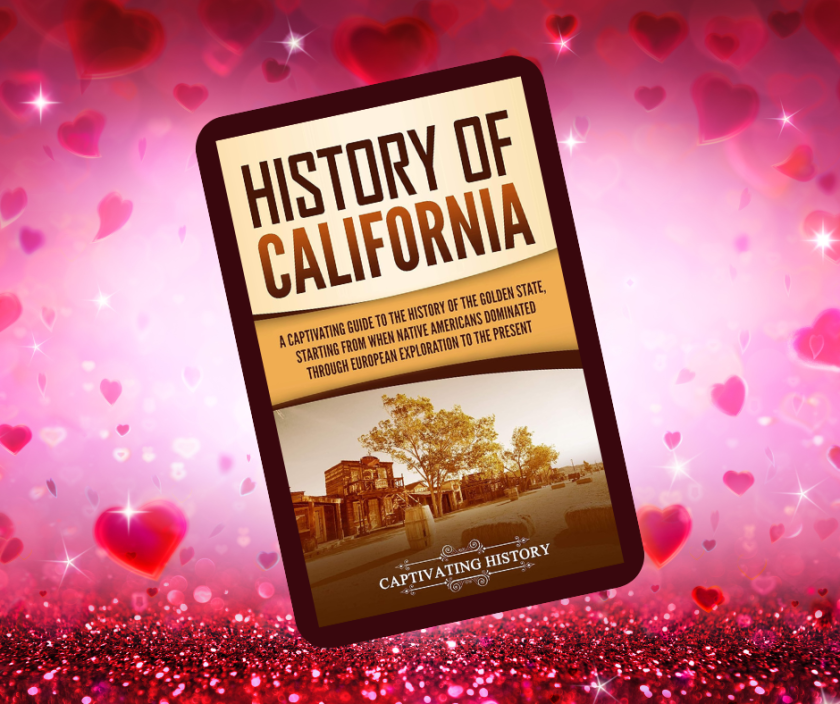
A Captivating Guide to the History of the Golden State, Starting from when Native Americans Dominated through European Exploration to the Present (U.S. States)
If you want to discover the influential and captivating history of California, then read on…
Free History BONUS Inside!
California’s transformation into the most populous state in America was certainly no accident. It became the home of some of the country’s richest citizens, spread amongst Silicon Valley and Hollywood. California has always been one of the most diverse and multicultural states in the United States. This diversity existed way before it was a state at all and even before the arrival of the Europeans.
California’s rugged yet diverse terrain influenced the first settlers. They spread into hundreds of different tribes. Each tribe had its own lifestyle, religion, diet, and culture. Much of this was based on the landscape they ended up in. Thousands of years passed. Then, the Spaniards arrived slowly. They colonized the land and converted thousands of Native Americans. They established missions and villages in many of the cities we know today. These cities include San Francisco, Los Angeles, San Diego, and more.
Over the course of the 18th century, California truly developed into the state we know it as today. Within the century, the region passed through the hands of the Spaniards and the Republic of Mexico. Finally, the United States of America acquired it by warring over California’s fertile and diverse lands. From the first true economy surrounding the California Gold Rush, the region began its evolution. It would become America’s richest and most populous state. This status is still maintained today. Yet, the state’s evolution into what it is today was not easy. The gorgeous and idyllic region of California attracted immigrants from all over. As a result, prejudice was commonplace. It took many years of rallies, protests, and social movements. These efforts were essential to create the diverse and accepting state we know today.
In this book, you will learn about:
California’s Native American population
The Spanish exploration of Mexico, which led to the discovery of California
The colonization of the region of California led by the Spanish church missions
Mexican California
California’s independence from Mexico
The Gold Rush
The San Francisco earthquake
The effects of World War I and II on California
The socio-political reforms that occurred over the course of the 20th century
California’s technology boom
How California transitioned into one of the most populous and affluent states in America as well as one of the more diverse and liberal states in the country
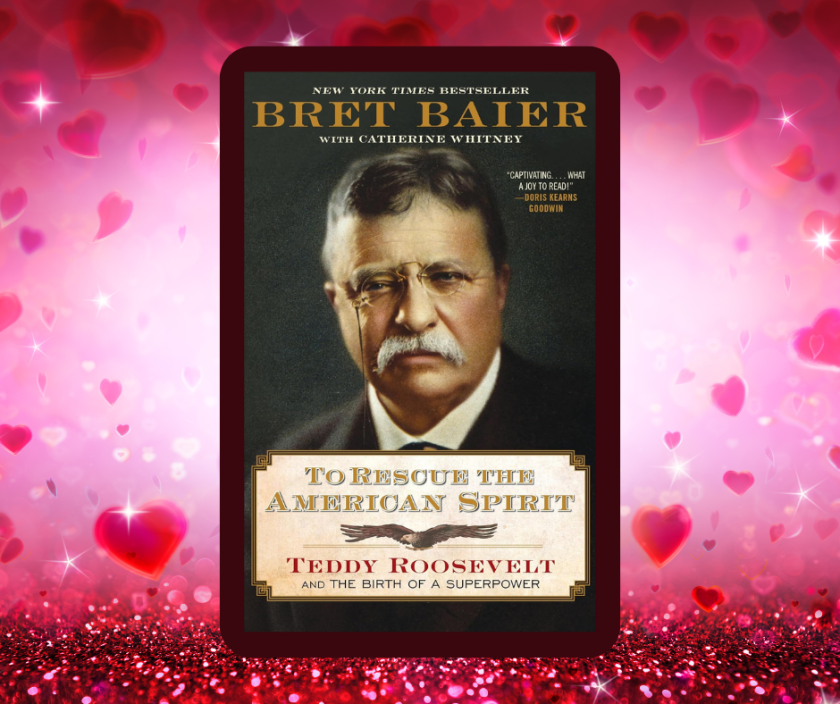
Teddy Roosevelt and the Birth of a Superpower—The New York Times Bestselling Biography of the Former President from the … Political Anchor (The Presidential Series)
New York Times Bestseller
“This captivating portrayal of Teddy is Bret Baier’s gift to us. From Roosevelt’s resilience over tragedy to his heroism in war, from his midnight rambles as police commissioner to his dramatic fights for reform as governor and president, Baier summons the irrepressible spirit of the man. What an engaging storyteller! What a joy to read!” —Doris Kearns Goodwin
From #1 bestselling author and Fox News Channel’s Chief Political Anchor, a fresh and fascinating exploration of the extraordinary life of Teddy Roosevelt, revealing how his bold leadership thrust America onto the world stage and changed the course of world history. “As Bret Baier shows in this wonderfully readable biography, Theodore Roosevelt has many lessons for today.” —Walter Isaacson There has never been a president like Theodore Roosevelt. An iconoclast shaped by fervent ideals, his early life seems ripped from the pages of an adventure novel. He abandoned his place in the New York aristocracy. He was drawn to the thrill of the West. He became an honorary cowboy. He won the respect of the rough men of the plains. He adopted their code of authenticity and courage. As a New York State legislator, he fought corruption and patronage. As New York City police commissioner, he walked the beat at night. He wanted to hold his men accountable. As New York governor, he butted heads with the old guard. He aimed to bring fresh air to a state mired in political corruption. He was a passionate naturalist and conservationist. He also loved hunting. He collected hundreds of specimens of birds and animals throughout his life. He was a soldier and commander. He led a regiment of “Rough Riders” to victory in the Spanish-American War. This show of leadership and bravery put him on the national map. As president, he brought energy, laughter, and bold ideas to the White House. He pursued a vigorous agenda that established America as a leader on the world stage. He advanced the Panama Canal, brokered peace with Russia, and took on business elites. Bret Baier’s exquisite book uncovers the storied life of a leader. His passion, daring, and prowess left an indelible mark on the fabric of our country. He reimagined the possibilities of the presidency.
Editorial Reviews
Review
“If joy in living was nature’s gift to Theodore Roosevelt, then this captivating portrayal of Teddy is Bret Baier’s gift to us. From Roosevelt’s resilience over tragedy to his heroism in war, from his midnight rambles as police commissioner to his dramatic fights for reform as governor and president, Baier summons the irrepressible spirit of the man. What an engaging storyteller! What a joy to read!” – Doris Kearns Goodwin, author of The Bully Pulpit: Theodore Roosevelt, William Howard Taft, and the Golden Age of Journalism “As Bret Baier shows in this wonderfully readable biography, Theodore Roosevelt has many lessons for today. In his New Nationalism, he combined patriotism with a sense of stewardship, both of our land and institutions. And he embraced the challenge of having the U.S. speak softly but be in service to the world. Like all of Baier’s biographies, he makes our great presidents relevant to the present.” – Walter Isaacson, author of Benjamin Franklin: An American Life “Bret Baier’s To Rescue the American Spirit is a riveting biographical portrait of Theodore Roosevelt in full. Our 26th U.S. president’s maverick instincts, multi-sided intellect and political acumen gallop across these fast-paced pages with bravado for the ages. Expertly researched and colorfully written, this is the story of true American leadership, brave, brilliant and mythic. Never pulling a punch, Baier leads readers to conclude that TR — our cowboy president — truly belongs enshrined on Mount Rushmore. Highly recommended!” – Douglas Brinkley, Professor of History at Rice University and author of The Wilderness Warrior: Theodore Roosevelt and the Crusade for America. “To Rescue the American Spirit is an inspiring portrait of Theodore Roosevelt and the promise of our nation at the turn of the twentieth century. Roosevelt’s vision of American leadership — that our strength is in our values — was a bold principle that shaped our nation for more than a century. Bret Baier brings that vision to life and shows how it still has tremendous relevance for today.” – Mark Levin, #1 New York Times Bestselling Author “With To Rescue the American Spirit, Bret Baier adds yet another terrific volume to his now-extraordinary series of six books written about key moments of transition in American politics and history. As with his other books, Bret Baier combines the journalist’s instinct for narrative with a real flair for identifying critical passages in American history and the people who guided America through those passages. As a journalist, Baier is interested in the way America’s history illuminates the present; as an historian, Baier observes Kipling’s maxim ‘if history were taught in the form of stories, it would never be forgotten.’ The result — this book — is the fascinating and unforgettable portrait of one of America’s greatest presidents which is also an assessment of America’s rise to superpower status in the decades after the civil culminating with TR’s presidency.” – David Eisenhower, Director, the University of Pennsylvania’s Institute for Public Service, and author of Eisenhower: At War, a finalist for the Pulitzer Prize in History “With To Rescue the American Spirit, Bret Baier adds yet another terrific volume to his now-extraordinary series of six books written about key moments of transition in American politics and history. As with his other books, Bret Baier combines the journalist’s instinct for narrative with a real flair for identifying critical passages in American history and the people who guided America through those passages.” – David Eisenhower, Director, the University of Pennsylvania’s Institute for Public Service, and author of Eisenhower: At War, a finalist for the Pulitzer Prize in History “Bret Baier has done it again, bringing another giant of American history to life. Many Americans think they know ‘T.R.’ but Teddy Roosevelt has sometimes defeated even earnest biographers because of the vast nature of his life an achievements. Bret brings the whole story to these pages, including some of the chapters about the ‘Bull Moose’ T.R. that few know it understand: Why did Roosevelt split with his hand-picked successor, President Taft? Turns out that as T.R. watched Taft, first from far off Africa and then during a long progress through Europe, Roosevelt’s famous temper and even more famous enthusiasm grew and grew and burst back on to the American political scene. That’s just one of many examples of Bret’s deft handling of a man of indomitable will and courage. But the joy T.R. brought to life, Bret Baier brings to these pages. Enjoy the ride!” – Hugh Hewitt, Washington Post columnist and host of The Hugh Hewitt Show “Celebrity. Disruptor. Larger-than-life. New Yorker. Assassination survivor. Lawfare target. World peacemaker. Theodore Roosevelt’s story is ripe for our time as we revive the American spirit for America’s 250th celebrations. Bret Baier brings his signature journalist eye and voice to paint a vivid and engaging narrative of Theodore Roosevelt, the president who rescued the American spirit. This is Baier at his very best.” – Jane Hampton Cook, former White House staffer and author of American Phoenix
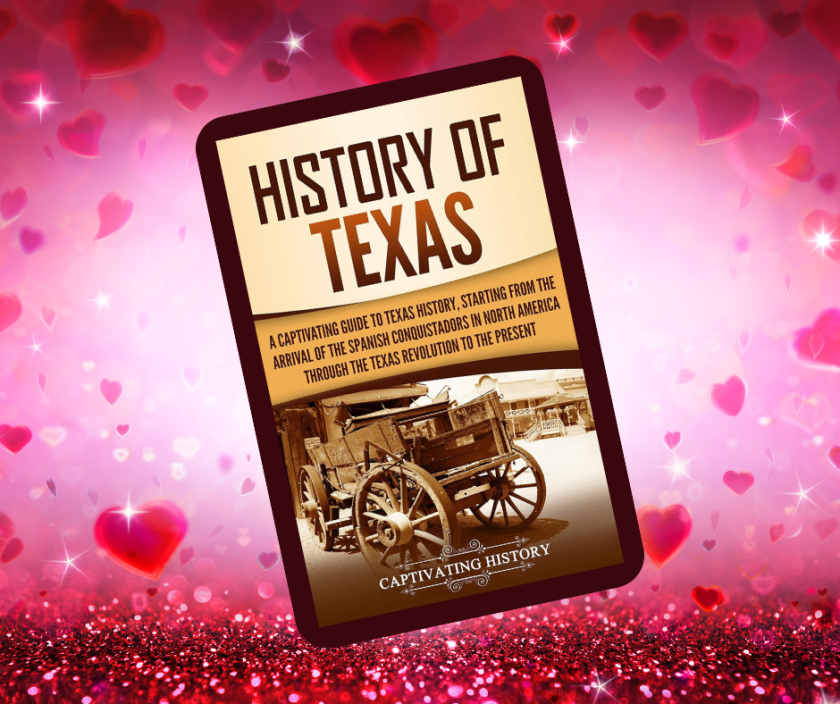
A Captivating Guide to Texas History, Starting from the Arrival of the Spanish Conquistadors in North America through the Texas Revolution to the Present (U.S. States)
If you want to discover the captivating history of Texas, then keep reading…
Free History BONUS Inside!
Texas is one of the most recognizable states in the United States of America (it is the second-largest, behind Alaska), and it also has a reputation for being unlike any other. This reputation is well-deserved, in part because of the state’s long and often contentious history.
That history has fascinated many people not only in this nation but around the world for centuries. From the heyday of the Wild West and the state’s oil boom to the storied Texas Rangers and the construction of one of NASA’s primary facilities, it seems nearly impossible to fully explore everything in the state’s rich past.
In History of Texas: A Captivating Guide to Texas History, Starting from the Arrival of the Spanish Conquistadors in North America through the Texas Revolution to the Present, you will discover topics such as
Before Columbus
Early Colonizers – Spain and France
Spanish Settlers Claim the Region
Americans Settle
Rising Tensions between Mexico and the Settlements
The Fight for Texas Independence Begins
“Remember the Alamo” and Other Major Battles
Annexation to the US and the Mexican-American War
Role in the Civil War
Reconstruction
Texas Rangers – One of the Most Illustrious Law Enforcement Agencies
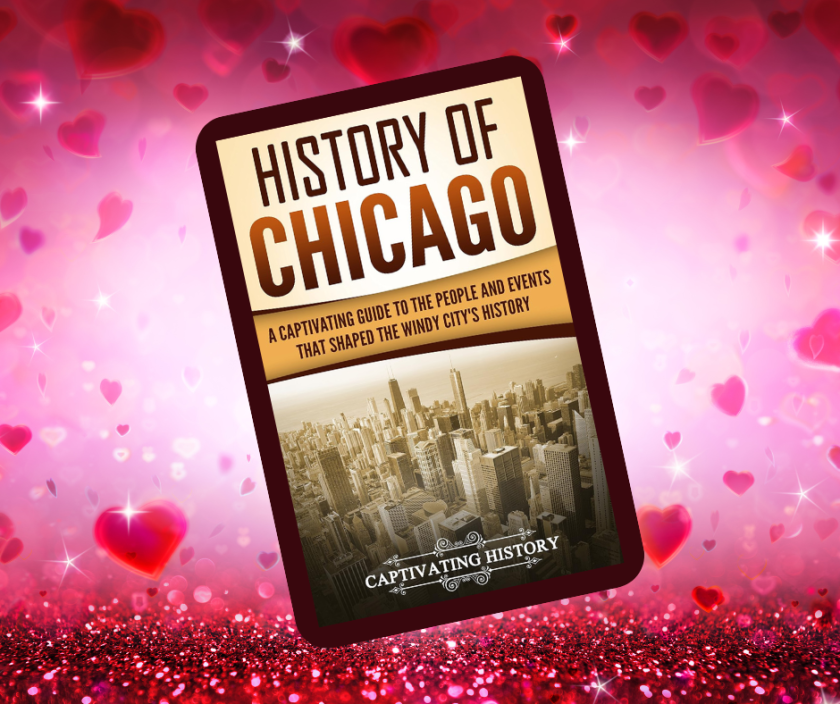
A Captivating Guide to the People and Events that Shaped the Windy City’s History (U.S. States)
Explore the Captivating History of Chicago Free History BONUS Inside! Founded as a tiny, temporary settlement, Chicago became a crux of the American fur trade before growing into one of the powerhouses of the Industrial Revolution. From procuring drinking water to implementing racial equality, nothing has ever been simple for the people who have called Chicago home – and yet there is immense pride among Chicagoans for what they and their fellow people have achieved. The city has been home to some of America’s most influential people, be they talk show hosts or U.S. Presidents. Every star on the Chicago flag represents an achievement to be remembered; every building an era that has helped shape the modern city into what it is today. In this book, you will discover remarkable stories of people and events who shaped the history of this fascinating city.
History of Chicago: A Captivating Guide to the People and Events that Shaped the Windy City’s History includes topics such as:
The Chicago Trail of Tears
All Roads (and Railways) Lead to Chicago
Filthiest City in America
The Financial District of America
Workers’ Cottage to Skyscraper; Chicago’s Architecture and Design
Ghostly footsteps, mysteriously locked doors, and apparitions from centuries past. The rolling hills and hollers of the Yadkin Valley have been home to many historic events, from Stoneman�s raid to the hanging of Tom Dooley. These events have left their imprint on the county�s architecture and landscape, and some of them have evenleft a ghostly legacy. Ghosts of the Yadkin Valley is a collection of spine-tingling tales, including ghost stories from many of the area�s National Historic Register sites. Join local storyteller R.G. Absher as he relates the history behind the haunts.








 Book Reviews by the Reluctant Retiree