Posted in #non-fiction

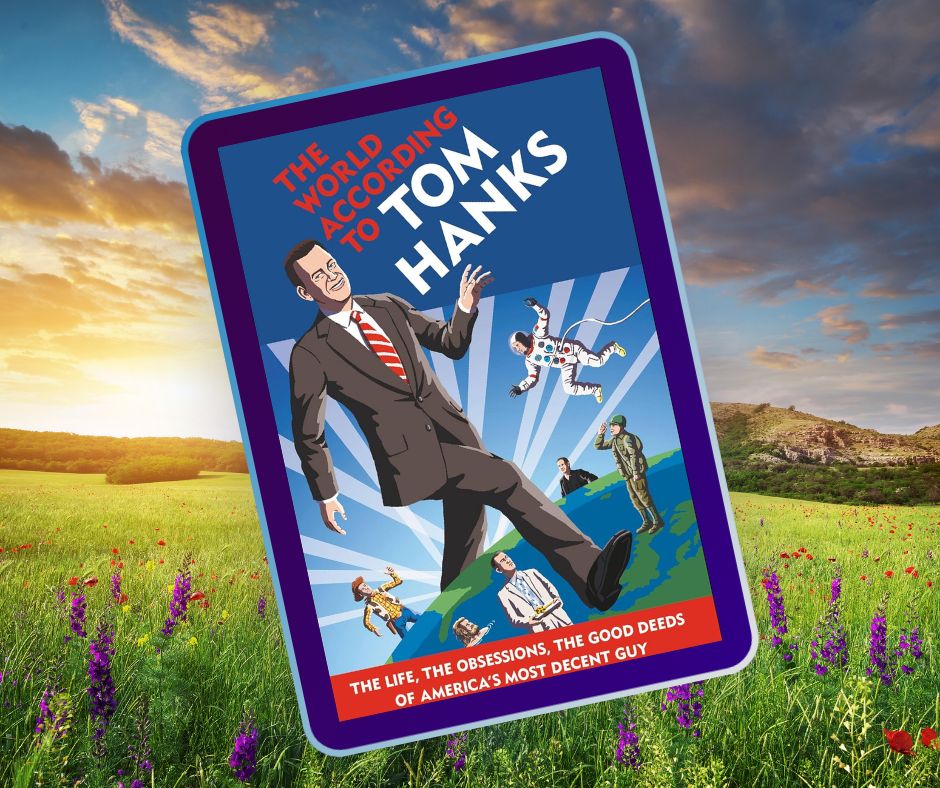
The World According to Tom Hanks

The Life, the Obsessions, the Good Deeds of America’s Most Decent Guy

An entertaining and insightful homage to America’s favorite movie star, from the New York Times–bestselling author of The Tao of Bill Murray.

Niceness gets a bad rap these days. Our culture rewards those who troll the hardest and who snark the most. At times it seems like there’s no place anymore for optimism, integrity, and good old-fashioned respect. Enter “America’s Dad”: Tom Hanks. Whether he’s buying espresso machines for the White House Press Corps, rewarding a jovial cab driver with a night out on Broadway, or extolling the virtues of using a typewriter, Hanks lives a passionate, joyful life and pays it forward to others. Gavin Edwards takes readers on a tour behind the scenes of Hanks’s life: from his less-than-idyllic childhood, rocky first marriage, and career wipeouts to the pinnacle of his acting career and domestic bliss with the love of his life, Rita Wilson.

As he did for Bill Murray, Edwards distills Hanks’s life story into ten “commandments” that beautifully encapsulate his All-American philosophy. Contemplating the life, the achievements, and the obsessions of Mr. Tom Hanks may or may not give you the road map you need to find your way. But at the very least, it’ll show you how niceness can be a worthy destination.

“If there is a new Mr. Rogers in our culture, it’s got to be Tom Hanks: honest, decent, trustworthy. Gavin Edwards’s book taps into what makes Hanks someone we love and someone we should emulate.” ―Morgan Neville, Oscar-winning director of Won’t You Be My Neighbor?


Editorial Reviews

Review

“If there is a new Mr. Rogers in our culture, it’s got to be Tom Hanks: honest, decent, trustworthy. Gavin Edwards’s book taps into what makes Hanks someone we love and someone we should emulate.”―Morgan Neville, director of Won’t You Be My Neighbor?

“There have been greater, weightier testaments to the art of cinema published in 2016 . . . but for sheer dopamine release, [The Tao of Bill Murray is] hard to beat.”―The New York Times Book Review

About the Author

Gavin Edwards is the New York Times bestselling author of nine books, including The Tao of Bill Murray, Last Night at the Viper Room, Can I Say (written with Travis Barker), VJ (written with the original MTV VJs), and ‘Scuse Me While I Kiss This Guy. As a longtime contributing editor for Rolling Stone, he has written a dozen cover stories for the magazine, traveled the world from Bahrain to New Zealand, and taken a city bus to the Grammys. He lives in Charlotte, North Carolina, with his wife and their two sons.

#History, , ,

Posted in #History

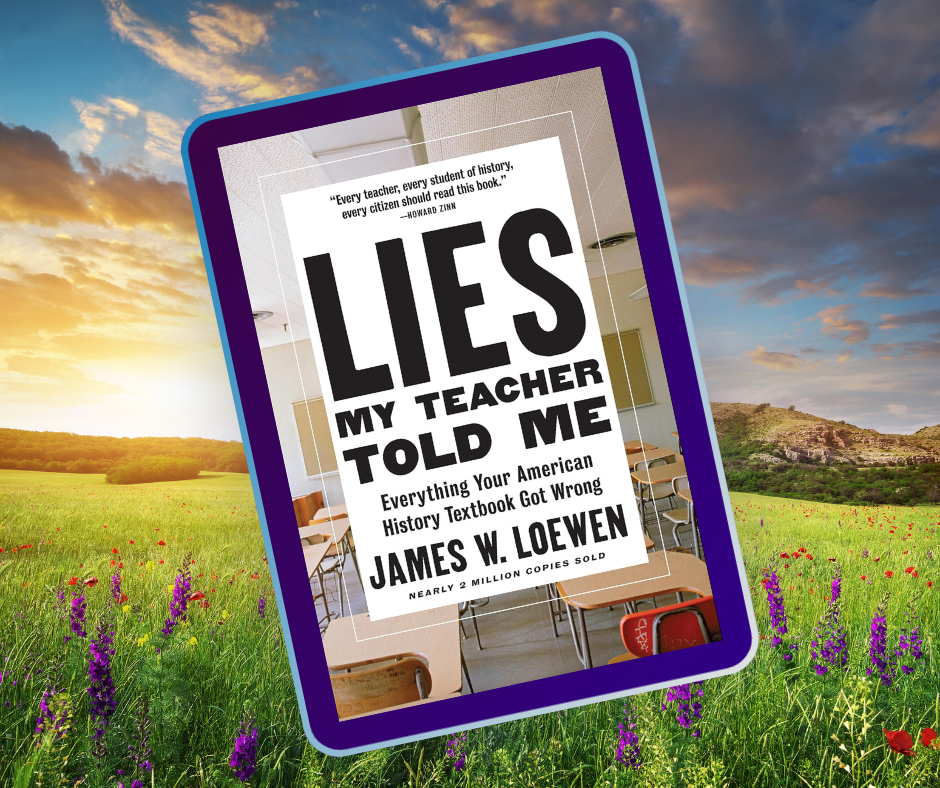
Lies My Teacher Told Me

Everything Your American History Textbook Got Wrong

“Every teacher, every student of history, every citizen should read this book. It is both a refreshing antidote to what has passed for history in our educational system and a one-volume education in itself.”
—Howard Zinn

A new edition of the national bestseller and American Book Award winner, with a new preface by the author

Since its first publication in 1995, Lies My Teacher Told Me has become one of the most important—and successful—history books of our time. Having sold nearly two million copies, the book also won an American Book Award and the Oliver Cromwell Cox Award for Distinguished Anti-Racist Scholarship and was heralded on the front page of the New York Times.

For this new edition, Loewen has added a new preface that shows how inadequate history courses in high school help produce adult Americans who think Donald Trump can solve their problems, and calls out academic historians for abandoning the concept of truth in a misguided effort to be “objective.”

What started out as a survey of the twelve leading American history textbooks has ended up being what the San Francisco Chronicle calls “an extremely convincing plea for truth in education.” In Lies My Teacher Told Me, James W. Loewen brings history alive in all its complexity and ambiguity. Beginning with pre-Columbian history and ranging over characters and events as diverse as Reconstruction, Helen Keller, the first Thanksgiving, the My Lai massacre, 9/11, and the Iraq War, Loewen offers an eye-opening critique of existing textbooks, and a wonderful retelling of American history as it should—and could—be taught to American students.


Editorial Reviews

Review

Praise for Lies My Teacher Told Me:
“Powerful . . . it serves as a crucial counter-textbook to provide a more realistic and critical narrative about the American past.”
―Truthdig

“A treat to read and a serious critique of American education.”
―Award Citation, American Book Award

“Remarkable.”
―USA Today

“A lively critique.”
―The New York Times

“Honest and well-written.”
―Harper’s Magazine

“Loewen’s book contains so much history that it ends up functioning not just as a critique, but also as a kind of counter-textbook that retells the story of the American past.”
―The Nation

“Every teacher, every student of history, every citizen should read this book. It is both a refreshing antidote to what has passed for history in our educational system and a one-volume education in itself.”
―Howard Zinn

About the Author

James W. Loewen (1942–2021) was the bestselling and award-winning author of Lies My Teacher Told Me, Lies Across America, Lies My Teacher Told Me About Christopher Columbus, Sundown Towns, and Lies My Teacher Told Me: Young Readers’ Edition (all from The New Press). He also wrote Teaching What Really Happened and The Mississippi Chinese: Between Black and White and edited The Confederate and Neo-Confederate Reader. He won the American Book Award, the Oliver Cromwell Cox Award for Distinguished Anti-Racist Scholarship, the Spirit of America Award from the National Council for the Social Studies, and the Gustavus Myers Outstanding Book Award.

History, , #WorldHistory,

Posted in #History

Mexican History

A Captivating Guide to the History of Mexico and the Mexican Revolution (South American Countries)

If you want to discover the captivating history of Mexico, then keep reading…

Free History BONUS Inside!

Two captivating manuscripts in one book:

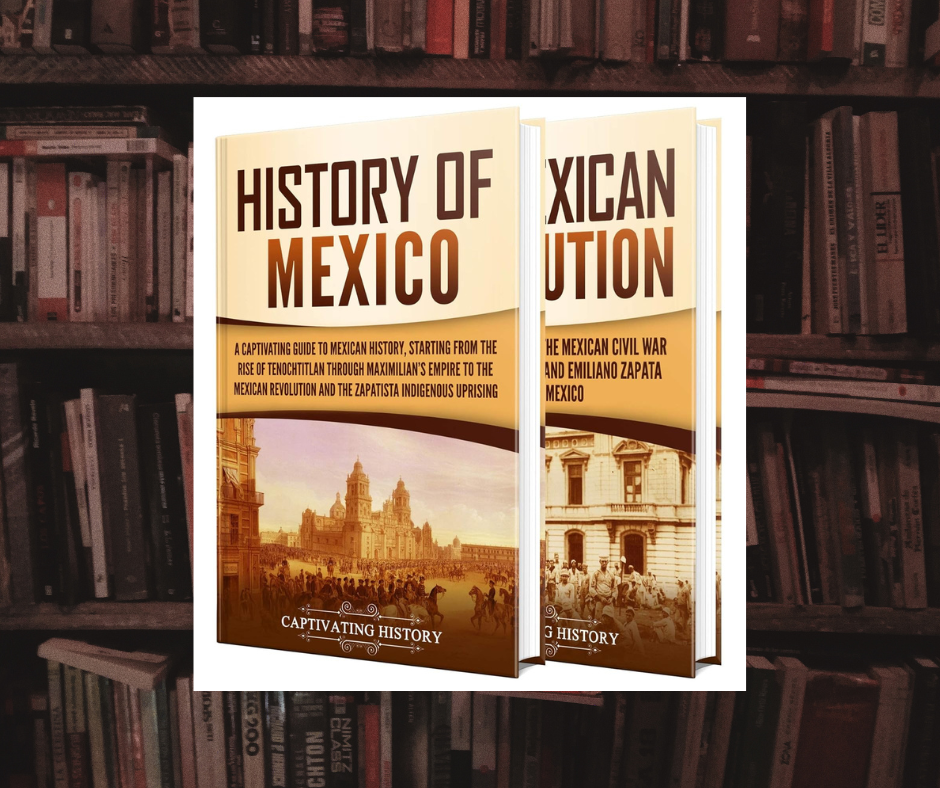
  • History of Mexico: A Captivating Guide to Mexican History, Starting from the Rise of Tenochtitlan through Maximilian’s Empire to the Mexican Revolution and the Zapatista Indigenous Uprising
  • The Mexican Revolution: A Captivating Guide to the Mexican Civil War and How Pancho Villa and Emiliano Zapata Impacted Mexico

The modern country was born in 1821. Before 1821, ancient dynasties and kingdoms inhabited the territory that today comprises 32 states and a few small islands. These were dynasties of warriors, astronomers, and priests. There were also temples for human sacrifice. Surprisingly, some of the largest cities in the world were here. Experts think the city of Chichen Itza was larger than Paris at its height of splendor. It is located in the Yucatan Peninsula.

This journey through Mexico’s history is fascinating. It spans from its amazing pre-Hispanic past to the end of the 20th century. It will reveal more surprises than the reader can imagine. In the words of the self-proclaimed Mexican singer Chavela Vargas, “Mexico has magic. I looked for that magic, and I found it there.”

Here are just some of the topics covered in part 1 of this book:

  • The Era of Empires
  • The Spanish-Aztec War and New Spain
  • The Birth of a Nation
  • “From the Halls of Montezuma…”
  • The Big Division
  • “The Most Beautiful Empire in the World”
  • In the Times of Don Porfirio
  • The Mexican Revolution
  • The Cristeros
  • The Second World War and the Mexican Miracle
  • End of Century Pangs
  • And much, much more!

Here are just some of the topics covered in part 2 of this book:

  • The Comet
  • The Strong Man of the Americas
  • Francisco and the Spirits
  • Victory Comes Too Soon
  • The Wicked Ambassador
  • Victoriano Huerta
  • Two Hurricanes
  • The Convention of Aguascalientes
  • The Presidential Chair
  • Huerta Strikes Back
  • The Horsemen of the Apocalypse
  • The Centaur and the General: Pershing’s Punitive Expedition
  • The Zimmermann Telegram
  • Aftermath
  • And much, much more!

Follow on Fediverse

BookReviews
BookReviews

I’m a Mom, a Grandmom, and a Veteran. Nothing scares me! That’s the saying on my favorite T Shirt. I’m enjoying life too much to let the little things slow me down. If you can’t tell from my Avatar, I live in Florida where I enjoy the sunshine and endure the hurricanes with good grace. Sometimes you have to take the bad with the good!

318 posts
4 followers
Posted in #History

History of Argentina

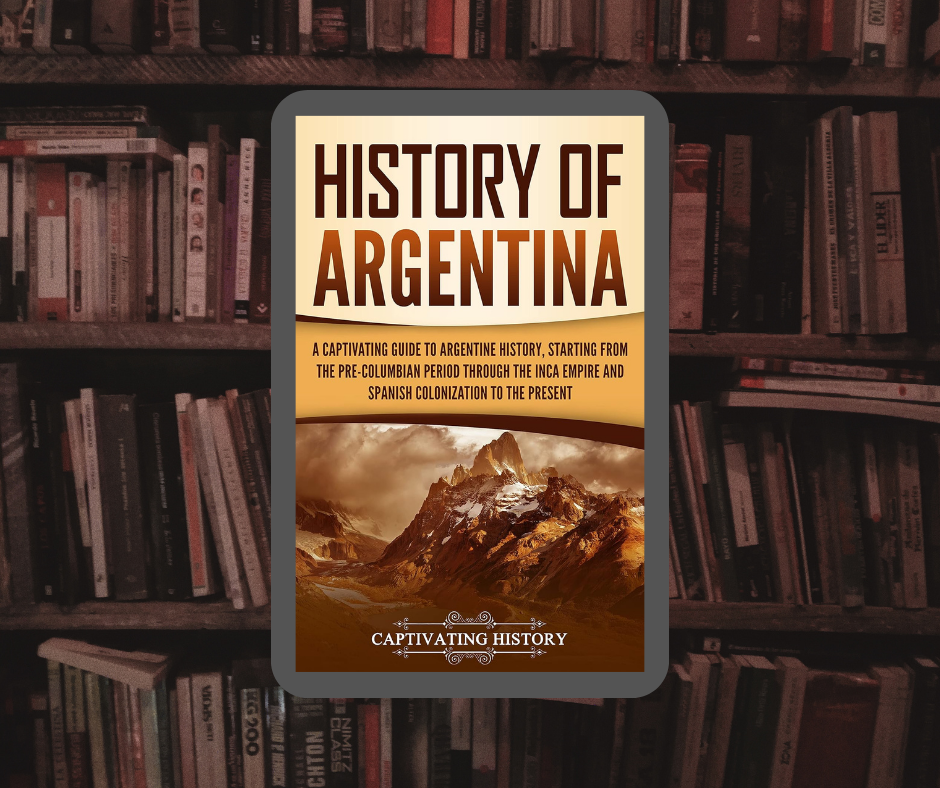
A Captivating Guide to Argentine History, Starting from the Pre-Columbian Period Through the Inca Empire and Spanish Colonization to the Present (South American Countries)

Did you know that as of 2018, Argentina has a literacy level of 99 percent? Are you curious to find out how it achieved this?

Argentina has a long and complex history. For hundreds of years, Argentina was inhabited by hunter-gatherer groups. For the most part, these people groups got along well with each other. In time, the Inca Empire rose to prominence and took over the Argentinian communities one by one. The Spanish arrived about twenty years later, bringing a new wave of invasion to the native inhabitants. The people of Argentina wouldn’t declare their independence until 1816, and after that, they faced civil war after civil war.

Argentina’s history might seem like it’s only compromised of conquest and warfare. However, it is also filled with fascinating civilizations and influential figures. Examples include José de San Martín and the less-revered Juan Manuel de Rosas. Argentineans have a rich culture to this day. Their cultural identity truly began to emerge on the international stage in the 19th century.

Almost everyone knows that Argentina is located in South America. However, not everyone is aware that Argentina’s successful May Revolution inspired other countries in Latin America to rebel. Many may have heard of Juan Perón and his wife, Eva. However, few know about Perón’s third wife, Isabel, and her time as the president of Argentina. This book will guide you through Argentina’s past. You will explore both its highs and lows. Discover a fuller picture of the beautiful nation of Argentina.

In this book, you will learn about:

  • The people groups who lived in the country before European colonization
  • The Spanish conquistadors who made their mark on the country
  • The May Revolution and Argentina’s struggle for independence
  • The immigrants who made Argentina their home and pushed its economy and society to new heights
  • The world wars and how Argentina strove to stay neutral
  • Juan Perón’s time in office
  • The “Dirty War” and the Falkland War
Posted in #History

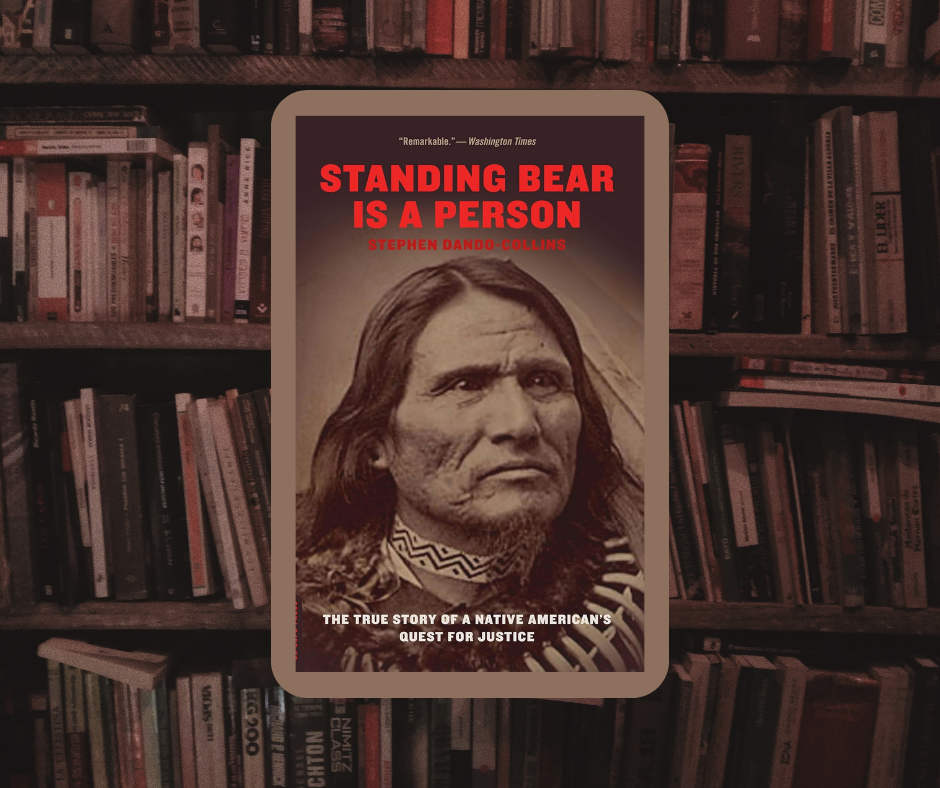
Standing Bear Is a Person

The True Story of a Native American’s Quest for Justice

In 1877, Standing Bear and his Indian people, the Ponca, were forcibly removed from their land in northern Nebraska. In defiance, Standing Bear sued in U.S. District Court for the right to return home. In a landmark case, the judge, for the first time in U.S. history, recognized Native American rights-acknowledging that “Standing Bear is a person”-and ruled in favor of Standing Bear. Standing Bear Is a Person is the fascinating behind-the-scenes story of that landmark 1879 court case. It also details the subsequent reverberations of the judge’s ruling across nineteenth-century America. It is also a story filled with memorable characters typical of the Old West. The story includes the crusty and wise Indian chief, Standing Bear. It also features the Army Indian-fighting general who became a strong Indian supporter. Additionally, it highlights the crusading newspaper editor who championed Standing Bear’s cause. Finally, it presents the “most beautiful Indian maiden of her time,” Bright Eyes, who became Standing Bear’s national spokesperson. This story takes place when America was obsessed with winning the West at any cost. It portrays an intensely human story. It represents a small victory for compassion. It also recounts an American tragedy. Standing Bear won his case. However, the court’s decision that should have changed everything, in the end, changed very little for America’s Indians.

Editorial Reviews 

From Booklist

The Bureau of Indian Affairs forcibly and illegally removed the Ponca Indians from their fertile croplands in Nebraska in 1877. They were taken to barren land in Oklahoma. Standing Bear, a clan leader, told the BIA that the land was unsuitable for farming. He also said that the Ponca wished to return home. Their request was denied, and by the end of the year, 158 Ponca had died. Desperate, Standing Bear and 27 others decided to escape to the reservation of the Omaha, their cousins. Once there, Omaha chief Iron Eye met with Brigadier General George Crook. Susette, his daughter who was a school principal, joined them. George Crook was one of two white initiates to the Omaha Soldier Lodge brotherhood. These three then told their story to T. H. Tibbles, deputy editor of the Omaha Daily Herald, whose coverage inspired attorney John Lee Webster to represent Standing Bear. In re-creating this significant chapter in Native American history, Dando-Collins captures the full drama of Standing Bear’s struggle. The story culminates in a riveting courtroom scene. In this scene, the judge rules in his favor. Rebecca Maksel
Copyright © American Library Association. All rights reserved

Review

“Compelling and historically important…a fascinating read.” — Flaunt

“An inspiring and informative book [that] brings to light a heretofore unknown nugget of our heritage.” — Curled Up With a Good Book 12/6/04

“[A] remarkable history.” — Washington Times 2/20/05

“A taut tale…A great story.” — Roanoke Times 2/6/05

“Brisk but evocative…an eloquent reminder of a fight well fought.” — Kirkus Reviews 10/1/04

“A fascinating behind-the-scenes story.” — Arizona Daily Star 11/21/04