
Posted in #non-fiction

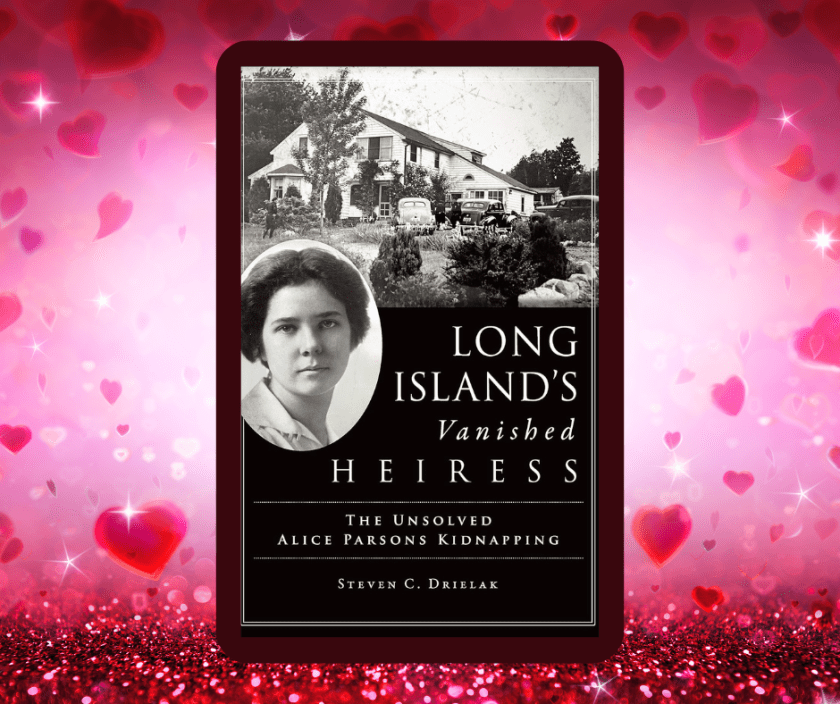
Unraveling the 1937 Alice Parsons Kidnapping Mystery

A new look at the 1937 abduction of a wealthy wife and mother, based on previously classified FBI documents—includes photos.

In 1937, Alice McDonell Parsons was kidnapped from Long Meadow Farm in Stony Brook, New York. She was the heir to a vast fortune among Long Island’s wealthy elite. The crime shocked the nation and was front-page news for several months.

J. Edgar Hoover personally assigned his best FBI agents to the case. Within a short time, Parsons’s husband and their live-in housekeeper, Anna Kupryanova, became prime suspects. Botched ransom attempts, clashes between authorities, and romantic intrigue kept the investigation mired in drama. The crime remained unsolved. Now, in this book, former Suffolk County detective Steven C. Drielak reveals previously classified FBI documents—and pieces together the mystery of the Alice Parsons kidnapping.

About the Author

Matt Weisgerber is the narrator of over a dozen audiobooks, including YA, children’s, horror, western, sci-fi, and comedy titles. His voice has been described as friendly, smooth, unique, and conversational, and he has a knack for character voices. Matt is easy to work with, and loves creating engaging and believable performances.

Steven C. Drielak is an internationally recognized expert in the area of Hot Zone Forensic Attribution. He received his master’s degrees from John Jay College of Criminal Justice in New York City. He has more than thirty years of law enforcement experience. Steven established the Suffolk County Environmental Crime Unit in New York. He commanded that unit for sixteen years. Steven has directed within the EPA’s Office of Criminal Enforcement, Forensics and Training. His role spanned both the Homeland Security and Criminal Enforcement national programs. As the director of the EPA’s National Criminal Enforcement Response Team, he led the effort. He deployed environmental forensic evidence collection teams. These teams responded to BP Alaska’s Prudhoe Bay oil pipeline failures. They also addressed the BP Deepwater Horizon disaster. Steven has served as a senior forensic attribution instructor. He worked at the Department of Homeland Security’s Federal Law Enforcement Training Center in Glynco, Georgia. There, he was a program developer. He served for seventeen years as a National Academy Instructor for the EPA’s criminal enforcement program. He has also provided environmental forensic attribution training for the FBI’s Hazardous Materials Response Unit. He has provided international training to numerous countries within the European Union. He has authored and coauthored six textbooks in the areas of environmental crimes, weapons of mass destruction and forensic attribution. He has also authored two historical fiction novels. He was an appointed member of the International Association of Chiefs of Police Environmental Crimes Committee. He served on the President’s Interagency Microbial Forensics Advisory Board.

Posted in #History

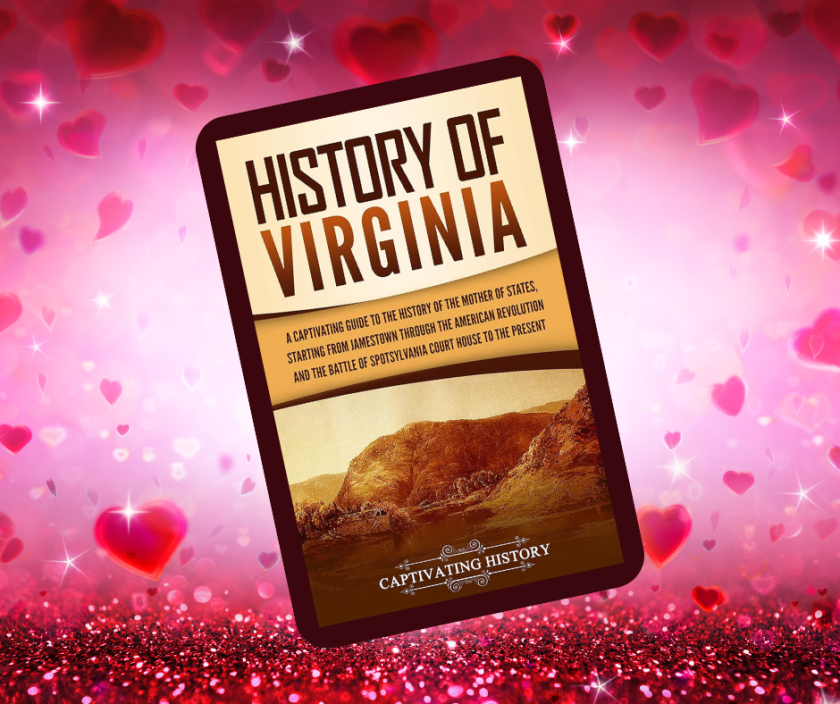
History of Virginia

A Captivating Guide to the History of the Mother of States, Starting from Jamestown through the American Revolution and the Battle … Court House to the Present (U.S. States)

If you want to discover the captivating history of Virginia, then keep reading…

Virginia was home to some of the first people in America. It became the birthplace of the United States. Virginia has had an incredibly rich and interesting history. This was even before its inauguration as a state. Virginia was once the most populous state in the country. It was also the most affluent. It was the birthplace of many important figures in early United States’ history. Yet, despite Virginia’s successes and great heritage, it has often been a divided state. Throughout much of history, it has debated even the most basic rights and issues. This is clearly illustrated by the splitting of Virginia into Virginia and West Virginia. This occurred in the years following the American Civil War.

Generational Virginians take pride in every aspect of their state’s legacy. In contrast, newcomers arrive to work for the Pentagon, the CIA, and other important government and military hubs in Virginia. These newcomers do not look so fondly on Virginia’s history. Yet, Virginia’s history is incredibly interesting. It captivates all those wondering how this southern US state became the way it is today. It remains intriguing regardless of how right or politically correct it may appear.

In this book, you will discover:

  • Virginia’s first people and their complex cultural, social, economic, spiritual and political systems and traditions
  • The colonization of America and the United States’ first settlement in Jamestown, Virginia
  • Interactions between the state’s first settlement and first people
  • Virginia’s culture under colonial rule
  • Virginia’s journey towards developing its own culture, economy and political system, separate from that of England, mostly surrounding the culture of tobacco farming
  • The state’s involvement in the American Revolution and the years post war
  • Virginia’s involvement in the American Civil War and the effects of the war on the state
  • The state’s many social movements
  • Virginia’s involvement in the First and Second World Wars and the effects of the war on the state and country
  • Virginia’s development in the 20th century into the military hub of America
Posted in #History

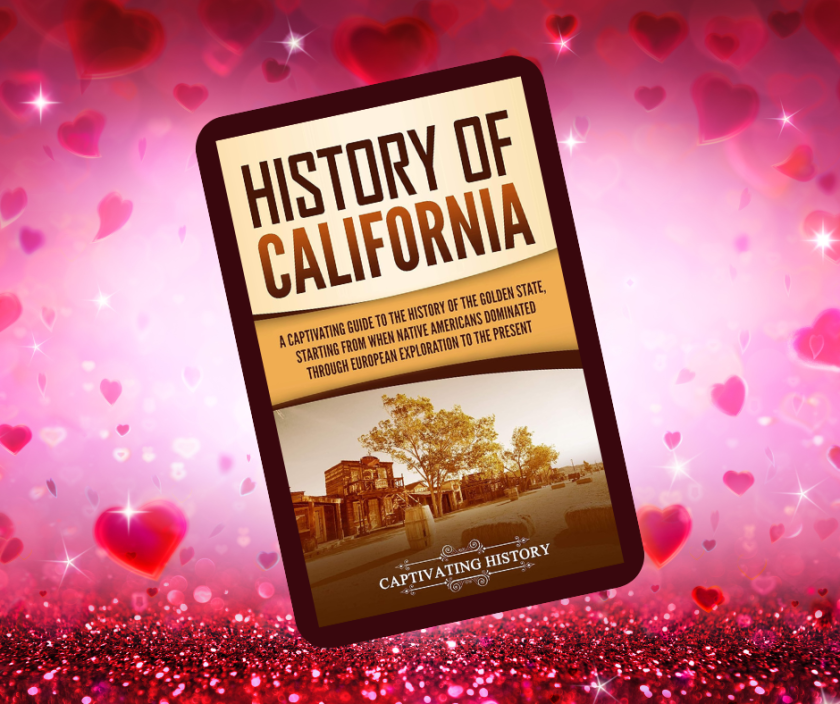
History of California

A Captivating Guide to the History of the Golden State, Starting from when Native Americans Dominated through European Exploration to the Present (U.S. States)

If you want to discover the influential and captivating history of California, then read on…

Free History BONUS Inside!

California’s transformation into the most populous state in America was certainly no accident. It became the home of some of the country’s richest citizens, spread amongst Silicon Valley and Hollywood. California has always been one of the most diverse and multicultural states in the United States. This diversity existed way before it was a state at all and even before the arrival of the Europeans.

California’s rugged yet diverse terrain influenced the first settlers. They spread into hundreds of different tribes. Each tribe had its own lifestyle, religion, diet, and culture. Much of this was based on the landscape they ended up in. Thousands of years passed. Then, the Spaniards arrived slowly. They colonized the land and converted thousands of Native Americans. They established missions and villages in many of the cities we know today. These cities include San Francisco, Los Angeles, San Diego, and more.

Over the course of the 18th century, California truly developed into the state we know it as today. Within the century, the region passed through the hands of the Spaniards and the Republic of Mexico. Finally, the United States of America acquired it by warring over California’s fertile and diverse lands. From the first true economy surrounding the California Gold Rush, the region began its evolution. It would become America’s richest and most populous state. This status is still maintained today. Yet, the state’s evolution into what it is today was not easy. The gorgeous and idyllic region of California attracted immigrants from all over. As a result, prejudice was commonplace. It took many years of rallies, protests, and social movements. These efforts were essential to create the diverse and accepting state we know today.

In this book, you will learn about:

  • California’s Native American population
  • The Spanish exploration of Mexico, which led to the discovery of California
  • The colonization of the region of California led by the Spanish church missions
  • Mexican California
  • California’s independence from Mexico
  • The Gold Rush
  • The San Francisco earthquake
  • The effects of World War I and II on California
  • The socio-political reforms that occurred over the course of the 20th century
  • California’s technology boom
  • How California transitioned into one of the most populous and affluent states in America as well as one of the more diverse and liberal states in the country
  • And much more!
Posted in #History

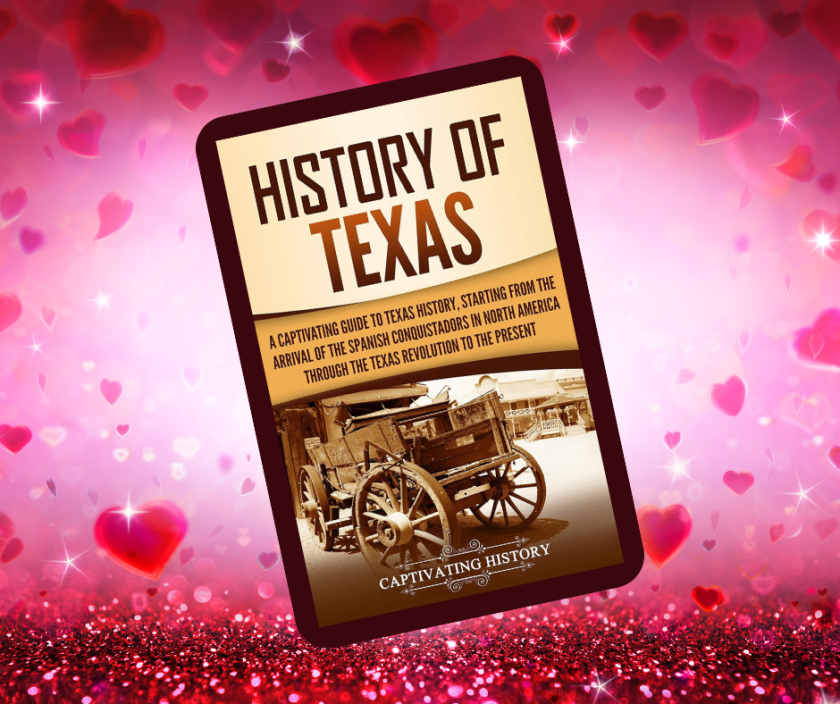
History of Texas

A Captivating Guide to Texas History, Starting from the Arrival of the Spanish Conquistadors in North America through the Texas Revolution to the Present (U.S. States)

If you want to discover the captivating history of Texas, then keep reading…

Free History BONUS Inside!

Texas is one of the most recognizable states in the United States of America (it is the second-largest, behind Alaska), and it also has a reputation for being unlike any other. This reputation is well-deserved, in part because of the state’s long and often contentious history.

That history has fascinated many people not only in this nation but around the world for centuries. From the heyday of the Wild West and the state’s oil boom to the storied Texas Rangers and the construction of one of NASA’s primary facilities, it seems nearly impossible to fully explore everything in the state’s rich past.

In History of Texas: A Captivating Guide to Texas History, Starting from the Arrival of the Spanish Conquistadors in North America through the Texas Revolution to the Present, you will discover topics such as

  • Before Columbus
  • Early Colonizers – Spain and France
  • Spanish Settlers Claim the Region
  • Americans Settle
  • Rising Tensions between Mexico and the Settlements
  • The Fight for Texas Independence Begins
  • “Remember the Alamo” and Other Major Battles
  • Annexation to the US and the Mexican-American War
  • Role in the Civil War
  • Reconstruction
  • Texas Rangers – One of the Most Illustrious Law Enforcement Agencies
  • Texas Tea – The Texas Oil Boom
  • The Space Race
  • Assassination of JFK
  • Texas Today
  • And much, much more!
Posted in #History

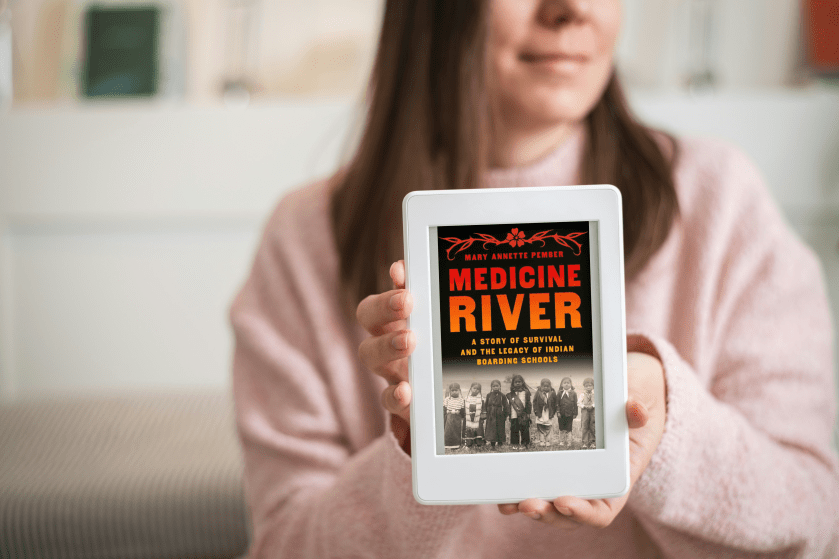
Medicine River

A Story of Survival and the Legacy of Indian Boarding Schools

A sweeping and deeply personal account of Native American boarding schools in the United States, and the legacy of abuse wrought by them in an attempt to destroy Native culture and life

FINALIST FOR THE PEN OPEN BOOK AWARD • A BEST BOOK OF THE YEAR: NPR, TIME, Smithsonian, The History Channel

“With a government that is rewriting history in real time, Medicine River stands as a testament to the truth.”—The New York Times

“Powerful. . . . An important work.”—Los Angeles Times

“Everyone, absolutely everyone, should read this book.”—Javier Zamora, author of Solito


From the mid-nineteenth century to the late 1930s, tens of thousands of Native children were pulled from their tribal communities to attend boarding schools whose stated aim was to “save the Indian” by way of assimilation. In reality, these boarding schools—sponsored by the U.S. government, but often run by various religious orders with little to no regulation—were a calculated attempt to dismantle tribes by pulling apart Native families. Children were beaten for speaking their Native languages; denied food, clothing, and comfort; and forced to work menial jobs in terrible conditions, all while utterly deprived of love and affection.

Amongst those thousands of children was Ojibwe journalist Mary Pember’s mother, who was sent to a boarding school in northern Wisconsin at age five. The trauma of her experience cast a pall over Pember’s own childhood and her relationship with her mother. Highlighting both her mother’s experience and the experiences of countless other students at such schools, their families, and their children, Medicine River paints a stark but hopeful portrait of communities still reckoning with the trauma of acculturation, religion, and abuse caused by the state. Through searing interviews and careful reporting, Pember traces the evolution and continued rebirth of Native cultures and nations in relation to the country that has been intent on eradicating them.