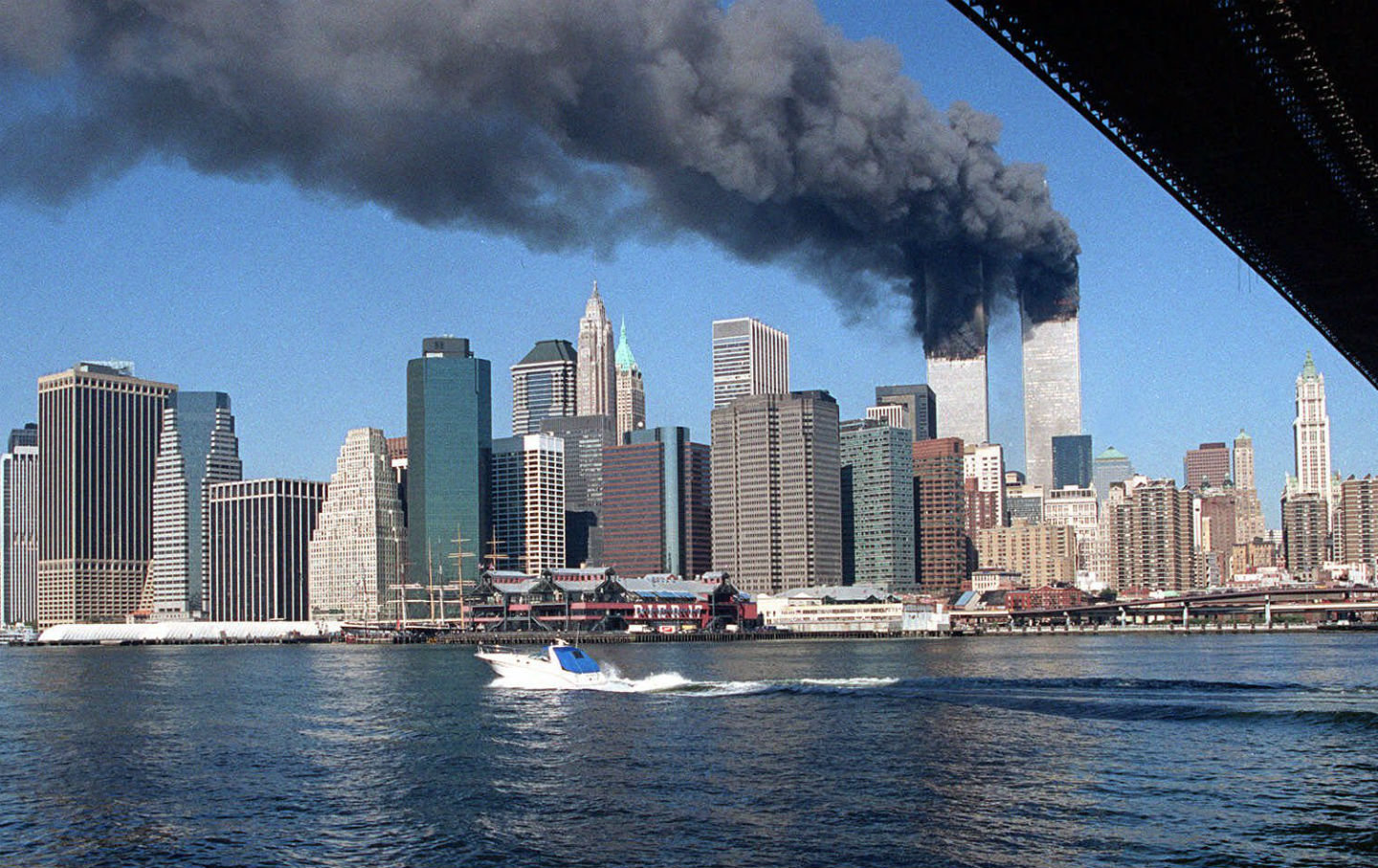


There are certain dates that don’t need a year attached to them.
September 11 is one of them.
For those of us old enough to remember that day, the memories can still be surprisingly close. We remember where we were. We remember the television coverage. We remember trying to reach people we loved.
And we remember the overwhelming sense that something had happened that we didn’t yet understand.
Twenty-five years later, I still find some stories about September 11 difficult to read.
So I wasn’t looking for another book about 9/11.
I was looking for something else entirely.
And then I discovered the boats.
The Story I Didn’t Know
I recently came across a History Channel article about the September 11 Boatlift.
I stopped.
I had never heard this story.
I knew about the towers. I knew about the firefighters, police officers and other first responders. I knew about the people who were trapped and the people who escaped.
But somehow, I had never learned about what happened along the waterfront.
While Lower Manhattan was becoming increasingly isolated, hundreds of thousands of people were trying to find a way off the island.
The bridges and tunnels had closed.
Public transportation was disrupted.
And people began moving toward the water.
Then the boats started coming.
That discovery led me to Jessica DuLong’s book, Saved at the Seawall: Stories from the September 11 Boat Lift.
And I realized I had found one of those pieces of history that deserves to be remembered.
When the Boats Became the Way Out
The water surrounding Manhattan suddenly became an escape route.
Ferries.
Tugboats.
Dinner boats.
Fireboats.
Commercial vessels.
Private boats.
The maritime community of New York Harbor began responding to the crisis.
Some vessels were already nearby.
Others came from across the harbor.
They carried people away from Lower Manhattan and brought them to safety.
And the extraordinary thing is that this massive evacuation wasn’t the result of some perfectly executed emergency plan.
People simply saw what was happening and responded.
The U.S. Coast Guard eventually called for “all available boats.”
But vessels were already moving toward Manhattan before that call went out.
Nearly Half a Million People
This is where the numbers become almost difficult to comprehend.
The U.S. Coast Guard’s official history describes the operation as the evacuation of more than 500,000 people from Manhattan, using hundreds of local ferries as well as commercial and private craft. The Coast Guard calls it the largest maritime evacuation in recorded history, completed in less than eight hours without a loss of life during the maritime evacuation.
The National September 11 Memorial & Museum gives a somewhat more conservative estimate of 300,000 to 500,000 people transported to safety.
That difference isn’t surprising.
There wasn’t one central passenger manifest for every boat involved. The evacuation was an enormous, rapidly developing operation involving vessels of many different types.
But whether you use 300,000, 400,000, nearly 500,000, or the Coast Guard’s figure of more than 500,000, the scale is astonishing.
Hundreds of thousands of people were carried away from Lower Manhattan by water in a matter of hours.
And Then There’s Dunkirk
This is the part of the story that really stopped me.
When we think about a dramatic evacuation by boat, many of us immediately think of Dunkirk.
Operation Dynamo, conducted from May 26 through June 4, 1940, has become one of the best-known maritime rescues in history.
More than 338,000 British and Allied troops were evacuated from Dunkirk.
The story became known as the “Miracle of Dunkirk.”
And rightly so.
The evacuation was an extraordinary achievement carried out under wartime conditions, with hundreds of naval and civilian vessels involved.
But here’s something I didn’t know until I started digging into the 9/11 Boatlift:
The number of people evacuated from Manhattan on September 11 was greater than the number evacuated from Dunkirk itself.
Dunkirk: 338,226 people.
9/11 Boatlift: approximately 300,000–500,000 people, with the U.S. Coast Guard reporting more than 500,000.
The comparison needs a little care because the broader 1940 evacuation also involved Allied troops being rescued from other French ports.
But when we compare the famous Dunkirk evacuation with the evacuation from Manhattan, the numbers make one thing very clear:
The 9/11 Boatlift belongs in the same conversation.
In fact, by the commonly cited figures, it was larger.
And yet I had never heard of it.
The Little Ships of New York Harbor
The comparison to Dunkirk is more than just about numbers.
At Dunkirk, civilian vessels became part of a desperate rescue effort.
In New York Harbor, ordinary working vessels did something remarkably similar.
But there is another difference.
The people being evacuated from Manhattan weren’t soldiers retreating from a battlefield.
They were commuters.
Residents.
Visitors.
Office workers.
People who had simply been in Lower Manhattan that morning.
They were trying to get home.
And the people operating the boats were, for the most part, doing something very ordinary:
They were doing their jobs.
Except this wasn’t an ordinary day.
The People Behind the Number
This is where Jessica DuLong’s book becomes especially important.
A statistic can tell us that nearly half a million people were evacuated.
A book can tell us what it was like to be one of them.
Saved at the Seawall is built around eyewitness accounts and the stories of both the people who were evacuated and the mariners who carried them away.
That’s one of the reasons I think this book belongs on the shelf of anyone interested in history.
It brings the story down to the human level.
People standing along the waterfront.
People looking for a way out.
People trying to find family members.
People who didn’t know what would happen next.
And then a boat arrives.
About 800 Mariners
One of the details in Saved at the Seawall that really brings the scale of the response into focus is the number of people involved on the water.
According to the foreword by Mitchell Zuckoff, approximately 800 mariners aboard at least 150 watercraft participated in the Boatlift.
Think about that.
Hundreds of people who knew New York Harbor.
People who understood tides and currents and docks and ferries.
People who knew how to move boats through crowded waters.
People whose ordinary knowledge suddenly became critically important.
They didn’t have a magic solution.
They had boats.
They had experience.
And they had people who needed help.
That was enough.
The Courage to Go Toward the Trouble
There is a question at the center of the Boatlift that I can’t quite shake:
What makes someone turn toward a disaster when everyone else is trying to get away from it?
The mariners didn’t know exactly what they were heading into.
The situation was still unfolding.
There was no guarantee that the harbor would remain safe.
Yet they went.
The boats came toward Manhattan.
They took people aboard.
They carried them away.
Then they turned around and came back.
And did it again.
That doesn’t sound like the kind of heroism we see in movies.
There’s no swelling soundtrack.
No dramatic speech.
Sometimes courage is simply recognizing that somebody needs help and deciding to go.
The Book Behind the Story
Jessica DuLong is particularly well suited to tell this story.
She is a journalist, historian and mariner, and she served as chief engineer of the historic New York City fireboat John J. Harvey.
That detail matters.
DuLong wasn’t writing about the maritime world from a distance.
She knew it.
She understood the harbor, the vessels and the culture of the people who work on the water.
And she had her own September 11 experience.
The John J. Harvey, a retired 1931 fireboat that was being restored by volunteers, was brought back into service after the attacks. It pumped seawater to Ground Zero for four days, helping provide water for firefighting after the city’s water infrastructure had been damaged.
DuLong was one of the boat’s engineers.
That personal connection gives Saved at the Seawall another layer.
She wasn’t simply researching an interesting historical event.
She was writing about a community she knew—and about a day she experienced.
From Dust to Deliverance to Saved at the Seawall
There’s another piece of the book’s history worth knowing.
The book was originally published in 2017 under the title Dust to Deliverance: Untold Stories from the Maritime Evacuation on September 11.
In 2021, Cornell University Press published a new edition under the title Saved at the Seawall: Stories from the September 11 Boat Lift.
The newer edition includes a new preface by DuLong and a foreword by Mitchell Zuckoff.
I actually like the new title.
Saved at the Seawall captures the image at the heart of the story: people reaching the waterfront and finding that someone had come to get them.
Why This Story Matters
I don’t think remembering the Boatlift makes September 11 a “feel-good” story.
There is nothing feel-good about that day.
Nearly 3,000 people died.
Families were shattered.
First responders gave their lives.
Thousands of people were injured or traumatized.
The consequences continued long after the smoke cleared.
Remembering the Boatlift doesn’t change any of that.
But it does remind us that the story of September 11 isn’t made up exclusively of destruction.
It also contains extraordinary acts of courage, compassion and cooperation.
The people who operated those boats didn’t undo the tragedy.
They simply helped people survive it.
And sometimes that’s what courage looks like.
Why I Wanted to Read This Book
I found Saved at the Seawall because I happened to read about the Boatlift.
That’s one of the things I love about books.
They have a way of opening doors into parts of history we didn’t even realize were missing.
I thought I knew the story of September 11.
Then I discovered the boats.
Then I discovered the mariners.
Then I discovered that hundreds of thousands of people had escaped Lower Manhattan by water.
And suddenly there was an entire story I had never heard.
That’s exactly the kind of discovery that makes me want to read a book.
My Recommendation
I recommend Saved at the Seawall.
I would, however, give prospective readers the same warning I would give myself:
This is a book about September 11.
Some of the stories are difficult.
If you’re someone who finds personal accounts of that day especially hard to read, you may want to take your time with it.
That’s not a criticism.
In fact, I think it’s part of why the book is meaningful.
DuLong isn’t asking us to forget what happened.
She’s asking us to remember something else that happened, too.
People helped people.
The Story We Should Remember
Twenty-five years after September 11, there are stories from that day that almost everyone knows.
And there are stories that still haven’t received the attention they deserve.
The 9/11 Boatlift is one of them.
When the bridges and tunnels closed and hundreds of thousands of people found themselves stranded in Lower Manhattan, the harbor became a way out.
And the boats came.
They came before there was a fully organized plan.
They came when the situation was still unfolding.
They came because mariners saw people in distress and responded.
Approximately 800 mariners aboard at least 150 vessels helped carry hundreds of thousands of people to safety.
The U.S. Coast Guard calls it the largest maritime evacuation in recorded history.
And the number of people evacuated from Manhattan was greater than the number rescued from Dunkirk itself.
I think that’s a story worth knowing.
I think it’s a story worth reading.
And, perhaps most importantly, I think it’s a story worth remembering.
Because on one of the darkest days in American history, there were people standing at the seawall.
And when they looked out at the harbor, the boats came.
Book Details
Title: Saved at the Seawall: Stories from the September 11 Boat Lift
Author: Jessica DuLong
Foreword: Mitchell Zuckoff
Publisher: Cornell University Press / Three Hills
Publication: 2021 edition
Original title: Dust to Deliverance: Untold Stories from the Maritime Evacuation on September 11
Genre: History / Oral History / Maritime History
My Rating: ⭐⭐⭐⭐⭐
Find the Book
If you’d like to read Saved at the Seawall, you can find it through these retailers:
Learn More
The 9/11 Boatlift
- U.S. Coast Guard — September 11 maritime evacuation
- National September 11 Memorial & Museum — Coast Guard and the maritime evacuation
- History Channel — The 9/11 Boatlift
The Book
- Jessica DuLong — Saved at the Seawall
- Cornell University Press — Saved at the Seawall
- Mitchell Zuckoff’s Foreword
Dunkirk
One Last Thought
Some stories are difficult because of what happened.
Others are difficult because of what they ask us to imagine.
The 9/11 Boatlift does both.
But it also gives us something else to hold onto.
On a day when so much was lost, people still found ways to help one another.
Sometimes history remembers the people at the center of an event.
Books like Saved at the Seawall remind us to look toward the edges, too.
Because sometimes, at the edge of the story, there is a seawall.
And beyond it, there are boats coming home.