Posted in #History

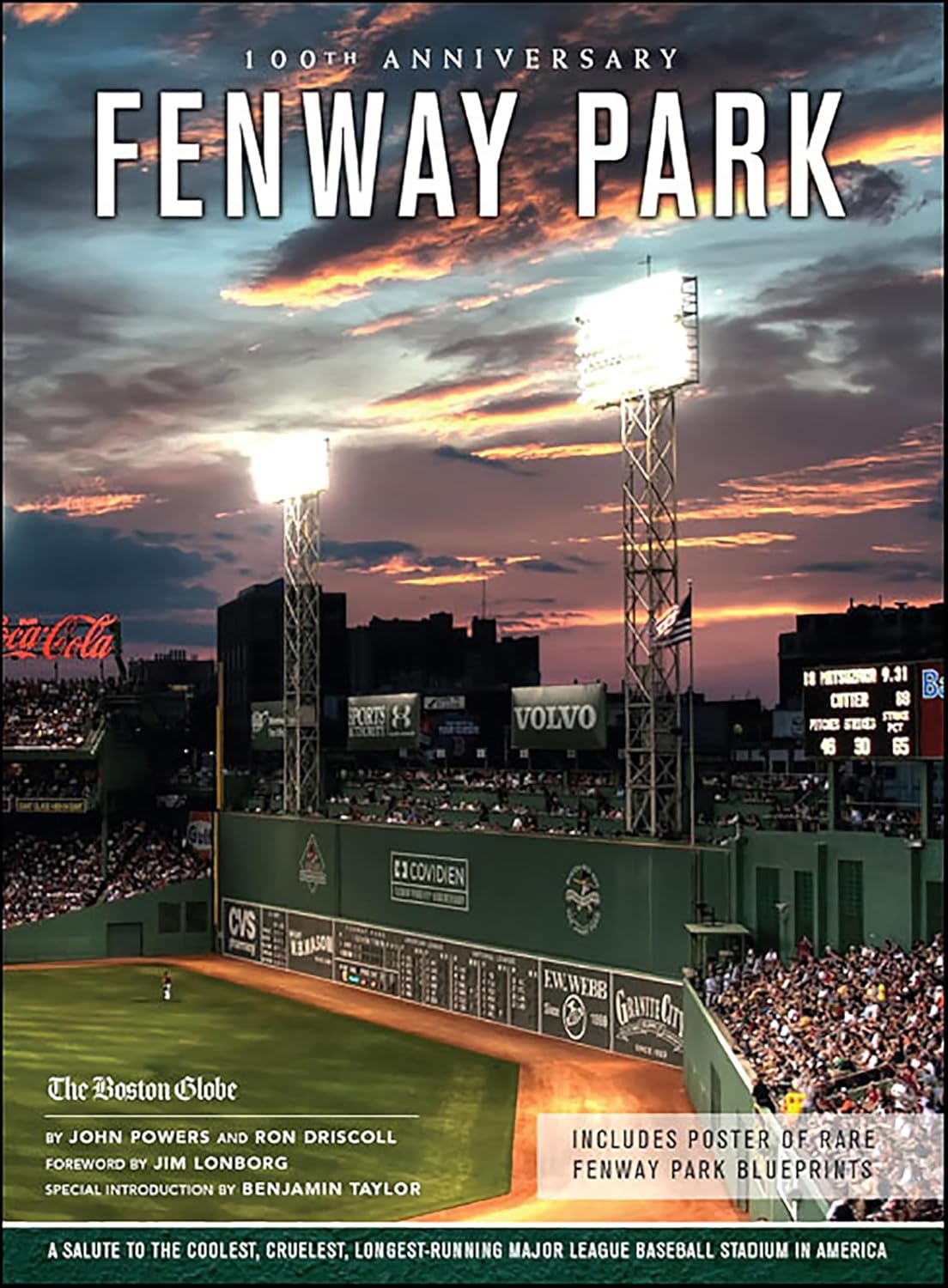
Fenway Park: A Salute to the Coolest, Cruelest, Longest-Running Major League Baseball Stadium in America

A centennial celebration of the Boston Red Sox’s home stadium and the city’s historical landmark.

Fenway Park evokes a team and a sport that have become more synonymous with a city’s identity than any stadium or arena in the country. The park’s instantly recognizable confines have seen some of the most dramatic happenings in baseball history, including Carlton Fisk’s “Is it fair?” home run in the 1975 World Series and Ted Williams’s perfectly scripted long ball in his final at-bat. Watching a game at Fenway means recognizing that the pitcher is standing on the same mound where Walter Johnson, Christy Mathewson, and Babe Ruth pitched, that a hitter is in the same batter’s box where Ty Cobb and Hank Aaron and Shoeless Joe Jackson dug in to take their swings.

In its long history, Fenway has hosted football, hockey, soccer, boxing, and so much more. It has hosted hundreds of historic events having nothing to do with sports, including concerts, religious gatherings, and political rallies. It was the site of Franklin Delano Roosevelt’s final campaign address, as well as performances by Stevie Wonder, Bruce Springsteen, and the Rolling Stones. Through it all, the Boston Globe has been the consistent, respected chronicler of every important moment in park history. In fact, the newspaper played a remarkable role in Fenway’s creation and evolution: the Taylor family—founders and longtime owners of the Globe—owned the ballclub in 1912, helped finance the new stadium, and renamed the team the “Red Sox”.

Fenway Park is the Globe‘s insider perspective, combined with more than a century of exemplary journalism, presenting the definitive narrative history of both park and team. It’s a centennial collectors’ item unlike any other, offering exceptional writing and hundreds of rarely seen photographs and illustrations.

Editorial Reviews

Review

Boston Red Thoughts.com
“A must read, and a must have on every Red Sox fans coffee table. Check it out!” Fenway Nation
“You know when you first pick up that fresh new copy of Sports Illustrated and rush to see the latest “how did they do that?” photos at the front? That’s what this entire book is like. Photo after photo will make your jaw drop. Whether it’s a casual pre-game street scene of Boston’s “new” ballpark in 1912, or Curt Schilling standing on the dugout in 2007 showering the crowd with champagne, each image is unforgettable. The Boston Globe’s John Powers and Ron Driscoll weave a compelling story of the park—and the photofest is also peppered with amazing commentaries by Globe writers like Dan Shaughnessy and the Great, Great, Great Bob Ryan. His essays alone are worth the price of this book. Fenway Park—A Salute to the Coolest, Cruelest, Longest-Running Major League Baseball Stadium in America will make the past come alive—from “the Lady With The Megaphone” (Lolly Hopkins) to the man who gave us all the sound of the Red Sox (organist John Kiley). Putting this book on your coffee table will make it the coolest in town.”

Longtime Boston Sportscaster Clark Booth
“We love Fenway Park because we love antiques, be they rocking chairs or ballparks. But we love it even more because the eccentricities of the place mirror our own. It is, like us, difficult and cranky. … Players come and go, but Fenway Park may become an American pyramid.”

Carl Yastrzemski
“I came to love Fenway. It was a place that rejuvenated me after a road trip; the fans right on top of you, the nutty angles. And the Wall. That was my baby, the left-field wall, the Green Monster.”

M.M. Library Journal
“This coffee-table book, commemorating the park’s 100th anniversary, painstakingly re-creates its history, from planning and construction to its role in the surrounding neighborhood and its designation as a symbol of a bygone era. Powers (sports reporter, Boston Globe) and Driscoll (formerly, Boston Globe) explore the unique character of the field and the legendary Green Monster, nemesis of many would-be home-run hitters. With large-format, archival color and black-and-white photos, stories of memorable games, and interviews with past players, this is more than a book about a stadium; it’s a testament to a city, a team, its fans, and the game itself. A treasure for all fans of baseball history, a must-have for Red Sox faithful.”

About the Author

John Powers made his first visit to Fenway on June 14, 1956 when he witnessed a normal ballgame of the era; the Sox nearly blew a five-run lead and Don Buddin made an error. Since joining the Globe sports staff in 1973 he has spent hundreds of hours watching games from the elevated perspective of the press box before heading to the clubhouse to ask the players to explain the inexplicable. He still has no idea why Johnson took out Willoughby. Powers lives outside Boston.
Ron Driscoll attended many Red Sox doubleheaders with his brother, Tom, in the mid-1960s, and later suffered the indignity of living in Kenmore Square surrounded by Yankee fans when he majored in journalism at Boston University in the late 1970s. A former copy editor for the Cape Cod Times and the Boston Globe, he lives in Marstons Mills, Massachusetts, with his wife Kathi and daughters Molly and Meg, and is manager of editorial services for the United States Golf Association.
The Boston Globe, winner of twenty-one Pulitzer Prizes, is New England’s leading daily newspaper. It is wholly owned by The New York Times Company.

Posted in #History

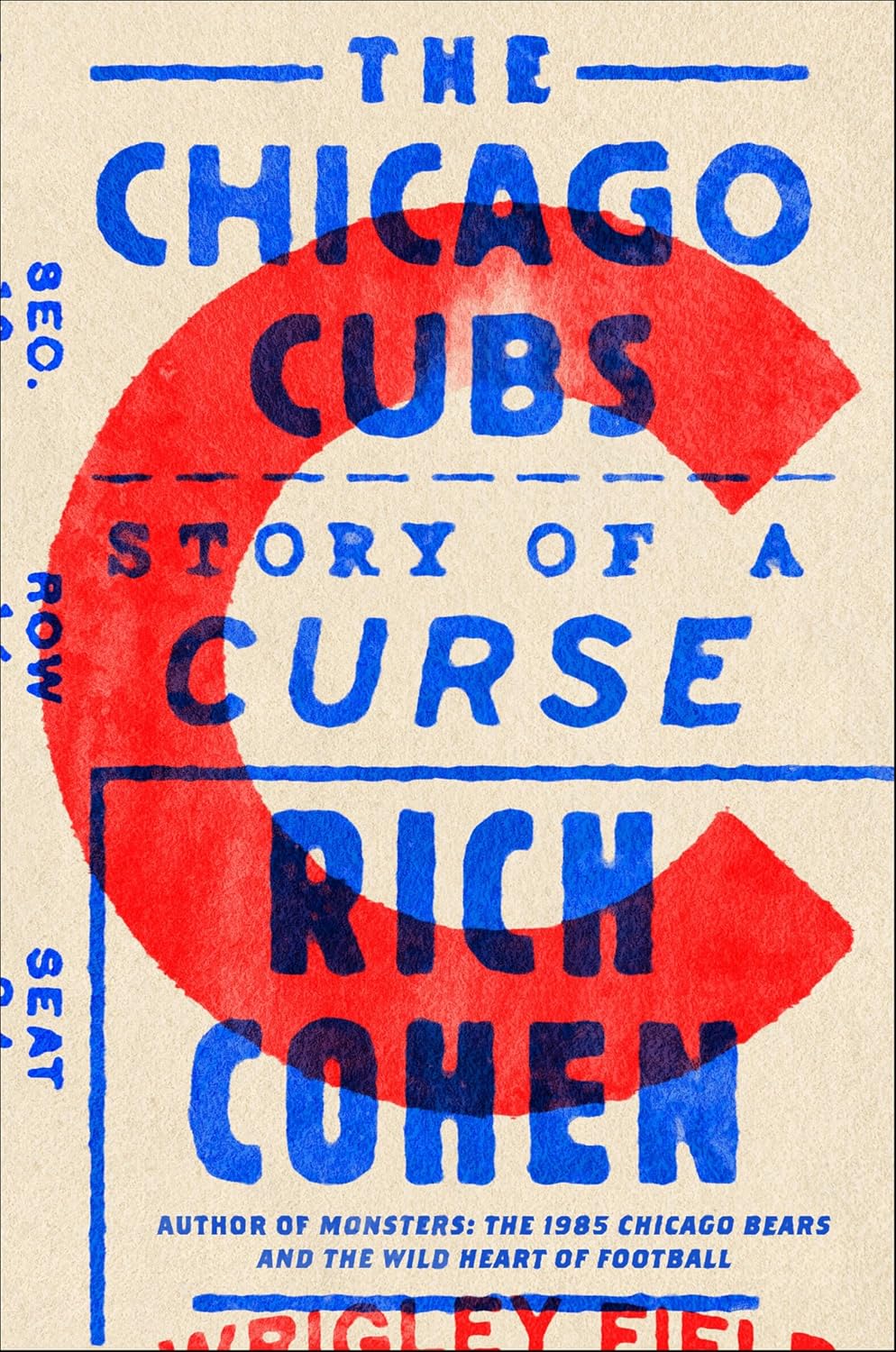
The Chicago Cubs: Story of a Curse

The New York Times–bestselling author “knocks it out of the park,” exploring the history of the 2016 World Series champions, the Chicago Cubs (Vanity Fair).
When Rich Cohen was eight years old, his father took him to see a Cubs game. On the way out of the park, his father asked him to make a promise. “Promise me you will never be a Cubs fan. The Cubs do not win,” he explained, “and because of that, a Cubs fan will have a diminished life determined by low expectations. That team will screw up your life.”
Cohen became not just a Cubs fan but one of the biggest Cubs fans in the world. In this book, he captures the story of the team, its players and crazy days. Billy Sunday and Ernie Banks, Three Finger Brown and Ryne Sandberg, Bill Buckner, the Bartman Ball, Kris Bryant, Anthony Rizzo—the early dominance followed by a 107-year trek across the wilderness. It’s all here, in The Chicago Cubs: Story of a Curse—not just what happened, but what it felt like and what it meant.
Featuring extensive interviews with players, owners, and coaches, this mix of memoir, reporting, history, and baseball theology—forty years in the making—has never been written because it never could be. Only with the 2016 World Series can the true arc of the story finally be understood.
“A marvelous distillation of all things Cubs, the history, the jinx, the glorious redemption of 2016, complete with a rainstorm sent by the Lord God Almighty. You’ll rip through it faster than a plastic cup of Old Style . . . ” —Chicago Sun-Times

Editorial Reviews

Review

“Plenty enough illumination to wow casual baseball fans and engage even the hardest-core Cubs fan . . . that long-awaited World Series win was undoubtedly a gift, and Cohen did with it what the best writers do: He turned it into something lasting.”―Josh Noel, Chicago Tribune

“The best sports book of 2017.”―J. Kemper Campbell, Lincoln Journal Star

“[There] is already a succession of books on the Chicago Cubs’ historic 2016 World Series championship . . . but [Cohen’s] might be the best, since it’s both a deeply satisfying historical account of that colorful franchise and a compelling, all-too-painful personal narrative of one longtime, besotted Cubs fan.” ―Booklist, starred review

“[Cohen] rehearses in swift, entertaining fashion the genesis of the team and its glory years (there were many early on) and long decades of mediocrity . . . His many personal stories, strung like holiday lights throughout the narrative, illuminate a fan’s frangible heart that annually repaired itself.”―Kirkus

About the Author

Rich Cohen is the New York Times-bestselling author of Tough Jews, Monsters, Sweet and Low, The Sun & the Moon & the Rolling Stones, The Chicago Cubs, and The Last Pirate of New York, and, with Jerry Weintraub, When I Stop Talking, You’ll Know I’m Dead. He is the cocreator of the HBO series Vinyl, a contributing editor at Rolling Stone, and a writer at large for Air Mail. He has written for The New York Times, The New Yorker, The Atlantic, and Harper’s Magazine, among other publications. Cohen has won the Great Lakes Book Award, the Chicago Public Library’s 21st Century Award, and the ASCAP Deems Taylor Award. He lives in Connecticut.

Posted in #History

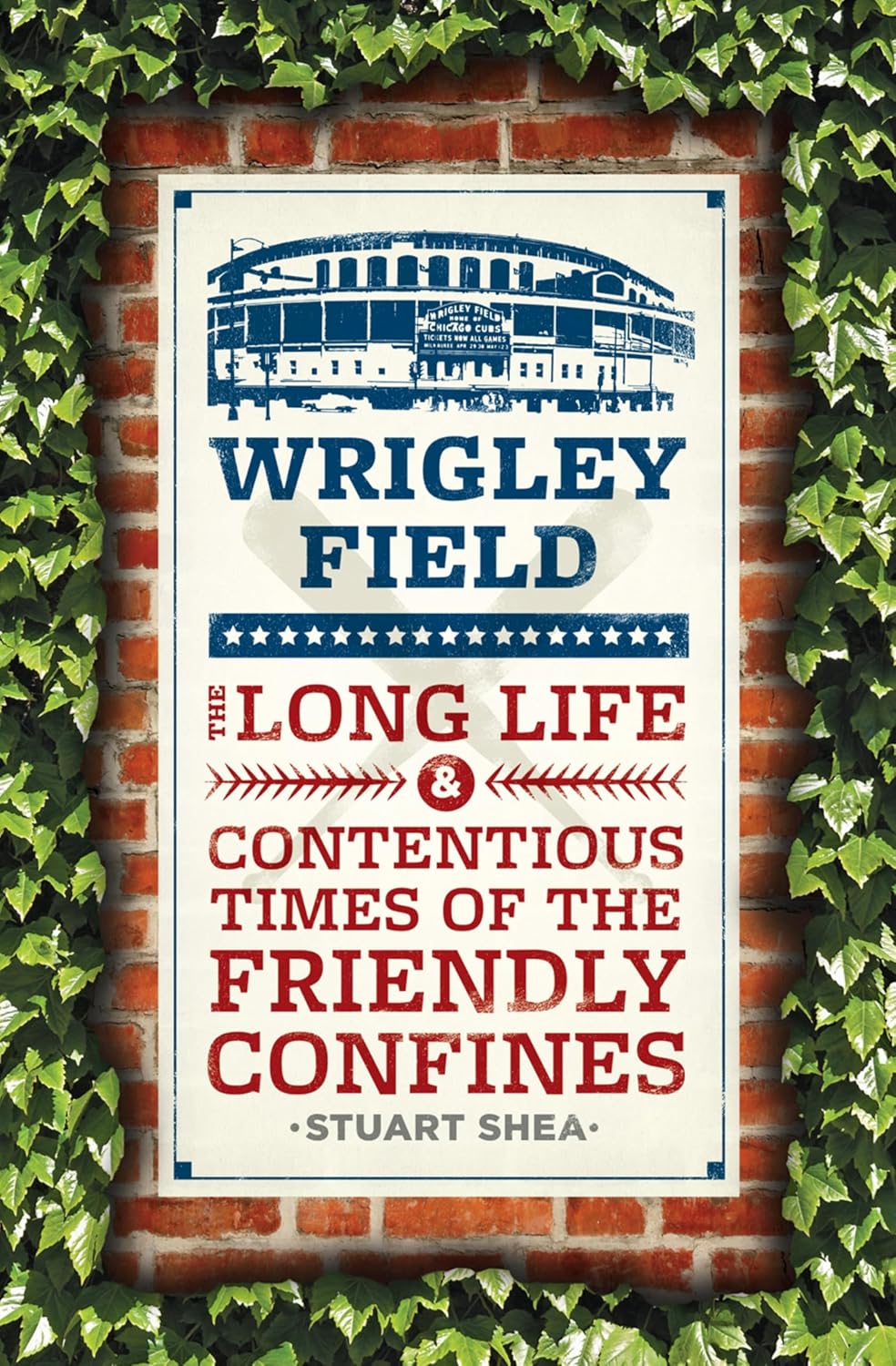
Wrigley Field: The Long Life and Contentious Times of the Friendly Confines

“One of the best books ever written about the Cubs, their home and the fans who flock there to watch them, win or lose.”—Rolling Stone

In spring 1914, a new ballpark opened in Chicago. Hastily constructed after epic political maneuvering around the city’s and organized baseball’s hierarchies, the new Weeghman Park (named after its builder, fast-food magnate Charley Weeghman) was home to the Federal Leagues Chicago Whales. The park would soon be known as Wrigley Field, one of the most emblematic and controversial baseball stadiums in America.

In this book, Stuart Shea provides a detailed and colorful chronicle of this living historic landmark and shows how the stadium has evolved to meet the shifting priorities of its owners and changing demands of its fans. While Wrigley Field today seems irreplaceable, we learn that from game one it has been the subject of endless debates over its future, its design, and its place in the neighborhood it calls home. To some, it is a hallowed piece of baseball history; to others, an icon of mismanagement and ineptitude. Shea deftly navigates the highs and lows, breaking through myths and rumors, in a book packed with facts, stories, and surprises that will captivate even the most fair-weather fan. From big money (the Ricketts family paid $900 million for the team and stadium in 2009), to exploding hot dog carts, to the curse-inducing goat, Shea uncovers the heart of the stadium’s history.

“More than any other American institution, baseball most wholeheartedly welcomes half-baked history and curdled lore. It’s fun, after all; what grinch wishes to poke at the tale of Babe Ruth’s called shot? But more often than not the real stories are even more delicious, and no one has gathered more of them than author Stuart Shea. His book is an unceasing delight.”—John Thorn, official historian, Major League Baseball and author of Baseball in the Garden of Eden


Editorial Reviews

Review

“Most ballpark books are like junk food―hundreds of empty calories of glossy photos and told-a-million-times anecdotes. They sate your appetite briefly without feeding your brain. But Stuart Shea’s Wrigley Field is a Thanksgiving feast for baseball fans. The book is saturated with culture and passion, flavor and spice, all lovingly created by a master chef. This is history to be savored: a winning combination of intimate knowledge, amazing detail, relevant context, and expert storytelling.” ― Gary Gillette, editor of The Baseball Encyclopedia

“Amid Wrigley Field’s birthday revels much will be reported about its vines, its scoreboard, its goat, its very origin—much of it not quite so. More than any other American institution, baseball most wholeheartedly welcomes half-baked history and curdled lore. It’s fun, after all; what grinch wishes to poke at the tale of Babe Ruth’s called shot? But more often than not the real stories are even more delicious, and no one has gathered more of them than author Stuart Shea. His book is an unceasing delight.” ― John Thorn, official historian, Major League Baseball and author of Baseball in the Garden of Eden

“Unlike any other venue, Wrigley Field has been a second home for generations of fans, a paragon of modern convenience turned baseball’s ultimate wayback machine, a status symbol for social climbers and corporate muscle alike. Shea’s book is the perfect history of the place that reflects Chicago’s past and future, its failures and its aspirations.” ― Christina Kahrl, cofounder of Baseball Prospectus

“One of the best books ever written about the Cubs, their home and the fans who flock there to watch them, win or lose.” ― Rolling Stone

“The 448-page book is packed with colorful anecdotes that are sure to keep any Chicago history buff or baseball fan—yes, even those who root for the South Side White Sox (or ‘Pale Hose,’ as Shea notes they are nicknamed)—glued to their bleacher seat.” ― Wrigleyville Nation

“You should read this book because of the history of wonderful stories and anecdotes about the team’s and the ballpark’s history, some of which is ‘contentious,’ as Shea’s title states, some of which is just colorful and fun, just as is the history of the neighborhood and city in which it resides.” ― Bleed Cubbie Blue

“Wrigley Field: The Long Life & Contentious Times of the Friendly Confines is a great reminder of what makes the ballpark so special, and why the Cubs remain so popular.” ― The Writer’s Journey

“Stuart Shea’s Wrigley Field: The Long Life and Contentious Times of the Friendly Confines deserves the location of honor on the nightstand of each and every Cubs fan, to be read a chapter or two at a time between Opening Day and the World Series.” ― Chicago Tribune

“Home of the Cubs, world’s greatest ballpark, Chicago’s largest beer garden, bucket list-worthy tourist attraction, field of (broken) dreams, enduring monument to enduring failure―Wrigley Field is all of these things, and of course so much more. Stuart Shea’s witty, informative, and deeply entertaining book gives the Friendly Confines the tribute it deserves.” — Dan Epstein, author of Big Hair and Plastic Grass: A Funky Ride Through Baseball and America in the Swinging ’70s

Posted in #History

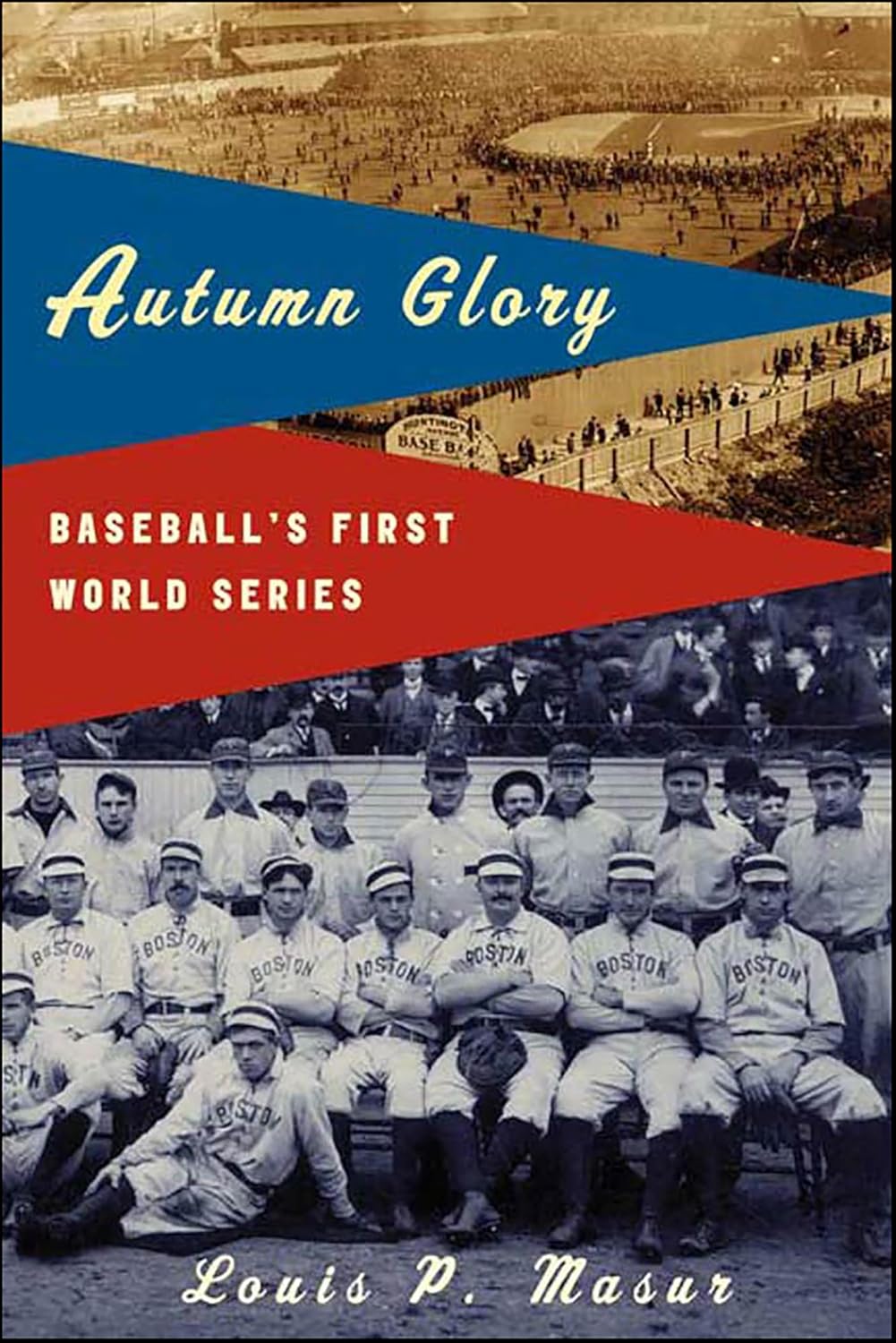
Autumn Glory: Baseball’s First World Series

A suspenseful account of the glorious days more than a century ago when our national madness began, the first Major League Baseball World Series.
A post-season series of games to establish supremacy in the major leagues was not inevitable in the baseball world. But in 1903 the owner of the Pittsburgh Pirates (in the well-established National League) challenged the Boston Americans (in the upstart American League) to a play-off, which he was sure his team would win. They didn’t—and that wasn’t the only surprise during what became the first World Series. In Autumn Glory, Louis P. Masur tells the riveting story of two agonizing weeks in which the stars blew it, unknown players stole the show, hysterical fans got into the act, and umpires had to hold on for dear life.

Before and even during the 1903 season, it had seemed that baseball might succumb to the forces that had been splintering the sport for decades: owners’ greed, players’ rowdyism, fans’ unrest. Yet baseball prevailed, and Masur tells the equally dramatic story of how it did so, in a country preoccupied with labor strife and big-business ruthlessness, and anxious about the welfare of those crowding into cities such as Pittsburgh and Boston (which in themselves offered competing versions of the American dream) .
His colorful history of how the first World Series consolidated baseball’s hold on the American imagination makes us see what one sportswriter meant when he wrote at the time, “Baseball is the melting pot at a boil, the most democratic sport in the world.” All in all, Masur believes, it still is.


Editorial Reviews

Review

“This is a book that every baseball fan will enjoy. History-minded Americans will love it, too. It’s a marvelous look at the Americans of 1903. What a great way to celebrate the one-hundredth anniversary of the World Series!”
–Thomas Fleming, author of The New Dealers’ War: F.D.R. and the War Within World War II

“Autumn Glory is a book to be savored in all seasons. Louis Masur vividly recreates a bygone year not only of immortals such as Cy Young, but also of forgotten diamond heroes with monikers such as Ginger Beaumont, Kitty Bransfield, and Noodles Hahn; a time when players rode to the stadium through cheering throngs in open barouches, and when, inning after inning, derby-hatted, cigar-smoking fans waved red parasols and belted out music-hall ballads until their throats were raw.”
–William E. Leuchtenburg, William Rand Kenan, Jr. Professor Emeritus, University of North Carolina

“Louis Masur’s Autumn Glory is the best researched and most eloquent account of the first World Series yet written. He provides ample evidence why the first modern fall classic became a beloved American tradition.”
–Glenn Stout, co-author of Red Sox Century

“Autumn Glory brings one back to those halcyon days when players and owners alike eschewed money for honor, and when Boston actually used to win the World Series. An invaluable resource for all fans of the game.”
–Kevin Baker, author of Paradise Alley

“As the World Series turns a hundred years old this year, I can think of no better way to celebrate than reading Autumn Glory. Louis Masur drops us back a full century to relive the first World Series, and in his hands the games lose none of their excitement and flavor. The era comes vibrantly alive in this wonderful baseball book.”
–Jules Tygiel, author of Past Time: Baseball as History

“In a perfect world, there would be a book this good about every World Series.”
s20–Rob Neyer, author of Feeding the Green Monster

From the Inside Flap

“Autumn Glory is a book to be savored in all seasons. Louis Masur vividly recreates a bygone year not only of immortals such as Cy Young, but also of forgotten diamond heroes with monikers such as Ginger Beaumont, Kitty Bransfield, and Noodles Hahn; a time when players rode to the stadium through cheering throngs in open barouches, and when, inning after inning, derby-hatted, cigar-smoking fans waved red parasols and belted out music-hall ballads until their throats were raw.”
William E. Leuchtenburg, William Rand Kenan, Jr. Professor Emeritus, University of North Carolina

“In a perfect world, there would be a book this good about every World Series.”
Rob Neyer, author of Feeding the Green Monster

“Autumn Glory brings one back to those halcyon days when players and owners alike eschewed money for honor, and when Boston actually used to win the World Series. An invaluable resource for all fans of the game.”
Kevin Baker, author of Paradise Alley

“As the World Series turns a hundred years old this year, I can think of no better way to celebrate than reading Autumn Glory. Louis Masur drops us back a full century to relive the first World Series, and in his hands the games lose none of their excitement and flavor. The era comes vibrantly alive in this wonderful baseball book.”
Jules Tygiel, author of Past Time: Baseball as History

“Louis Masur s Autumn Glory is the best researched and most eloquent account of the first World Series yet written. He provides ample evidence why the first modern fall classic became a beloved American tradition.”
Glenn Stout, co-author of Red Sox Century

“This is a book that every baseball fan will enjoy. History-minded Americans will love it, too. It s a marvelous look at the Americans of 1903. What a great way to celebrate the one-hundredth anniversary of the World Series!”
Thomas Fleming, author of The New Dealers War: F.D.R. and the War Within World War II

Posted in #non-fiction

The Greatest: The Quotes of Muhammad Ali 

(Quotes For Every Occasion Book 11)

The Greatest in his own words

“I’ll tell you how I would like to be remembered: As a black man who won the heavyweight title – Who was humorous and never looked down on those who looked up to him – A man who stood for freedom, justice and equality – And I wouldn’t even mind if folks forgot how pretty I was.”

Muhammad Ali

No one has straddled the world of sport, politics and popular culture as Muhammad Ali did.

He was born in Louisville in 1942 in an America where blacks were subjected to a brutal apartheid and were treated as second class citizens. He rose, through his boxing skill and character, to become the most famous person in the world at the time.

He was most famous for styling himself as ‘The Greatest’. There is a consensus that he was the greatest of boxers during an era of great boxers. However, he was far more than that. He was a very great man a moral leader, anti-war and fierce opponent of racial prejudice.

A career beyond boxing as a black political leader, fighting for the rights of an oppressed minority, seemed inevitable. Fate had another twist however and Ali suffered from Parkinson’s Disease for 30 years, possibly exacerbated by an extended boxing career. This rendered his full potential as an advocate for black rights impossible.

This book is some of the wit and wisdom of a much loved and complex man through his own words.