Posted in #BookTours

In the Orchards of Shadow and Light


In the French Resistance of 1944, trust is the difference between life and death. 

Post-war troubles heighten when our hero’s life is in danger and all he holds dear is at risk.


In the Orchards of Shadow and Light

The Shadow Series Book 1

by Arthur McMaster

Genre: Historical WWII Suspenseful Spy Romance


In the vast tapestry of war, outcomes are never certain. Its demands are endless, its sacrifices countless. Yet for one couple who will share war’s burdens and dangers-a daring American OSS agent and a French Resistance leader-its conclusion will transform both lives forever.

From the opening line, author Arthur McMaster, a retired foreign intelligence officer, makes clear: “No families escape the devastation of war.” What follows is storytelling you won’t be able to set aside. Amid the apple orchards and farmlands of war-ravaged Western Europe in the final years of World War II, we follow thirty-five-year-old OSS operative Claire Skiffington and French Resistance leader Jacques Berlangier through perilous clandestine operations. Eluding Vichy collaborators and Wehrmacht checkpoints, Claire’s cover is that of a simple pastry girl, but this emissary is far more than she appears.

Years after the Nazi menace has passed, in the small Breton village of Combourg, Claire and Jacques are in love and determined to build a life together. Their days and nights in Paris work to make it all magical. But someone wants Jacques dead. Why? And how will one estranged family member unlock the source of danger?

Brimming with suspense and rich in character development, In the Orchards of Shadow and Light features beautiful imagery and finely drawn characters. Written by former DIA-CIA analyst and award-winning writer Arthur McMaster, In the Orchards of Shadow and Light is the first in a trilogy based on espionage, romance, and suspense. Combines elements of “The Rose Code,” “The Nightingale,” and “All the Light We Cannot See” to create a rich atmosphere, original characters embroiled in real historical events, dangerous romance and compelling drama. This story represents one man and one woman’s perilous commitment to service in the face of danger: one couple’s commitment to overcoming treachery and blazing a future together.


What readers are saying:

“Finely crafted with an artisan’s touch, there is an unseen history beneath the lives of those trying to survive. Precisely researched, McMaster adroitly drops the reader behind the lines of clandestine operations. The grim destruction of Europe is brought to life with beautiful imagery and reconnoitered characters-every bit as interesting as those of Ken Follett’s Eye of the Needle and The Key to Rebecca. This is a fine novel no one should pass up.”

— William Walsh, author of Lakewood (TouchPoint Press)


As you begin this book, prepare yourself for reading a writer who knows the details of espionage so well they feel like second nature, rather than research. Prepare yourself for lush, lyrical prose and the historical span of an Ian McEwan novel. This is a spy story, a love story, and a family story set largely in France, during a war, but McMaster balances the deprivations of war with domestic arts, the healing chores of mother women who bake stolen oranges into cakes, somehow find tea to serve, and harvest the slenderest sprigs of tarragon and chervil, plucked from their gardens, and stored in delicate clay pottery. This is a white knuckle thriller written by someone with all the sensibilities of a poet.

— Susan Tekulve, author of In the Garden of Stone


**Releases June 2nd – Order Now!!**

Amazon * B&N * Kobo * Bookbub * Goodreads


Near eleven, Jacques’s truck approached the barn. There, he and Claire saw two men in black coats putting a third into their vehicle. The barn behind them roiled in flame. From the look of it, the generator had exploded, or maybe they had simply set off some explosives. Jacques and Claire sat far enough back to observe what had happened but not close enough to be spotted.

“Goddamn it.”

“My God, Jacques,” she said. “They are taking him.” Their own luck had held. Thomas’s had not. “And he had been so clever. The boot heel. The shaving cream.”

“We have to go. Immediately!” Both watched, though only seconds more, until the Germans drove off with their prize, the barn behind them collapsing in flame. “Did you think he knew about Combourg?” Jacques asked her.

She had never mentioned it. They’d only met Thomas at the Laurent farm, in Épiniac. “As I recall, nothing was ever said to him about Combourg.”

“He would not know of the monsignor, Roger’s uncle,” she added. They had kept that secret. Claire rubbed at the palm of one hand, kneading it with the knuckle of the other.

“No. And he does not know our real names,” Jacques said. “But Roger Laurent could know.”

Jacques took her hand. “Thomas is lost, but what harm Roger could do yet is considerable. If he gives up Roger.”

“Will he? Where will they take him?” she asked as Jacques worked the truck around, knowing he was leaving behind his apples and, more importantly, his cover for travel.

“Saint-Lô, I would think. Some Nazi headquarters.”

As Jacques wrenched the truck sharply onto the road toward home, where the deeply distressed Claire would be able to arrange for her return to Bodney, a bottle scooted out from under her seat.

“Look at this,” she said, pulling it up from the floor. “It’s his Calvados.” Attempting to hold back tears.

“Keep it. We will finish it tonight in his honor with a tip of the hat to our friend.”

Passing near enough to the Laurent farm en route to Combourg, with relative safety still several kilometers away, Jacques pointed to the farmhouse. It was risky, but he had to take a look, remaining well back from potential observation. There, they were able to make out, standing near the entry door, the one thing they had hardly dared hope to see—a dark green motorcycle.

What Roger’s return portended was unclear, but given what had happened to Thomas, that outcome was surely the best they could have hoped for. Jacques slowed the truck and looked to the darkened house, their hearts racing.

“Oh my God. He’s come back.”

Jacques touched her hand.

She thought to say something, leaning into him. “Let’s go home, Jacques. Please!” Then added, “You did well, getting us through it all. So brave.”

“You and me,” he said. “We did. Together.” He touched her face tenderly.

In that moment, Jacques and Claire leaned toward each other for a necessary hug, and then a kiss. A kiss of relief. A kiss of what might yet be.


Poet, playwright and novelist, Arthur retired from full-time teaching, most recently as Visiting Assoc. Professor of English, at Converse College, in Spartanburg, SC. HIs books include: In the Orchards of Our Mothers (historical fiction novel); The Whole Picture Show (poetry) Musical Muse (academic); Birdies Never Die (golf); Givings & Misgivings (poetry) and The Spy Who Came Down with a Cold (poetry) and Need to Know (memoir).

Arthur’s first career was that of a foreign intelligence officer, with assignments with military intelligence and briefly with the CIA. Arthur earned an MFA degree in Poetry at University of Florida. Pushcart Prize nominations. He now teaches in Continuing Education Dept for Furman University (fiction and poetry). 


Website * Facebook * Facebook * Instagram * Instagram * TikTok * Amazon * Goodreads


Follow the tour HERE for special content and a giveaway!


Enter the In the Orchards of Shadow and Light Giveaway Here


Posted in #History

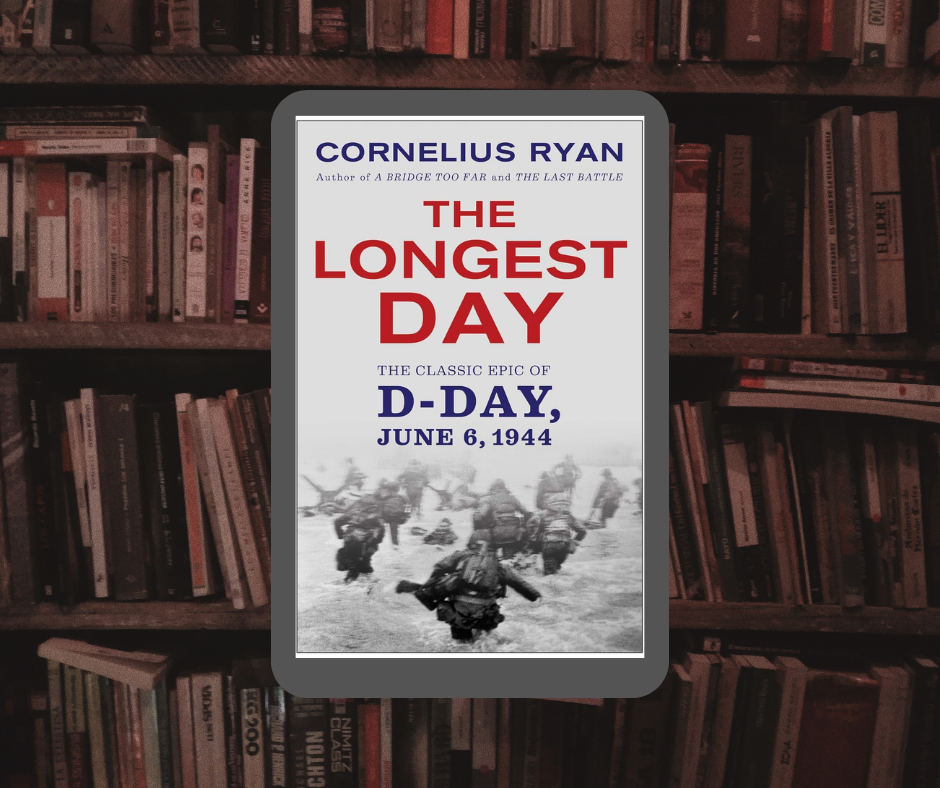
The Longest Day: The Classic Epic of D-Day

From the acclaimed author of A Bridge Too Far comes the unparalleled, classic work of history that vividly recreates the battle that changed World War II—the Allied invasion of Normandy.

The Longest Day is Cornelius Ryan’s unsurpassed account of D-Day, a book that endures as a masterpiece of military history. In this compelling tale, Ryan painstakingly recreates the fateful hours before and after the massive invasion of Normandy. He retells the story of an epic battle. This battle turned the tide against world fascism and freed Europe from the grip of Nazi Germany.

This book, first published in 1959, is a must for anyone who loves history. It’s also essential for anyone who wants to better understand how free nations prevailed when darkness enshrouded the earth.

Editorial Reviews

Amazon.com Review

A true classic of World War II history, The Longest Day is more than a book. It is an in-depth account of a pivotal moment. The story unfolds with the massive Allied invasion of Normandy on June 6, 1944. Journalist Cornelius Ryan began working on the book in the mid-1950s. At that time, the memories of the D-day participants were still fresh. He spent three years interviewing D-day survivors in the United States and Europe. When his book was first published in 1959, it was tremendously successful. It established many of the legends of D-day that endure in the public’s mind. Ryan was enormously skillful at weaving small personal stories into the overall narrative. Later, he used the same technique to depict the airborne invasion of Holland in A Bridge Too Far. The Longest Day is a pleasure to read. Subsequent historians have noted its accuracy. They have relied heavily on Ryan’s research for their own accounts. In short, the book is a “must read” for anyone interested in the D-day invasion. –Robert McNamara

Review

“A dramatic, moving masterpiece, a living memorial to the men who died and as suspenseful as the most gripping mystery story.” — J. H. Thompson, Chicago Sunday Tribune

“Fifty years from now, the history of D-Day, I am sure, will lean heavily on this book.” — John Toland, The New York Times Book Review

“If you have read all the accounts of D-Day or none of them, if you were in the fighting or on the sidelines, you will be spellbound, as I was, by this magnificent retelling of a glorious and tragic story.” — Lt. Gen. James Gavin


“If you have read all the accounts of D-Day or none of them, if you were in the fighting or on the sidelines, you will be spellbound, as I was, by this magnificent retelling of a glorious and tragic story.” — Lt. Gen. James Gavin

From the Publisher

6 1.5-hour cassettes

About the Author

Cornelius Ryan was born in 1920 in Dublin, Ireland, where he was raised. He became one of the preeminent war correspondents of his time. He flew fourteen bombing missions with the Eighth and Ninth US Air Forces. He covered the D-Day landings and the advance of General Patton’s Third Army across France and Germany. After the end of hostilities in Europe, he covered the Pacific War. He wrote numerous other books in addition to his classic works The Longest Day, The Last Battle, and A Bridge Too Far. These books have appeared throughout the world in nineteen languages. Awarded the Legion of Honor by the French government in 1973, Mr. Ryan was hailed at that time by Malcolm Muggeridge as “perhaps the most brilliant reporter now alive.” He died in 1976.

Posted in My Likes and Dislikes

Robinson Crusoe, USN #BookReview

Despite the title, this is a non-fiction book. It is what I consider to be a forgotten piece of American WWII Pacific history.

Let me tell you more. My husband and I were watching “Donovan’s Reef” the other day, and a section of the movie reminded me of this story. To my delight, I found it on Amazon.

The Beginning

Thanks to this speech, the world remembers what happened on December 7, 1941. What seems to have been lost is what happened the day that FDR gave this speech.

On December 8, 1941, the Japanese dropped their first bomb on American held Guam. As you can imagine, it caused quite a panic. Both the military and the civilians weren’t entire sure of how to react. What they did know is that they couldn’t hold out for long.

What Came Next

George Tweedy takes us inside what happened on the island after the Japanese took over until the time that the American’s returned. The story is told in an easy-to-read conversational style. You can feel everything that is happening around him as if you were really there. I loved it.

The Reviews

Yablonsky

5.0 out of 5 stars
Great Book! Would recommend to anyone interested in knowing World War II history.
Reviewed in the United States on January 5, 2017
Verified Purchase
I've read this book twice now. I had heard about the basic story from my father saying to watch the movie "No Man is an Island" as it covers your Grandfather's history in the Navy. He was a Radio Operator and was one of the few that ran into the bush to escape capture by the Japanese when they attacked and captured Guam. The story is very riveting as it covers Tweed's run into the bush and how the Chamorros had helped him and the others. My Grandfather's death is described her also, which really got my attention. He was beheaded by the Japanese for unknown reasons, even the Navy records don't mention how he died, but George found the truth. After reading it, I have great respect for the Guamanians and what they endured to protect Tweed and the others. I've purchased several copies and sent as gifts and to family and all say the same things about it being such a great book and excellent true story.

The movie this is based on with Jeffrey Hunter was good, but there were extra Hollywood additions to the story. What Hollywood movie doesn't exaggerate the story to better the film or make it more exciting.

I hope you enjoyed the book as much as I did.
Stan

5.0 out of 5 stars
I could NOT put it down!
Reviewed in the United States on June 16, 2013
Verified Purchase
I have not read a book from cover to cover in over 30+ years without stopping! This book was one I started reading one evening around 8:00 PM and only laid it down briefly when I finished it at 4:49 AM in the morning. It was riveting. Tweed the "Robin Crusoe" ran up against incredible dangers and difficulties I could not even comprehend. The ingenuity he possessed made Robin Crusoe look like small potatoes. He devised a way to create his own electricity for lights, make a radio, and an alarm system that was pure genius, furniture, and clothing in the 2 1/2 years he was in a dangerous situation. I was struck with the tenacity and sheer drive he had and will to live that this man possessed. This is a book to own and pass down to your children, grandchildren to read one day! This gripping story happened on Guam during WWII when the Japanese captured Guam. Tweed had a choice of surrendering or being taken prisoner by the Japanese invading forces. Tweed escaped into the countryside. Aided by Chamorro natives who risked their lives and the lives of their families to keep him alive and safe, Tweed survived for 2 1/2 years until he was eventually rescued by a U.S. Navy ship that came close to firing on him and ending his life. This was an incredible read. Period!
D. W. Young, Jr.

5.0 out of 5 stars
I would have attempted what Tweed accomplished.
Reviewed in the United States on December 14, 2019
Verified Purchase
I enjoyed 18 months of Navy duty on Guam some two years before the movie was released. I trust the book Tweed wrote is so much more real/accurate than that portrayed in the movie that was NOT EVEN filmed on Guam. A few have criticized Tweed for endangering the lives of the Chamorian occupants who helped him survive; perhaps even causing the Japanese occupiers to murder those who were suspected of shielding him. As much danger as Tweed was in during the 31 or so months he was surviving, a few captured US Navy personnel were extremely fortunate the Japanese never discovered the true nature of their mission.