

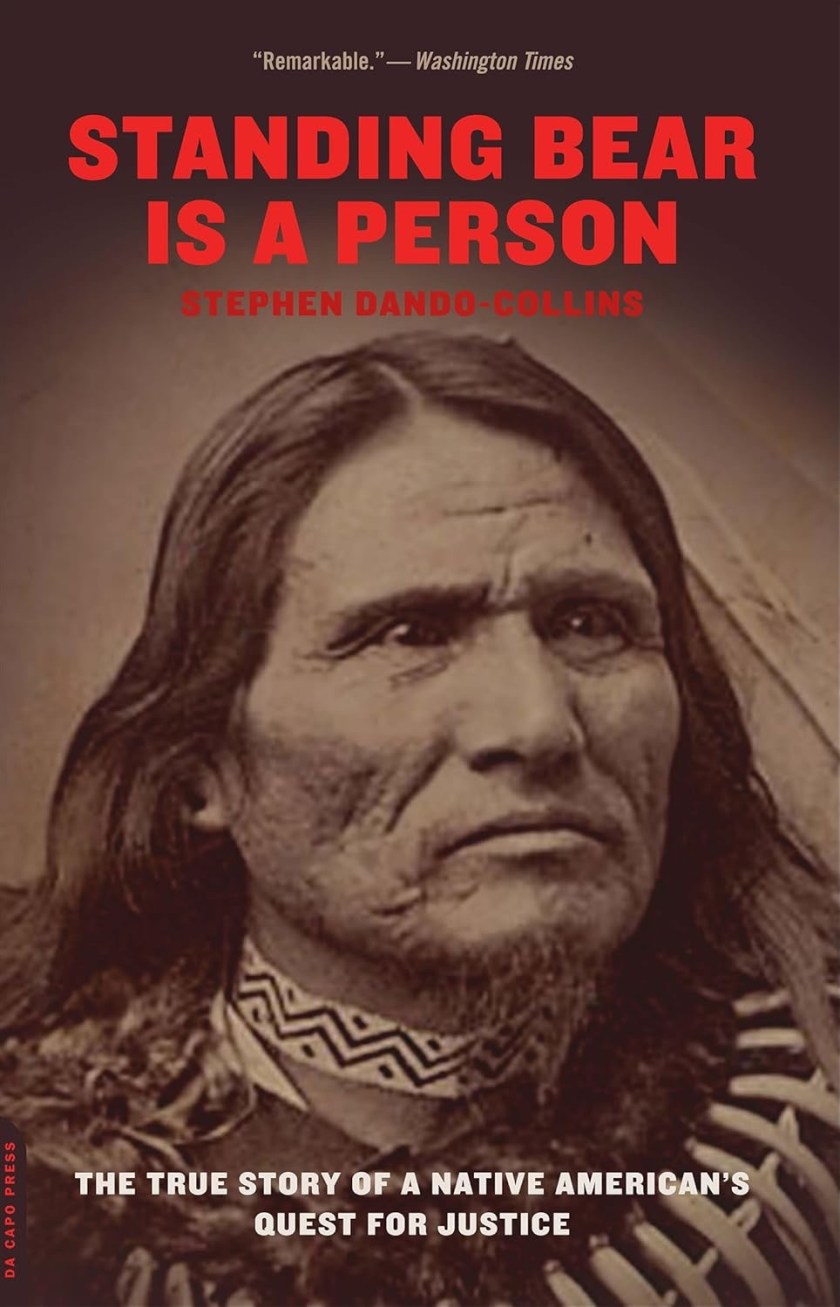
The True Story of a Native American’s Quest for Justice
In 1877, Standing Bear and his Indian people, the Ponca, were forcibly removed from their land in northern Nebraska. In defiance, Standing Bear sued in U.S. District Court for the right to return home. In a landmark case, the judge, for the first time in U.S. history, recognized Native American rights-acknowledging that “Standing Bear is a person”-and ruled in favor of Standing Bear. Standing Bear Is a Person is the fascinating behind-the-scenes story of that landmark 1879 court case, and the subsequent reverberations of the judge’s ruling across nineteenth-century America. It is also a story filled with memorable characters typical of the Old West-the crusty and wise Indian chief, Standing Bear, the Army Indian-fighting general who became a strong Indian supporter, the crusading newspaper editor who championed Standing Bear’s cause, and the “most beautiful Indian maiden of her time,” Bright Eyes, who became Standing Bear’s national spokesperson. At a time when America was obsessed with winning the West, no matter what, this is an intensely human story and a small victory for compassion. It is also the chronicle of an American tragedy: Standing Bear won his case, but the court’s decision that should have changed everything, in the end, changed very little for America’s Indians.
Editorial Reviews
From Booklist
In 1877 the Ponca Indians were forcibly and illegally removed from their fertile croplands in Nebraska and taken to barren land in Oklahoma by the Bureau of Indian Affairs. Standing Bear, a clan leader, told the BIA that the land was unsuitable for farming, and that the Ponca wished to return home. Their request was denied, and by the end of the year, 158 Ponca had died. Desperate, Standing Bear and 27 others decided to escape to the reservation of the Omaha, their cousins. Once there, Omaha chief Iron Eye, along with his daughter Susette, a school principal, met with Brigadier General George Crook, one of two white initiates to the Omaha Soldier Lodge brotherhood. These three then told their story to T. H. Tibbles, deputy editor of the Omaha Daily Herald, whose coverage inspired attorney John Lee Webster to represent Standing Bear. In re-creating this important chapter in Native American history, Dando-Collins captures the full drama of Standing Bear’s struggle, which culminates in a riveting courtroom scene in which the judge rules in his favor. Rebecca Maksel
Copyright © American Library Association. All rights reserved
Review
“Compelling and historically important…a fascinating read.” — Flaunt
“An inspiring and informative book [that] brings to light a heretofore unknown nugget of our heritage.” — Curled Up With a Good Book 12/6/04
“[A] remarkable history.” — Washington Times 2/20/05
“A taut tale…A great story.” — Roanoke Times 2/6/05
“Brisk but evocative…an eloquent reminder of a fight well fought.” — Kirkus Reviews 10/1/04
“A fascinating behind-the-scenes story.” — Arizona Daily Star 11/21/04
Amazon
Discover more from Book Reviews by the Reluctant Retiree
Subscribe to get the latest posts sent to your email.


 Book Reviews by the Reluctant Retiree