

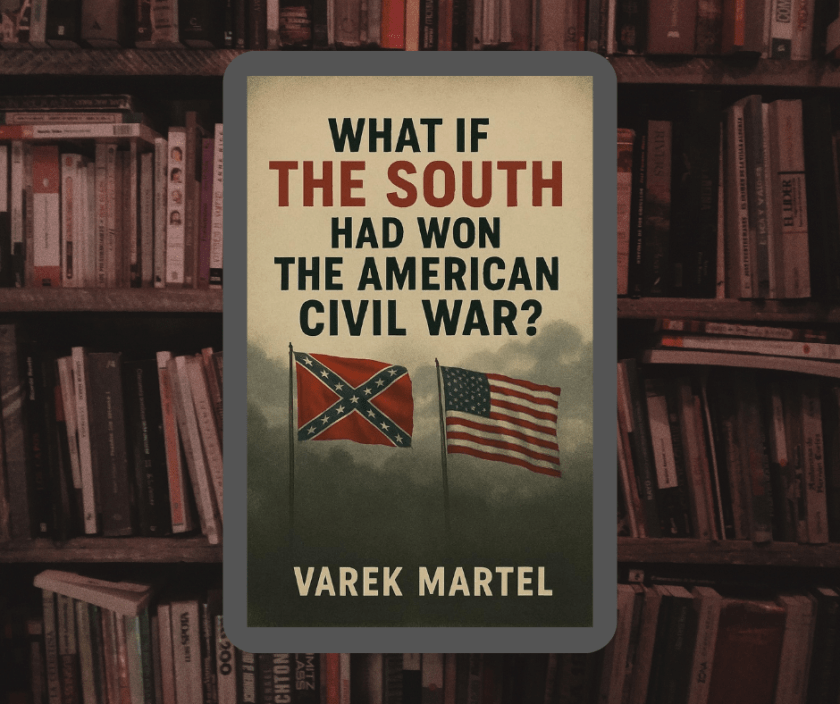
(What If? Turning Points of History)
What If the South Had Won the American Civil War
What if one of the most pivotal conflicts in history had ended differently?
This gripping work of alternate history dares to imagine a world where the Confederacy emerged victorious. This victory reshapes not just the fate of the United States, but also the course of global events.
Through vivid storytelling and thought-provoking scenarios, What If the South Had Won the American Civil War explores the ripple effects of a Confederate triumph:
- How would slavery have evolved—or endured—in a victorious South?
- Would the United States have fractured permanently into rival nations?
- How might this alternate America have influenced world wars, diplomacy, and the rise of global powers?
This book blends historical detail with bold imagination. It offers readers a chance to step into a parallel timeline. In this timeline, the familiar story of America takes a dramatic turn. Perfect for fans of counterfactual history, political thrillers, and anyone fascinated by the delicate hinges on which history turns.
If you’ve ever wondered what could have been, this book delivers a compelling answer.
Discover a world that almost was—and imagine the consequences.
Marko Roostalu
4.0 out of 5 stars.
A Thoughtful “What If” That Sparks Real Historical Thinking.
Reviewed in the United States on January 25, 2026.
Format: Kindle
Verified Purchase.
As a history teacher, I’m always cautious with alternate-history books—done poorly, they oversimplify complex events or drift into speculation without grounding. This one does a better job than most. What If the South Had Won the American Civil War treats the question seriously and uses it as a lens to explore the causes, consequences, and contingencies of history.
What I appreciated most is how the book doesn’t just stop at a Confederate victory and call it a day. It follows the ripple effects forward: politics, economics, global power shifts, and—crucially—the unresolved moral and social questions around slavery. Even when the scenarios are imaginative, they’re rooted in real historical tensions and documented debates from the era.
This isn’t a substitute for studying what actually happened, and it shouldn’t be read without context. But as a supplement, it’s excellent for older students or curious readers who want to understand why outcomes matter in history. It encourages critical thinking, comparison, and discussion—exactly the kinds of skills we want students to develop.
Used thoughtfully, this book can spark meaningful conversations about historical turning points, unintended consequences, and how fragile the paths of history really are.
Discover more from Book Reviews by the Reluctant Retiree
Subscribe to get the latest posts sent to your email.


 Book Reviews by the Reluctant Retiree